Anjali Gurjar
When one wears the lens of feminism there is no going back , only a urge to break the centuries old structures that once seemed ordinary
Misogynistic means beliefs , behaviour , law , tradition etc which treats women as LESS important, LESS intelligent, LESS worthy and objects to control at large and Ironically I have came across that misogynistic attitudes are often more openly expressed by women than by men in a highly glorified manner which reveals how deeply patriarchal norms can be internalized
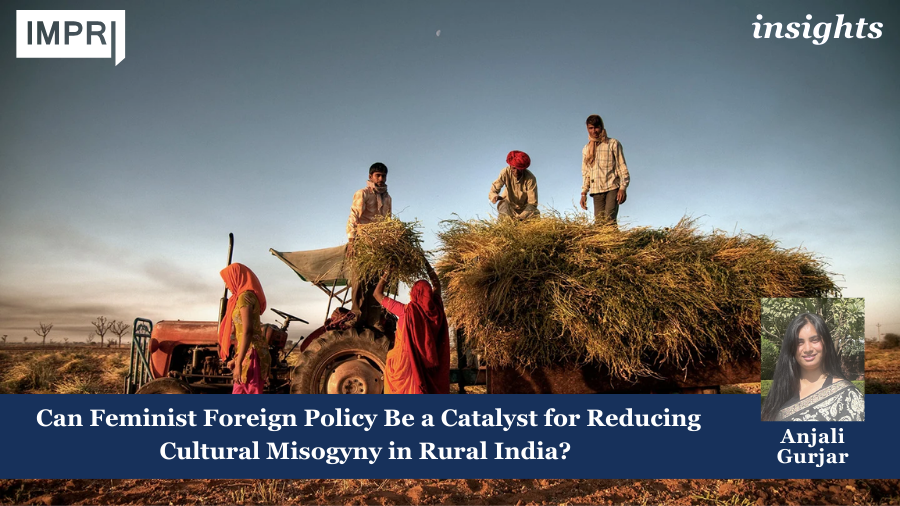
Coming from a rural background I have grown up witnessing countless forms of cultural misogyny woven into everyday life on the name of culture and normalized to the point where they seem invisible to those living with them and whenever I try to explain that these customs are a form of violence and not destiny , my concerns are not only often dismissed but women themselves tell me that I might create problems for myself and ill not be a good women if ill stick to this thought process this resistance reveals how deeply cultural norms can shape acceptance of injustice even among those who are harmed by it
I have grown up in a city like Gwalior I often come across the casual and boasting discussions of dowry among women in bustling markets shows the extent to which patriarchal customs continues to operate as everyday norms
This Article explores about how feminist foreign policy can be a change maker in reducing cultural misogyny in rural India this article raises a critical question ,can feminist foreign policy shape domestic change , especially in rural India where misogyny is still existing like a wild fire, will FFP be able to dismantle cultural misogyny and uplift rural women and their upcoming generations at large.
What feminist foreign policy is about ?
Feminist foreign policy, or feminist diplomacy, is a strategy integrated into the policies and practices of a state to become gender inclusive , gender equality, and to help improve women’s access to resources, basic human rights, and political participation. It can often be bucketed into three categories: rights, resources, and representation. The concept was first coined and integrated into governmental policy by Margot Wallström, former Swedish Foreign Affairs
Minister. The objectives of feminist foreign policy include (but are not limited to)
The fight against sexual and sexist violence
The education of women and girls, and that of men and boys
The economic emancipation of women across the world
Involving women in politics and decision-making
Involving women in peace negotiations and treaties
In 2014, Sweden adopted the world’s first feminist foreign policy. Since then, more than a dozen countries and political parties have followed suit or have announced their intention of developing a feminist foreign policy., the number of countries embracing this banner keeps growing.
A GLOBAL POLICY ( FFP) AND RURAL INDIA
There is huge gap between the global stage and the ground reality in my village one side there is feminist foreign policy which is asking for gender inclusive world and making women’s a part global decision making whereby I can see rural women not even having fundamental rights which are written in the constitution like right to freedom , right to equality , right against exploitation , cultural and educational rights and much more basic than these all they are performing is right to freedom of religion which is ironically has become a women’s duty to look after the religion and cultural activities , where them not being aware how on the name of religion and culture they have been exploited for centuries till now and my major concern is about the upcoming generations as their mothers have witnessed this misogyny and paradoxically glorifying to put up with the violence and suffrage which they should have unaccepted long back but oddly they teaching their daughter that adjust toh krna padta hai and
not making feeling like they can not live as their brothers and husbands do and want their daughters to go through the same as to be called ache ghar ki bahu beti who has been nurtured with a lot of ghar ke sanskaars and sending daughters to In-laws house with a lot of dowry and In laws take that cash and gift with such an audacity and this is the very reason for female foeticide in villages here women have killed 4 to 5 daughters casually and everyone knows as its such a normal activity and roams unapologetically just because they wanted a male and they are afraid to spend money in the daughters wedding and dowry
I wonder the society here has itself made practices like dowry and kills daughter too and blame society only who makes the so called samaj? We were are only and what we are blaming, a hidden evil inside us only
CONCLUSION
While reaching at the top must not forget who are behind and I think we need to work on rural India the most right now because the kind of plight I can witness here are pathetic there should a cooperation like foreign partnerships can co finance rural girls education and injecting these notions in them and have to talk about maternal health , sanitation , digital literacy and livelihood projects that directly address the structural constrains women face
In villages however as far as I have comprehended , feminist foreign policy can be a tangible catalyst for reducing cultural misogyny in rural India but only if it shifts from rhetoric to practice in ways that respect local agency moreover success requires intersectional sensitivity and major role of education and mentors in the villages schools this can be a major way through which the ideologies like feminism can be transmitted in villages between all the genders it might reduce the cultural misogyny to some extent and women start learning l to live unapologetically
About the author
I am 22 years old Have done hons in political science from amity university gwalior and currently pursuing masters in economics from jiwaji university gwalior I am a feminist and concerned about rural feminism and upcoming generations in rural India I have started indulging myself into research and I am aspiring to work with ministry of women and child development
Disclaimer
All views expressed in the article belong solely to the author and not necessarily to the organisation.
Read also
Water for Work, Work for Water — How a 2025 MGNREGA amendment is reshaping India’s fight against rural water stress
Farmer Producer Organizations: A Pathway to Rural Prosperity (2025)