Category Center for International Relations and Strategic Studies

Balancing Between Beijing and Delhi: Shifting China’s Tilt

With Male facing increasing domestic and foreign policy challenges, Mohamed Muizzu is possibly aiming at a reconciliation with India.

From calling India a “bully” to visiting New Delhi as an invitee to the swearing-in of Narendra Modi as the Prime Minister of India for a third term, in June 2024, Mohamed Muizzu’s India policy is one of blowing hot and cold. Ever since his swearing-in in November 2023 as the President of the Maldives, Mr. Muizzu has embraced a “pro-Maldives” policy that reduces his country’s dependence on India, increases relations with China, and diversifies its foreign policy with others. More than six months after his swearing-in and impairing Male’s ties with India, his foreign policy is now seeing some recalibration.
Balancing Concerns: Modi-Hasina’s Strategic Approach to China

The inherent strength of India-Bangladesh relationship was once again in evidence as the Prime Minister of Bangladesh, Sheikh Hasina, decided to visit New Delhi days after attending the swearing-in ceremony of Prime Minister Narendra Modi. The ease with which the top leadership in Delhi and Dhaka now interact and engage each other is a tribute to the manner in which Modi and Hasina have managed to build this important partnership over the last decade, often under very difficult circumstances.

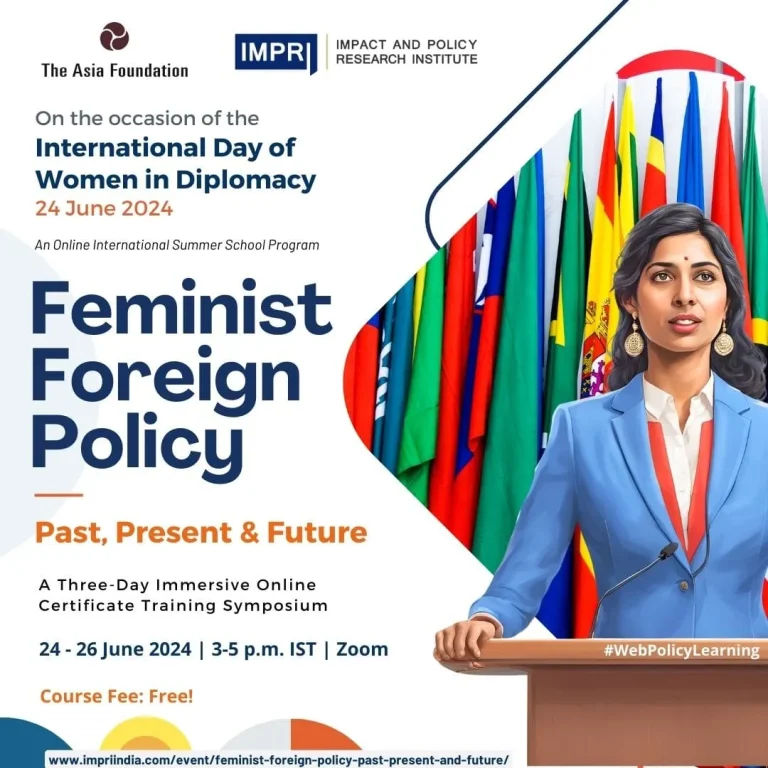
Pioneering Diplomacy: Women’s Impact and the Evolution of Feminist Foreign Policy

The International Day of Women in Diplomacy, celebrated annually on June 24, as declared by the United Nations General Assembly during its 76th session, stands as a global testament to the invaluable contributions of women in the diplomatic arena. This day is dedicated to honoring the achievements of women diplomats, acknowledging their resilience in overcoming challenges, and advancing the cause of gender equality within diplomacy.

Talk to Us