Policy Update
Riya Singh
Background
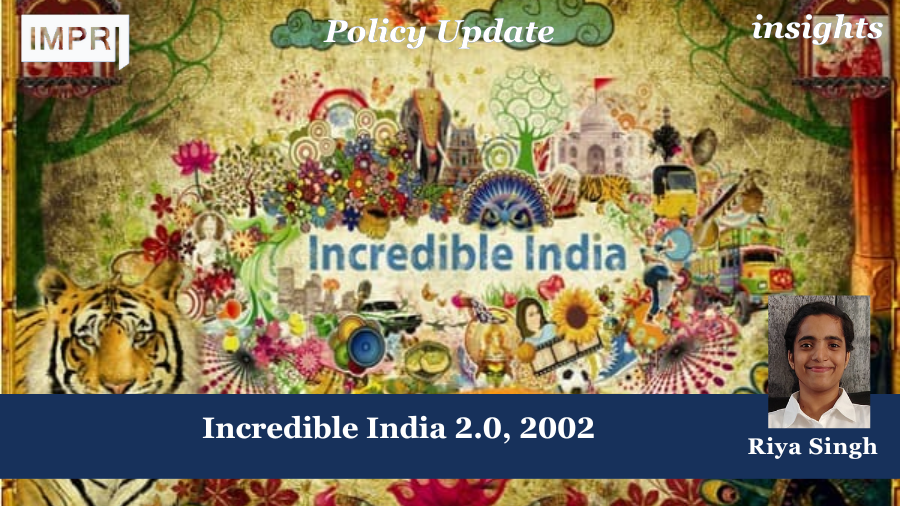
The Incredible India campaign, which was launched in 2002 was the first concerted effort by India to position the country as a global unified tourism brand. The campaign aimed at positioning India as a year-round destination by uniting heritage monuments, cultural festivals, natural landscapes, spirituality and modern infrastructure under a single umbrella. The target was to use tourism as a growth driver and a soft power and therefore boost the inflow of foreign tourists, foreign exchange earnings, local travel and employment in the hospitality-tourism sector.
The initiative was re-named in 2017 “Incredible India 2.0” with a new focus on digital marketing, niche tourism segments, reinforcing e-visas, and improving destination management. In 2024, the policy has been updated once again, pushed by the G20 Presidency and push of domestic tourism with the tagline Dekho Apna Desh: the campaign now focuses on immersive experiences, smart tourism infrastructure, sustainability, and year-round visitation (instead of traditional circuits of the so-called Golden Triangle). The branding policy therefore includes three key stages, the initial launch in 2002, the re-launch in 2017, and the re-inaugration in 2024.
Functioning
The campaign operates based on a multi layered institutional and operational design. On the top, the Ministry of Tourism defines policy, funds, and strategic standards of tourism branding and infrastructure. The global and domestic markets are both targeted by the national branding portal, Incredible India, as well as the multimedia outreach. States and Union Territories possess their tourism boards which are connected to the central campaign to package experiences and generate flows.
The major elements of its operations are market-segmented promotion, thematic tourism routes like heritage, spiritual, eco tourism, rural tourism, adventure tourism and film tourism, the e-Visa programme with simplified arrival processes, and the digital platform (website, app, social media) with trip-planning, bookings and feedback. The capital budget is directed to develop the destinations (airports, connectivity, signage, visitor centres) and the recurrent budget is allocated to marketing, participation in travel marts and influencers and global campaigns.
The brand formed the basis of the “Chalo India” diaspora-led campaign and One State, One Destination initiative in 2024 as the brand had to move away from the foreign-tourist focus and multiply domestic flows and penetrate into tier-II/III circuits.
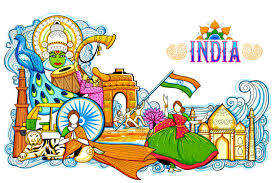
Performance
The campaign has produced material gains since 2002 since its inception. Indicatively, as per the annual report of the Ministry of Tourism, in 2024, India registered 9.66 million foreign tourist arrivals (FTAs), and foreign exchange earnings (FEEs) of 2,77,842 crore. Simultaneously, the number of domestic tourist visits was 2,509.13 million in 2024. The past years are an indication of the improvement: in 2019, FTAs were at their highest point of 10.93 million. The campaign spurred the growth of e-Visa availability to 171 countries and enrolled in the double-digit growth in niches (adventure, wellness). The World Travel and Tourism Council (WTTC) estimates that the amount of foreigners spending in India will reach US 36 billion (3.1 trillion) in 2024, 9 percent higher than in 2019. India improved in terms of global ranking in the tourism competitiveness indices and in 2023 ranked 24 in the world in terms of International Tourist Arrivals. At the domestic market, the middle class boom, enhanced connectivity and marketing synergy have generated an expedited growth in domestic travel.
Impact
The branding policy has contributed to making tourism a rapidly developing sector of the Indian economy economically. This growth in arrivals and spending is translated to creation of jobs in the region, incomes, and foreign exchange. The brand has contributed to the rise in the visibility of lesser-known destinations, restoration of heritage sites, popularisation of tribal and rural circuits, and increased the soft-power presence of India in the rest of the world, socially and culturally.
To the first-time travellers in the emerging Indian middle-income population, the campaign turned aspirational and made domestic tourism affordable, thus driving inclusive development in the hospitality industry, transport and allied services. In the environmental and regional sense, the impetus of balanced regional tourism has been the emphasis on developing high-potential destinations that have been underserved (Himalayan, North-East, desert, coastal).
Emerging Issues
The gains do not eliminate a number of challenges that have become apparent. To begin with, despite the increase in arrivals and spending, tourism continues to have a relatively low contribution to GDP (under 5-6 per cent.), as compared to the rest of the world (around 10 per cent.). Second, the flows of tourists are very seasonal and are concentrated in few states and circuits hence restricted in terms of regional diffusion. Third, bottlenecks in infrastructure, in particular remote and tribal locations, are still present: connectivity, hospitality provision, last-mile accessibility and uniformity of the service quality are still poor. Fourth, branding is solid, but experiential delivery is wanting: visitor satisfaction, repeat visits, and word-of-mouth across the world should be improved. Fifth, as domestic tourism boomed, inbound numbers remain half of pre-pandemic highs in certain markets, and visa/administrative obstacles remain as an impediment. Sixth, the issue of sustainability, crowding, environmental stress, cultural commodification etc., become more salient. In addition, there is still fragmentation in data monitoring and outcome measurement in spite of better dashboards.
Way Forward
The campaign should shift to a full-fledged tourism ecosystem policy in order to transition to branding to sustainable growth. Smart tourism infrastructure should be built faster, especially in Tier-II/III and tribal hubs. The process of recruiting hospitality talent and tourism management professionals requires national emphasis in terms of skilling missions. It is necessary to shift the focus of marketing to experience-based branding: immersive storytelling, AR/VR legacy tours, personalised journeys of travellers, and post-travel interactions can improve the value proposition of India.
The allocation of budget on overseas promotion needs to be reinstated and reinforced: India needs to be global competitors, not national. Performance measures, e-governance and unified state-wide systems should support the One State, One Destination initiative. The concept of sustainability needs to be institutionalized: obligatory regulations on visitor-capacity, community-based tourism, and destination-green certification. Lastly, using the brand as a source of jobs will aid in achieving local entrepreneurship and regional connectivity to provide inclusive benefits in line with Viksit Bharat 2047 vision.
Conclusion
Incredible India campaign has been transformed into more than just a slogan brand to a tool of tourism development and national brand-building. Its re-introduction in 2017 and the update in 2024 indicate that the policy has developed in line with market realities. Nevertheless, branding alone will not be enough to fulfill the promise – the following chapter should be devoted to implementation: infrastructure, service quality, regional expansion, experiential innovation and sustainability. Provided that India can transform the ambitious brand into the global visitor experiences, the campaign may assist in turning tourism into one of the pillars of the economy and the growth that is driven by equity.
References
Ministry of Tourism. (2025). Annual Report 2024-25 [PDF]. Government of India. Retrieved from https://tourism.gov.in/sites/default/files/2025-02/Ministry%20of%20Tourism%20Annual%20Report2024-25ENGLISH0.pdf
Ministry of Tourism. (2025). India Tourism Data Compendium Key Highlights 2024 [PDF]. Government of India. https://tourism.gov.in/sites/default/files/2025-03/India%20Tourism%20Data%20Compendium%202024.pdf
Press Information Bureau. (2024, December 16). “Transforming India as Biggest Tourist Hub.” Government of India.
https://www.pib.gov.in/PressReleasePage.aspx?PRID=2084815
World Travel & Tourism Council. (2025, June 6). “India’s International Visitors Spent $36 B in 2024.” Asian Hospitality.
https://www.asianhospitality.com/india-tourism-growth-usa-wttc
IBEF. (2024). Tourism & Hospitality Industry in India. https://www.ibef.org/industry/tourism-hospitality-india
LiveMint. (2025, July 14). “We need a revamped Incredible India campaign to lift tourism.” https://www.livemint.com/industry/we-need-a-revamped-incredible-india-campaign-to-lift-tourism-hais-mp-bezbaruah-11752489769801.html
About the Contributor:
Riya Singh is a Research Intern at IMPRI. She is a student of the Master of Arts in Public Policy and Governance at the Tata Institute of Social Science, Hyderabad and holds a bachelor’s degree in Political Science from the University of Delhi. Her research interests lie in government policy and data analysis.
Acknowledgement: The author sincerely thanks IMPRI team for their valuable support.
Disclaimer: All views expressed in the article belong solely to the author and not necessarily to the organisation.
Read more at IMPRI:
The Global Impact of Trump’s ‘America First’ Agenda
India–EU Ties in a Changing Global Order