Category Center for International Relations and Strategic Studies

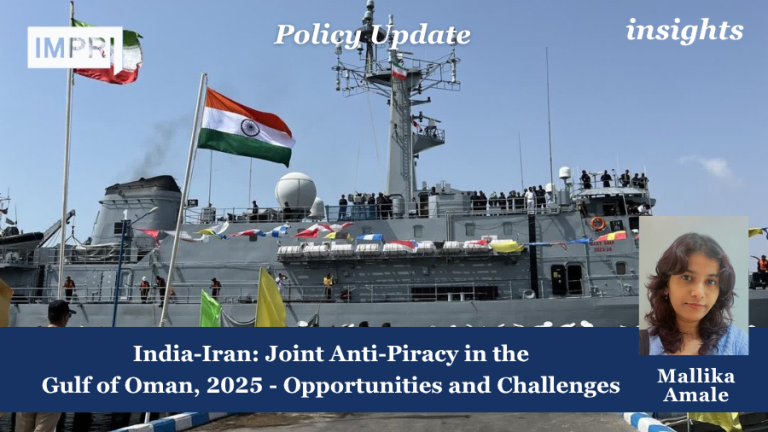
India-Iran: Joint Anti-Piracy in the Gulf of Oman - Opportunities and Challenges (2025)

India-Iran: Joint Anti-Piracy in the Gulf of Oman – Opportunities and Challenges (2025)

The Gulf of Oman is at the center of maritime insecurity. Situated in the Arabian Sea, it borders Iran, Pakistan, and Oman, and is of strategic importance to India, especially considering energy security. While not itself a hotspot for piracy, it lies adjacent to several high risk zones. To its northwest is the Strait of Hormuz, one of the world’s most critical chokepoints, often called the ‘oil chokepoint,’ through which nearly 20 percent of the world’s oil shipments transits.
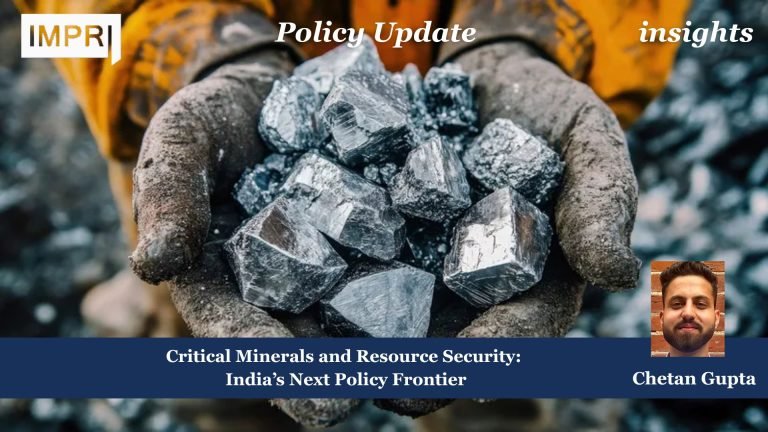
Photo 12

Critical Minerals and Resource Security: India’s Next Policy Frontier

India in South Asia stands at a tipping point where untapped mineral potential intersects with high import dependence, and India is leading the charge to bridge this gap. China's recent export restrictions on essential rare earth magnets have led to a supply chain bottleneck in different parts of the world.

India–Nepal: Border Security and Disaster Response

India-Nepal: Border Security and Disaster Response

The India-Nepal open land border, which is approximately 1,751 km, is unique in South Asia for its free flow of people under the Treaty of Peace and Friendship 1950. That open nature has been both a security challenge and a source of connectivity. The Shastra Seema Bal is India's primary guiding force, which prevents crime and smuggling, and also coordinates with Nepal security agencies. Joint military exercises such as “Surya Kiran” also enhance collaboration for Humanitarian Assistance and Disaster Relief (HADR) operations.

Insights poster 8

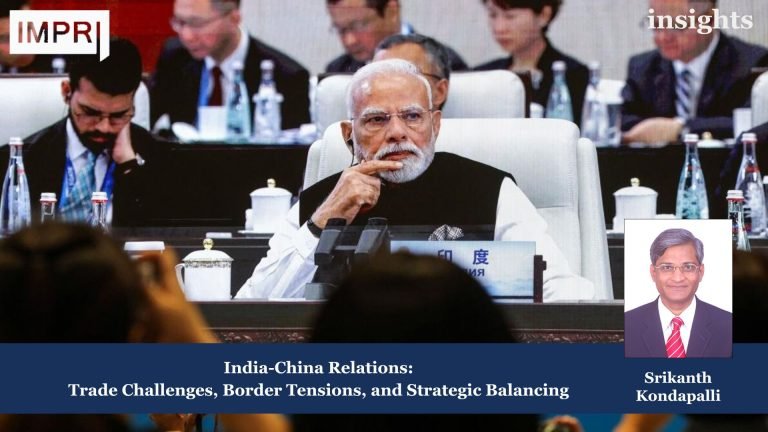
India-China Relations: Trade Challenges, Border Tensions, and Strategic Balancing

Srikanth Kondapalli Prime Minister Narendra Modi’s visit to Tianjin to attend the 25th Shanghai Cooperation Organisation (SCO) meeting had triggered widespread expectations on offsetting the damage caused by the United States’ 50% tariffs, ushering in a multipolar world , and…

India-UK Free Trade Agreement (FTA) 2025: Impact on the Services Sector

India-UK Free Trade Agreement (FTA) 2025: Impact on the Services Sector

The India–UK FTA is equally packed with opportunities to transform the services sector, which forms the backbone of the Indian economy. In addressing issues of mobility, regulatory recognition, and digital trade, the agreement can foster competitiveness, create jobs, and spur innovation. But an equilibrium between liberalization and capacity-building in domestic areas is still essential to be attained. If implemented, the FTA would be a model services-driven free trade agreement that strengthens India's position in the world services value chain and further consolidates its strategic engagement with the UK.

Talk to Us