Policy Update
Riya Singh
Background
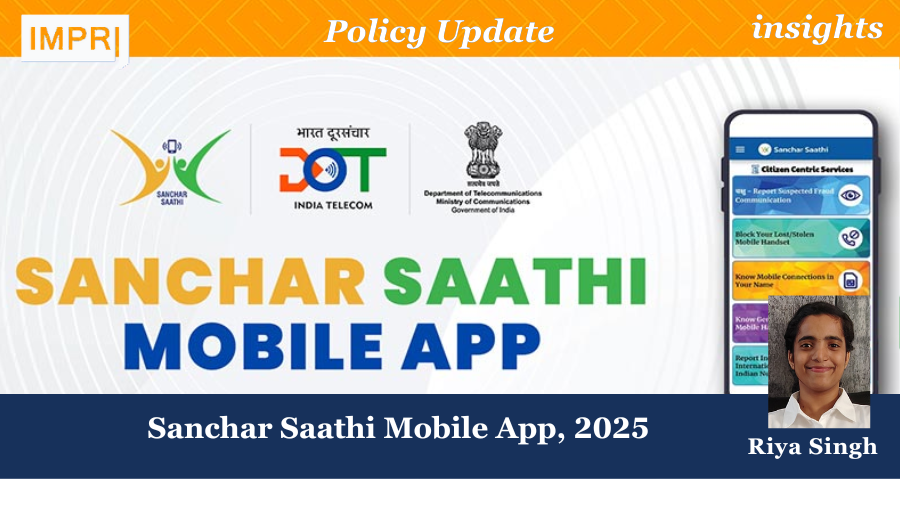
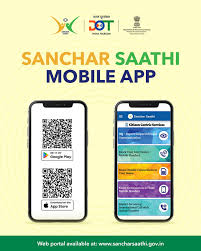
The Sanchar Saathi mobile app is a citizen-centric cybersecurity initiative developed by the Government of India’s Department of Telecommunications (DoT) to strengthen mobile security for subscribers nationwide. Launched via a web portal in May 2023, the mobile application version was introduced on 17 January 2025 to make services more accessible to smartphone users.
The app was conceived against rising concerns over telecom fraud, lost or stolen phones, spoofed or duplicate International Mobile Equipment Identity (IMEI) numbers, unauthorised connections, and other telecom-related cyber threats. It aims to provide a single interface for reporting and responding to mobile security issues, ensuring protection of users’ telecom identity and enabling proactive citizen participation (Jan Bhagidari) in governance.
While designed to benefit all Indian mobile subscribers—currently over 1.2 billion users—it gained national prominence when the DoT, in November 2025, issued a directive under the Telecom Cybersecurity Amendment Rules to pre-install the app on all new handsets sold in India. However, amidst privacy concerns and industry pushback, including opposition from major manufacturers like Apple and public debate, the mandate was later rolled back, and the app’s use remains voluntary.
Functioning
The Sanchar Saathi mobile app functions as a telecom security platform that enables users to:
- Report suspicious calls/SMS directly from their call/SMS logs via the Chakshu feature.
- Check mobile connections registered in their name to identify unauthorised SIMs.
- Block lost or stolen phones using IMEI information.
- Verify handset genuineness before purchase to prevent use of fake or tampered devices.
- Monitor trusted contact details for banks and financial institutions to guard against fraud.
These features are designed to empower users to take swift action against telecom misuses and help authorities respond quickly to reported frauds.
Integration with national telecom infrastructure enables the DoT and service providers to act on citizen reports, block numbers or devices, and help curb unauthorised activities. The app supports English, Hindi, and 21 regional languages, increasing accessibility across India’s diverse user base.
Challenges
Literature and media analysis highlight several concerns:
- Privacy and Surveillance Fears: Mandating pre-installation sparked worries about potential misuse, with critics arguing it could enable mass surveillance or data harvesting.
- Policy Communication Gaps: Confusion ensued between the directive’s written requirement and later clarifications that the app remains optional and users can delete it.
- Technical & Adoption Barriers: Some users reported issues with registration, SMS verification failures, and accuracy of features such as listing all SIMs under a user’s identity.
These concerns underline the importance of clear legal frameworks, robust data protection safeguards, and transparent communication in deploying citizen-facing cybersecurity tools.
Performance
According to official figures and media reports:
- Within six months of launch, the Sanchar Saathi mobile app crossed 50 lakh (5 million) downloads.
- Government sources reported over 14 million downloads by late 2025, with spikes of around 6 lakh downloads in single days following policy announcements.
- The initiative reportedly helped recover over 5.35 lakh lost/stolen devices.
- It contributed to the disconnection of more than 1 crore unauthorised mobile connections.
- Significant numbers of handset genuineness checks and fraud reports were filed via the portal and the app, reflecting active user engagement.
While official dashboards provide detailed real-time data on complaints and actions taken, specifics from ministry dashboards, budget documents, or parliamentary committee reviews weren’t publicly released in a structured format as of late 2025. Nonetheless, reported performance indicators suggest an increasing user adoption trend with noteworthy engagement in telecom security reporting.
Impact
The Sanchar Saathi app’s impact manifests in several areas:
- Citizen Empowerment: Users now have tools to report fraud swiftly without intermediaries, reflecting enhanced digital agency.
- Telecom Fraud Mitigation: Reported reductions in duplicate IMEI misuse and lost/stolen device incidents point to improved mobile security outcomes.
- Public Awareness: The policy spotlight and debates around mandatory installation raised national awareness on cybersecurity issues.
- Policy-Public Interaction: The strong public reaction to mandatory preinstallation influenced the government to reframe policy communication and clarify voluntary usage, showing responsiveness to citizen concerns.
However, the lack of comprehensive official performance dashboards and independent academic evaluations limits a deeper understanding of long-term sustainability and behavioural changes in user safety practices.
Emerging Issues
- Privacy & Data Protection Concerns:
Issue: Public unease about potential surveillance.
Suggestion: Enact clear data protection safeguards and publish a privacy impact assessment. - Policy Communication Clarity:
Issue: Confusion between mandatory and voluntary messaging.
Suggestion: Issue publicly accessible, detailed policy notes and FAQs. - Technical Adoption Challenges:
Issue: Usability problems (registration, SMS verification).
Suggestion: Improve UI/UX and user guidance materials, including video tutorials. - Transparency in Metrics:
Issue: Limited public dashboards for performance tracking.
Suggestion: Publish monthly transparent dashboards with key indicators. - Legal Framework Alignment:
Issue: Ambiguity in legal basis for mandatory app pre-installation.
Suggestion: Harmonise app deployment rules with India’s emerging Digital Personal Data Protection Act.
Way Forward
Sanchar Saathi embodies a significant stride toward strengthening telecom cybersecurity for citizens. Its future success hinges on:
- Enhancing trust through transparency in data usage and privacy practices.
- Building robust legal safeguards to protect citizen rights.
- Integrating with national cyber threat intelligence systems for faster fraud detection.
- Expanding awareness campaigns to deepen public understanding of telecom security.
Such measures can help transform the app into an enduring tool for safeguarding India’s massive mobile user base, aligning with the nation’s broader goals of digital empowerment and secure connectivity.
References
- Department of Telecommunications (MoC). (2025). Sanchar Saathi mobile app crosses 50 lakh downloads press release. Press Information Bureau. https://www.pib.gov.in/PressReleasePage.aspx?PRID=2154606 (Sanchar Saathi)
- India Today. (2025, Dec 2). India makes pre-installation of Sanchar Saathi app mandatory… https://www.indiatoday.in/india/story/india-mandates-sanchar-saathi-app-pre-installation-on-all-phones-glbs-2829087-2025-12-02 (India Today)
- Times of India. (2025). Government takes U-turn; removes mandatory pre-install… https://timesofindia.indiatimes.com/technology/tech-news/government-takes-a-u-turn-removes-mandatory-pre-installation-of-sanchar-saathi-app/articleshow/125740115.cms (The Times of India)
- Associated Press. (2025). India rolls back order to preinstall… https://apnews.com/article/e60ae3999705927996143ef0264149ad (AP News)
About the Contributor
Riya Singh is a Research Intern at IMPRI. She is a student of the Master of Arts in Public Policy and Governance at the Tata Institute of Social Science, Hyderabad and holds a bachelor’s degree in Political Science from the University of Delhi. Her research interests lie in government policy and data analysis.
Acknowledgement: The author sincerely thanks IMPRI team for their valuable support.
Disclaimer: All views expressed in the article belong solely to the author and not necessarily to the organisation.
Read more at IMPRI:
The Global Impact of Trump’s ‘America First’ Agenda
India–EU Ties in a Changing Global Order