Akshay Sharma
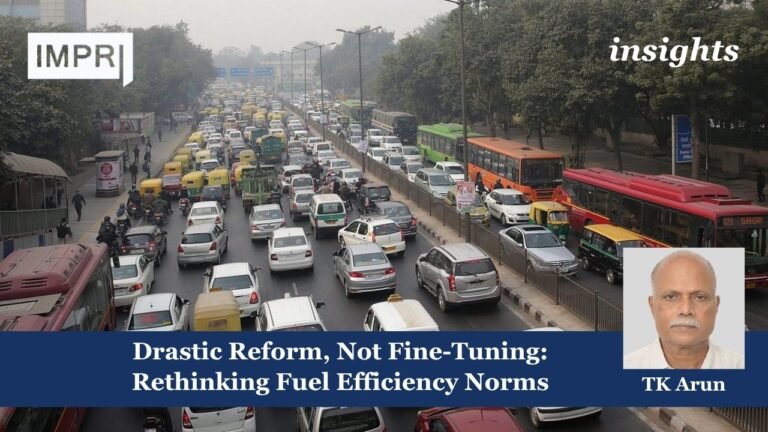
Delhi has become a centre of controversy and politics for the continuously rising and persisting levels of high AQI. Rising vehicular emission, industrial expansion, burning of stubble, etc. remains to be the prime suspected reason for this. States keep blaming each other for transmitting it with lesser stricter action against polluters. Political leaders keep shifting the burden of failing policies to each other’s lack of past efforts.
Delhi has been trying to reduce the impact and burden of air pollution for a long time now. Starting from the most famous “Odd-Even policy” which did not sustain longer and was part of controversy causing discomfort to the general public in mobility. “Red Light On, Gaadi Off” is something we may still remember even if its promotion is off the track with shifting political dynamics.
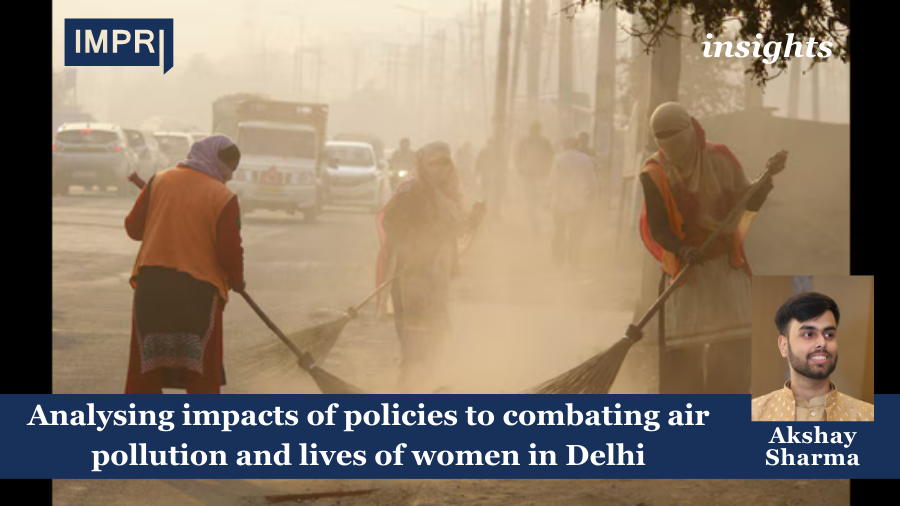
Polluted air brings physical schooling to a halt, less social activities, reduced walks, work from home, etc. It makes stepping outside home an unsafe experience. The work of women multiplies- travel and manage work, take care of children and old a little extra ,be responsible for the health of the family, help children in hybrid schooling, etc. People with asthma suffer more.
“No PUC, No Fuel” Policy took a firm grasp amongst the vehicle owners. Pollution under control certificate ensures vehicles are not causing any excess pollution and is safe to drive. Bharat Stage VI (BS-VI) emission standards have been reinforced time to time limiting mobility of working individuals but a boost to car pooling and use of public transport which supports the ideals of sustainability. Free dtc bus rides for women became the most accessible benefit to women.
Through proactive promotion of the Electric Vehicle (EV) Policy, the government encourages people to shift from fuels to electricity which is more environmentally friendly. The government also recently shared a future plan to provide subsidies to women buyers of electric vehicles. Delhi government also launched DEVI (Delhi Electric Vehicle Interconnector) bus which runs on electricity with continuation of free mobility for women and even recruited women drivers.
The Pink Saheli metro card scheme was in talks offering free travel to women specifically. This if implemented would increase mobility and reduce inequality through higher mobility amongst women. But if it would allow women from all backgrounds then it would become more of a fiscal burden. It supports women to reduce travel through walking which would have higher health impact in smog covered the city.
14-Point Construction Guidelines have been formulated. Police institutions ensured regulating construction work and calling it to halt at times of high pollutants in the air. Anti-Smog Guns were deployed on high-rise buildings.There was sprinkling of water around the city but what caught the attention of social media was constant sprinkling of water near the AQI monitoring stations. The governments are more conscious of their reputation and numbers that bring it but less for the choking citizens.
Graded Response Action Plan (GRAP) is imposed in the city based on severity of pollution in 4 stages as a mechanism to decide the actions that governments in Delhi-NCR must take as the levels of air pollution rise through various stages. The GRAP framework was approved by the Supreme Court in 2016, and its implementation has since been overseen by the Commission for air quality management (CAQM).Artificial rain was held in the month of October by a collaborative effort of Delhi’s Environment Department, IIT Kanpur, and the India Meteorological Department (IMD) but the effect seemed negligible. Not much rain poured and pollution kept rising after it.
This Diwali was not so greener with allowing crackers despite pollution awareness. The government behaved less carefully. So do citizens. Crackers were not banned on Diwali. Stubble burning did not fully vanish. No limit imposed on the number of vehicles a person could own. But tandoors face a ban in Delhi. Looks odd? Yes it is. The netizens also took a comic stance on it by calling it like “ banning bicycles to reduce traffic’. A serious matter like pollution and climate change has become a joke in the hands of politics, power play, loose institutions and foolish policies.
Though there have been governmental efforts and citizen awareness about the issue but the efforts on the root cause were missing. This is evident in the ineffectiveness of policies to reduce pollution in Delhi. Towards a new year 2026, the city is still juggling between GRAP III and IV. There should be regulations on sale and ownership of vehicles. State governments should collaborate to completely stop stubble burning.
The health of its citizens should become the prime focus of public policy and fund allocation. The largest budget allocation to Delhi in 2025 failed in improving the real standard of living for the city. Citizens’ awareness should rise about the depth of the issue with more talks, discussions, campaigns, etc. It is the public that has caused it all and it will be the public which will control it now.
References
- Commission for Air Quality Management. (2025, December 24). CAQM revokes GRAP IV as AQI improves to 271; restrictions under other stages to remain. Press Information Bureau. https://pib.gov.in/PressReleasePage.aspx?PRID=2208266
- Delhi Environment Department. (2025, December 24). Red Light on, Gaadi off. Government of NCT of Delhi. https://environment.delhi.gov.in/environment/red-light-gadi
- Economic Times. (2025, December 29). Delhi Pink Saheli card: Free bus travel for women, new smart card system launched. https://infra.economictimes.indiatimes.com/news/urban-transportation/delhi-pink-saheli-card-free-bus-travel-for-women-new-smart-card-system-launched/126222983
- EV Reporter. (2025, May 2). Delhi CM flags off 400 electric buses under DEVi initiative. https://evreporter.com/delhi-cm-rekha-gupta-flags-off-400-electric-buses-under-devi-initiative/
- The Hindu. (2024, September 28). Delhi Government launches anti-dust campaign to tackle pollution, sets 14 point construction guidelines. https://www.thehindu.com/news/cities/Delhi/delhi-government-launches-anti-dust-campaign-to-tackle-pollution-sets-14-point-construction-guidelines/article68694130.ece
- The Hindu. (2025, October 28). Cloud-seeding trials done in Delhi to combat air pollution. https://www.thehindu.com/news/cities/Delhi/delhi-cloud-seeding-artificial-rain-updates-october-28-2025/article70211599.ece
- Times of India. (2025, October 29). Why Delhi’s cloud seeding failed: Rs 1.9 crore spent on 3 sorties, IIT Kanpur blames low moisture. https://timesofindia.indiatimes.com/city/delhi/why-delhis-cloud-seeding-failed-1-9-crore-spent-three-flights-still-no-rain-iit-kanpur-blames-low-moisture/articleshow/124886792.cms
About the Author
Akshay Sharma is an undergraduate student of Economics at Atma Ram Sanatan Dharma College, University of Delhi. He is a research intern at IMPRI, He’s interested in applying economic principles to real-world issues and local contexts. With a background in humanities, Akshay has developed strong writing and critical thinking skills. His goal is to pursue a career in research and education.
Disclaimer: All views expressed in the article belong solely to the author and not necessarily to the organisation.
Read More at IMPRI
DigiYatra (2022) – Transforming India’s Airport Experience with Biometric Boarding
Acknowledgement: This article was posted by Vatsala Sinha, Research Intern at IMPRI.