
Tikender Singh Panwar

Tikender Singh Panwar

Former Deputy Mayor of Shimla and Visiting Senior Fellow at IMPRI

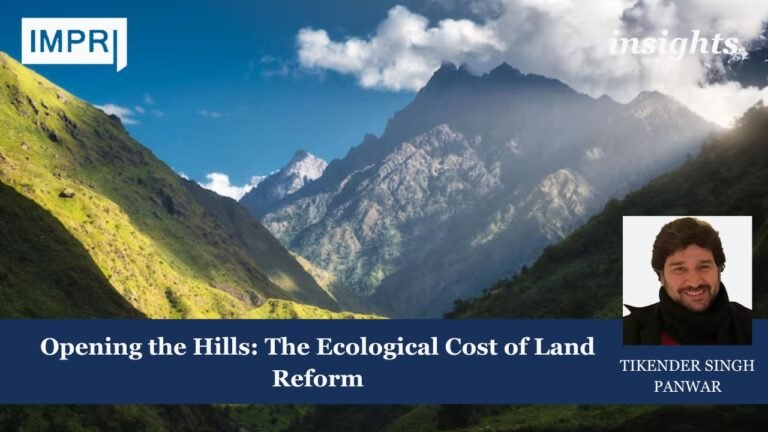
Opening the Hills: The Ecological Cost of Land Reform
157

The Himachal Pradesh government has again opened the debate on relaxing Section 118 of the Himachal Pradesh Tenancy and Land Reforms Act, 1972 — a provision that has, for five decades, protected the state's most sacred resource: its land. Under this Section, a non-agriculturist cannot buy land in Himachal without prior permission from the state government. This legislative instrument ensures that land is not reduced to a commodity but continues to embody livelihood, culture and ecological balance.Today, in the name of "encouraging investment, industry, tourism and housing", the state government is tempted to loosen this protective clause. But to tamper with Section 118 is to play with fire.
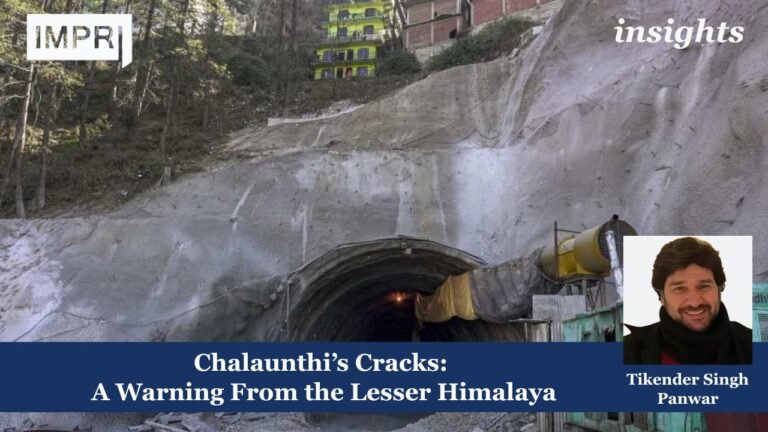
Chalaunthi’s Cracks: A Warning From the Lesser Himalaya

Copy of Insights 2

Tikender Singh Panwar The cracks will travel – from Chalaunthi to Shimla, from Shimla to Kullu, from Kullu to the upper valleys – until the Lesser Himalaya responds not with fissures, but with collapse. The mountain has already spoken. Chalaunthi…

Selling Survival: What Air and Water Reveal About State Failure

Copy of Insights 1 1

Delhi’s air crisis is not an isolated failure. It is part of a larger civilisational collapse, one where the state has quietly surrendered its most fundamental duty: safeguarding the commons.

Urbanisation Trends in India’s Small Towns

Copy of Insights 4

The story so far: India continues to narrate its urban future through the loud vocabulary of megacities. But a quieter and far more consequential transformation is unfolding. Of India’s nearly 9,000 census and statutory towns, barely 500 qualify as large cities. The overwhelming majority are small towns, with populations below 1,00,000. This proliferation of small towns is a structural product of India’s capitalist development — and of its crisis.

Talk to Us