Category Research

India-Fiji Relations

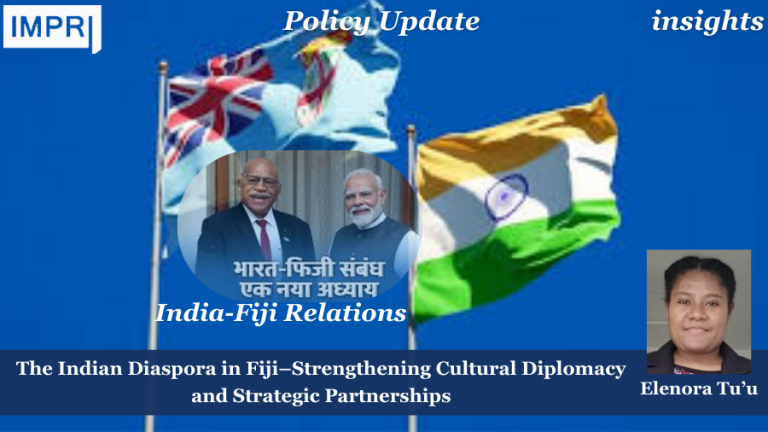
India-Fiji Relations: The Indian Diaspora in Fiji–Strengthening Cultural Diplomacy and Strategic Partnerships

India-Fiji relations are deeply rooted in a shared historical journey, tracing back to the ancestral legacy of indentured laborers who first migrated to Fiji under Bristish colonial rule.
Today, Indo-Fijians comprise nearly 37% of Fiji’s population, though their share has declined due to emigration to Australia, New Zealand, and other Pacific nations such as Papua New Guinea. Despite this, the community continues to preserve its traditions—language, cuisine, religion, and vibrant festivals—while adapting to local realities. This resilience underscores the enduring strength of diaspora communities. This migration not only created a resilient Indo-Fijian community but also laid the foundation for enduring cultural, social and diplomatic ties between both nations and the broader pacific.
Agriculture and Farmers Welfare

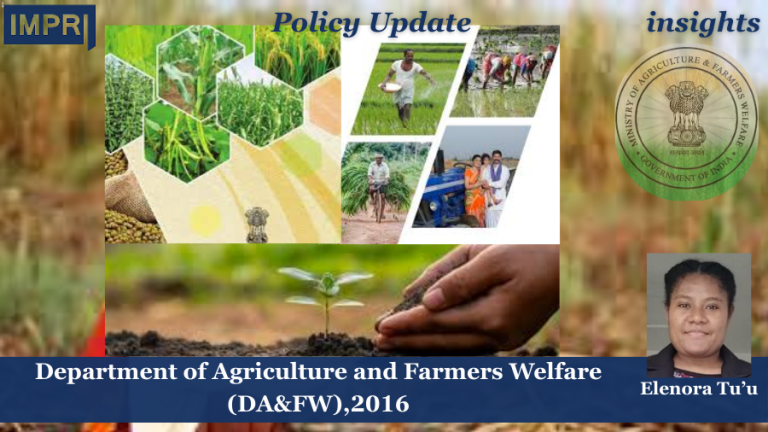
Department of Agriculture and Farmers Welfare (DA&FW),2016

The Department of Agriculture and Farmers Welfare (DA & FW) is one of two constituent departments under the Ministry of Agriculture and Farmers Welfare, the other being the Department of Agriculture, Research and Education (DARE).
DA&FW is primarily responsible for policy formulation, regulation and implementation of programs relating to agriculture and farmer welfare in India. Its functions span foodgrain production, farmer income support, crop insurance, market linkages, and agricultural sustainability.

Key institutional arms include the Commission for Agriculture Costs and Prices (CACP), which recommends Minimum Support Prices (MSPs); the Directorate of Economics and Statistics (DES); with multiple attached support subordinate offices. The Department has been a Centre of India’s Green Revolution, food security policies, and recent farmer-centric digital reforms.

Ministry of Jal Shakti 2019

Ministry of Jal Shakti 2019

The Department of Water Resources, River Development and Ganga Rejuvenation (DoWR, RD & GR) plays a primary role in laying down the policy guidelines and programmes in the field of development, conservation and management of water as a national resource. It also provides an overarching national view on water planning and coordination as regards various uses of water; water laws and legislations, how inter-state and trans-boundary problems regarding water could be localized, bilateral and multi-lateral co-operations, and broad policy guidelines and programmes to determine how the waters of the nation can be judged, developed and controlled.

Aarogya Maitri Aid Cube

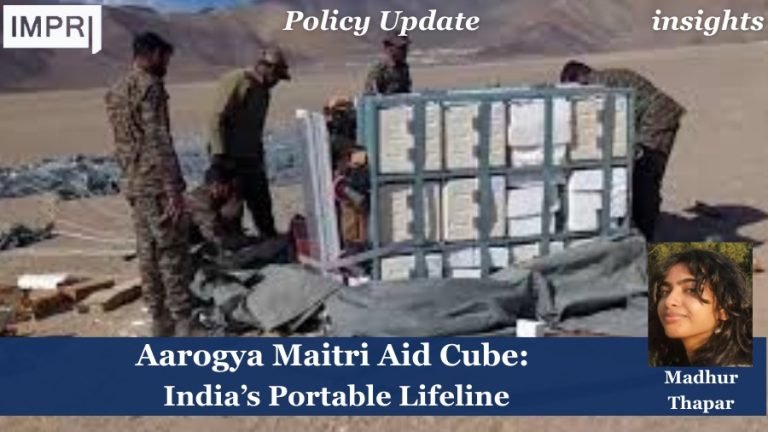
Aarogya Maitri Aid Cube: India’s Portable Lifeline

In an increasingly multipolar world, India has been making a name for itself in the realm of global humanitarian aid. From its vaccine diplomacy under the “Vaccine Maitri” initiative during the COVID-19 pandemic to dispatching rescue teams under “Operation Dost” to Turkey and Syria after the 2023 earthquake. India’s commitment to global solidarity has gained popularity. A key addition to this humanitarian mission is the Aarogya Maitri Aid Cube, launched on February 27, 2024, during the Voice Of  Global South Summit. The cube is part of the “Project BHISHM”- Bharat Health Initiative for Sahyog, Hita and and Maitri, this represents India’s effort to provide emergency medical support to developing nations, especially those in the global South.

Passport Seva Project (PSP), 2010: Transforming Passport Services in India

Passport Seva Project (PSP), 2010: Transforming Passport Services in India

To enhance and speed up passport services available to citizens, the Ministry of External Affairs (MEA) initiated the Passport Seva Project (PSP) in May 2010. The PSP is a project that is reliant upon a Public-Private Partnership (PPP) with Tata Consultancy Services (TCS), awarded through an open competitive bidding process.

Mentoring for Excellence: Impact of the Margdarshan Initiative

Mentoring for Excellence: Impact of the Margdarshan Initiative

India has a large, complex and multi-layered system of technical and higher education. It has the third-largest higher education system in the world, next to China and the United States. The development of human resources of the country is a critical factor for the progress of the Nation.

PU insights poster 3 1

Ministry of Labor & Employment (2025): Labor Welfare Schemes in India

The Labor welfare schemes in India were introduced as a means to provide protection and support to workers, especially in the unorganised sector. The Schemes, implemented and monitored by the Ministry of Labor and Employment through the Directorate General of Labor Welfare (DGLW) and its labor welfare organizations (LWOs), are in place to ensure worker safety, provide social security benefits, improve working conditions, and enhance the overall well-being of the workforce. 

Talk to Us