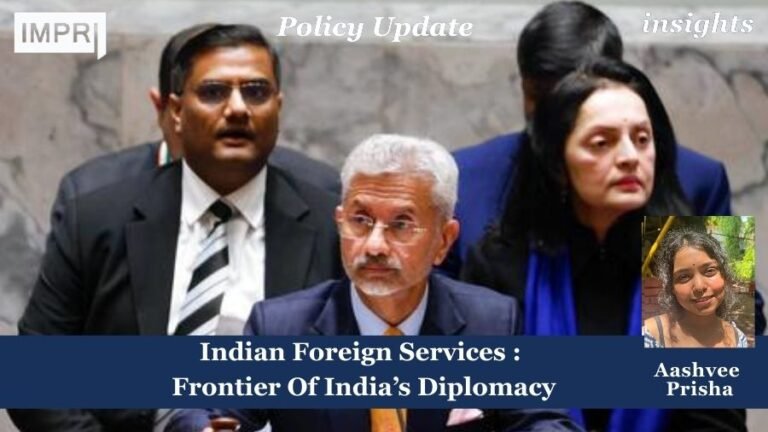
Indian Foreign Services : Frontier Of India’s Diplomacy
The Indian Foreign Services(IFS) is India’s premier diplomatic corps, responsible for projecting the nation’s interests abroad.
The Indian Foreign Services(IFS) is India’s premier diplomatic corps, responsible for projecting the nation’s interests abroad.
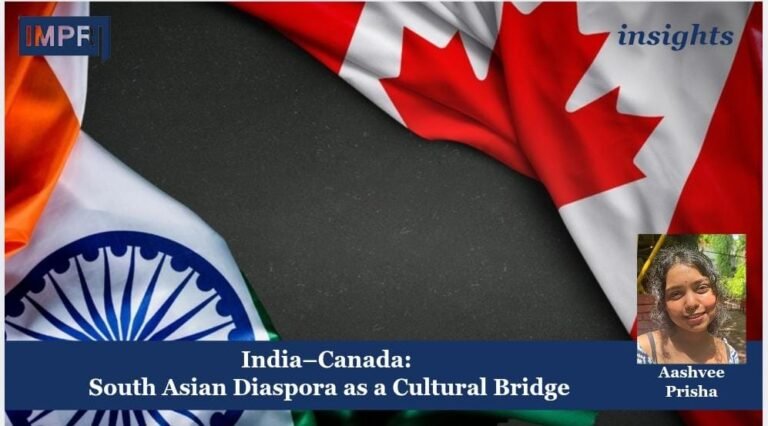
The South Asian diaspora in Canada, a community of nearly two million people, is a foundational element of the bilateral relationship between India and Canada. This community has long served as a “cultural bridge”, profoundly influencing both through political collaboration, economic development, and cultural interchange.
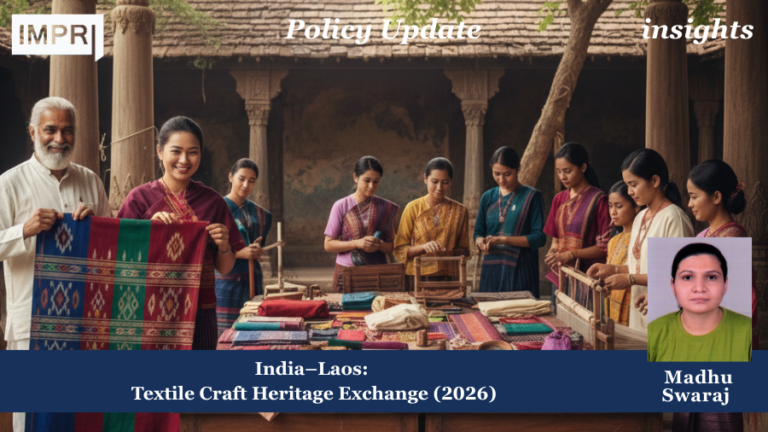
The textile connection between India and the Lao People’s Democratic Republic (PDR) is rooted in a shared civilizational tapestry that spans over a millennium. Both nations view textiles not merely as commodities but as profound storytellers of cultural identity, spirituality, and social status. Historically, the exchange began through the spread of Buddhism and the migration of the Tai people, who carried weaving traditions from the Yunnan region into the Mekong Valley.
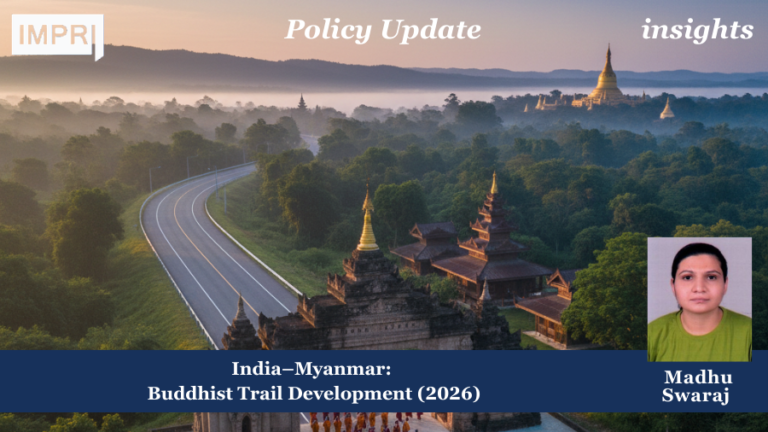
The shared spiritual landscape between India and Myanmar is anchored in a 2,500-year-old history. Buddhism, which migrated from the plains of Magadha to the shores of the Irrawaddy, serves as the "civilizational glue" for bilateral relations. For Myanmar’s predominantly Theravada Buddhist population, India is Jambudvipa—the sacred land of the Enlightenment.
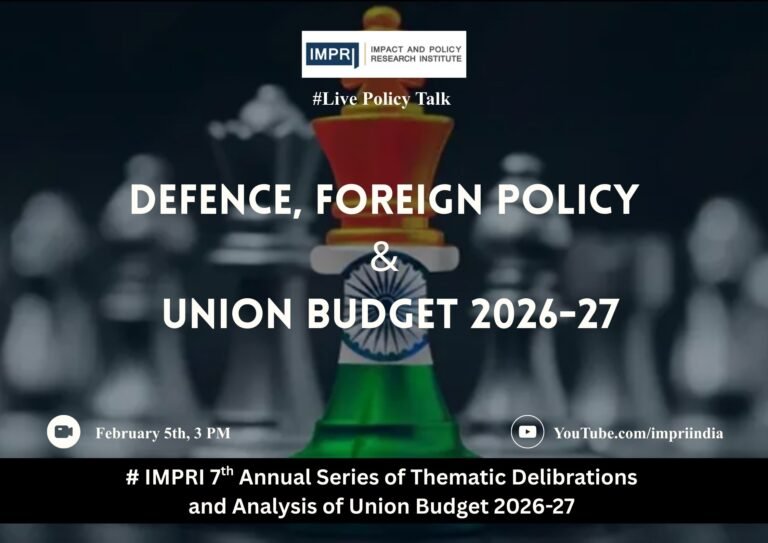
On 5th February 2026 at 3:00 PM IST, the Centre for International Relations and Strategic Studies of the Impact and Policy Research Institute, IMPRI, organised an online panel discussion titled “Defence, Foreign Policy and Union Budget 2026–27”as part of its 7th Annual Series of Thematic Deliberations and Analysis of the Union Budget 2026–27.
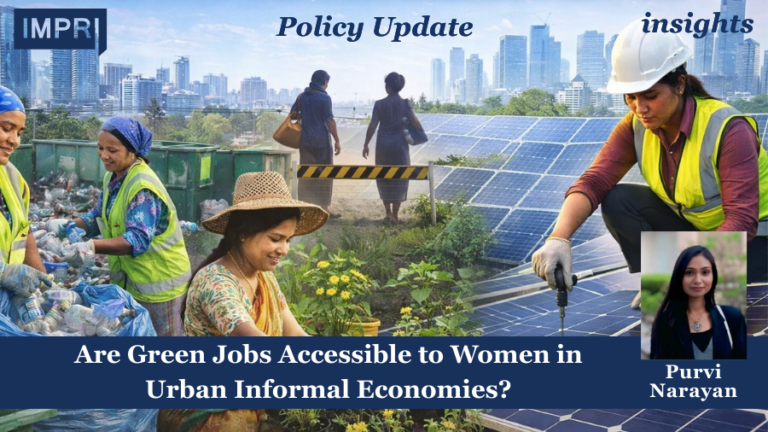
Urban economies across the Global South are undergoing profound transformations driven by climate imperatives, sustainability goals, and green growth agendas. Yet these transitions intersect with labour markets that are already deeply unequal. Informal work constitutes the backbone of urban employment in countries like India, and women form a substantial share of this workforce.
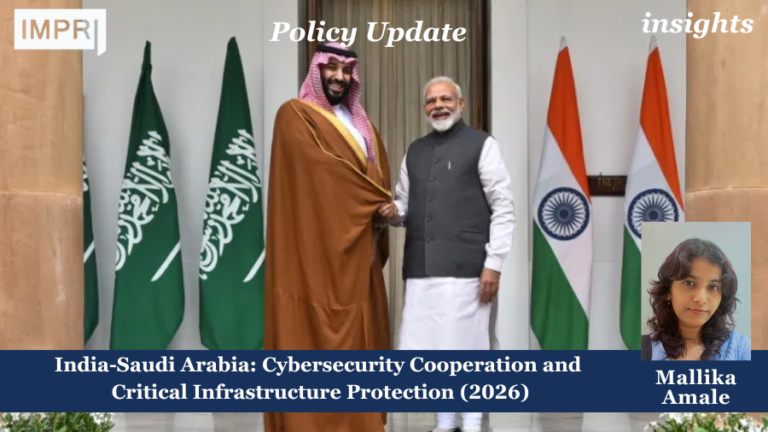
The institutionalisation of the Strategic Partnership Council (SPC) in 2019 marked the beginning of India-Saudi cooperation in cybersecurity and the safeguarding of critical infrastructure. Discussions commenced under broader defence, security, and technological cooperation frameworks of SPC. India’s priorities are to safeguard its Digital Public Infrastructure (DPI) and the telecom sector along with its cyberspace. Its digital economy is valued at 11.74 percent of its national income, thus contributing USD 402 billion to the GDP. Considerable progress has been made in capacity development, legal, and technical aspects of cybersecurity by India as evident by its Tier 1 status in the International Telecommunication Union (ITU) Global Cybersecurity Index. Similarly, Saudi Arabia’s Vision 2030 constitutes cybersecurity as a cornerstone for its economic resilience and development. Vision 2030 seeks to diversify the Saudi economy, build smart cities such as NEOM, and secure critical oil, gas, desalination, and logistics infrastructure.