Category Urbanization, Habitat, Transportation and Regional Development

160 1

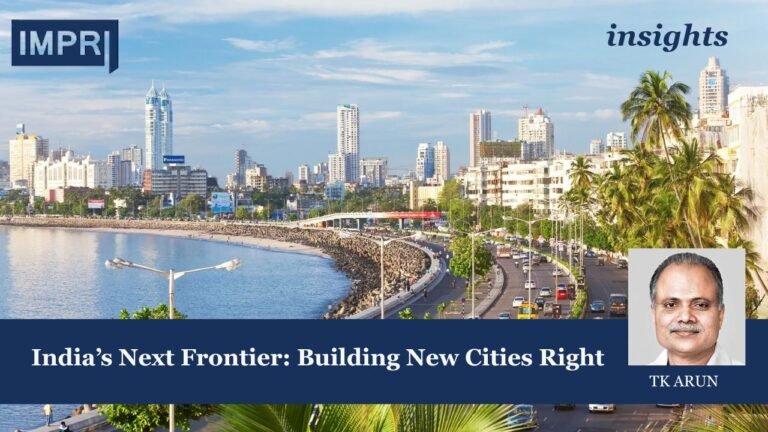
India’s Next Frontier: Building New Cities Right

Fast-growing countries urbanise, and the share of urban population rises. Since India has not had a Census since 2011, the size of the current urban population is an estimate. The World Bank puts it at 37%, below the world average of 58% and China’s level of 66%. Towns are where the bulk of economic activity, particularly in the modern, evolving sectors, takes place. If India is to grow, so must its total urban space.
Nuclear

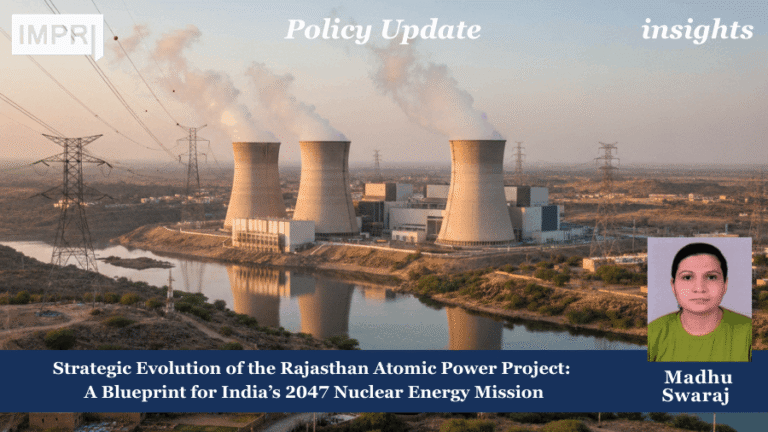
Strategic Evolution of the Rajasthan Atomic Power Project: A Blueprint for India’s 2047 Nuclear Energy Mission

The Rajasthan Atomic Power Project (RAPP), located at Rawatbhata near the Rana Pratap Sagar Dam, serves as the cornerstone of India’s indigenous nuclear energy program. Managed by the Nuclear Power Corporation of India Limited (NPCIL), the site transitioned from early collaboration with Canada (CANDU reactors) to becoming the primary testing ground for India’s sovereign Pressurized Heavy Water Reactor (PHWR) technology.

4 2

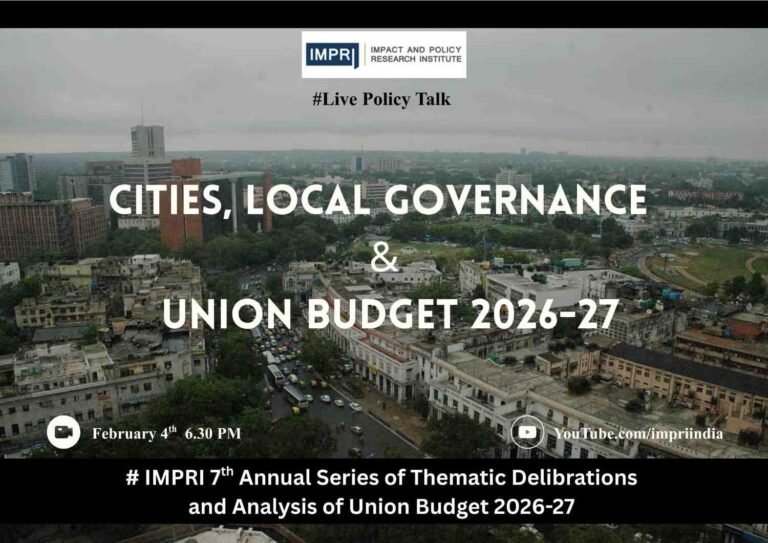
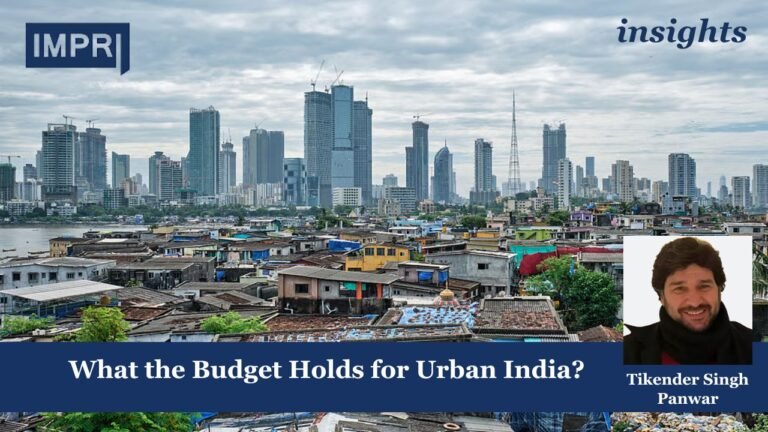
Cities, Local Governance and the Union Budget 2026–27

The IMPRI Centre for Habitat, Urban and Regional Studies (CHURS), IMPRI – Impact and Policy Research Institute, New Delhi, convened an online policy discussion on Cities, Local Governance and the Union Budget 2026–27 as part of IMPRI’s 7th Annual Series of Thematic Deliberations and Analysis of the Union Budget 2026–27, which was held on February 4 at 6:30 p.m. IST.

9

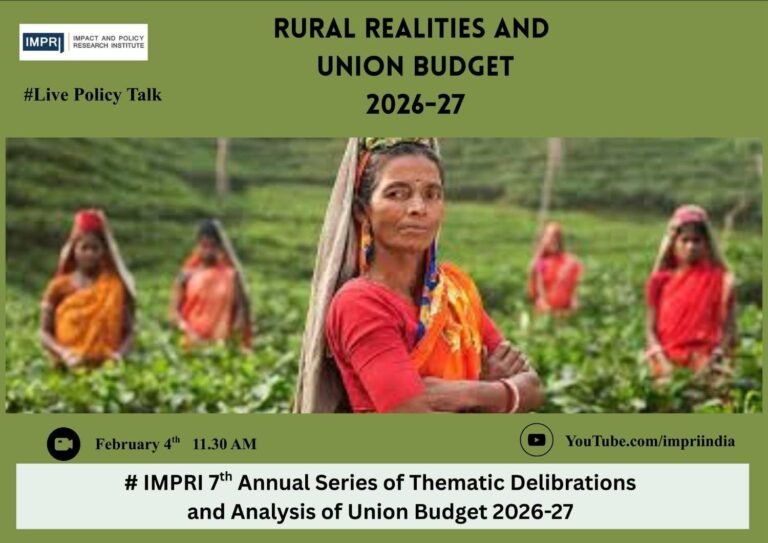
Rural Realities and Union Budget 2026-27

The IMPRI Center for Habitat, Urban and Regional Studies (CHURS) at the IMPRI Impact and Policy Research Institute, New Delhi, hosted an interactive panel discussion on “Rural Realities and Union Budget 2026-27” on February 4, 2026 (Wednesday) at 11:30 a.m. IST under IMPRI’s 7th Annual Series of Thematic Deliberations and Analysis of Union Budget 2026-27, as part of IMPRI, bringing together leading economists and policy researchers to assess how the latest Budget addresses rural livelihoods, agriculture, gender equity and employment generation.

Buddhist

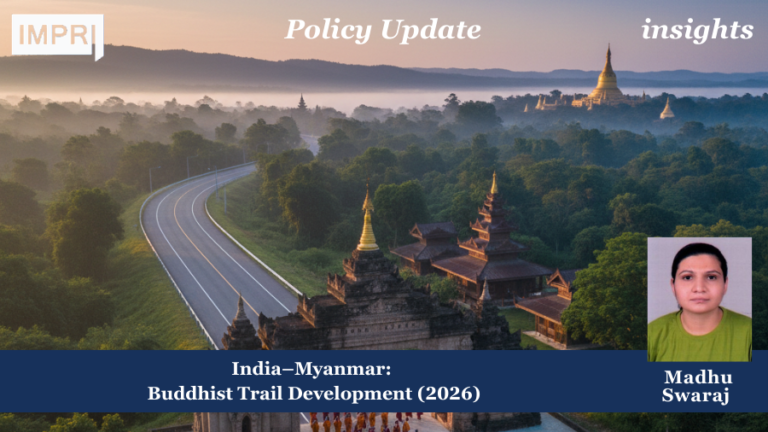
India–Myanmar: Buddhist Trail Development (2026)

The shared spiritual landscape between India and Myanmar is anchored in a 2,500-year-old history. Buddhism, which migrated from the plains of Magadha to the shores of the Irrawaddy, serves as the "civilizational glue" for bilateral relations. For Myanmar’s predominantly Theravada Buddhist population, India is Jambudvipa—the sacred land of the Enlightenment.  

Rethinking Airport Privatisation: Lessons from India’s Bidding Experience

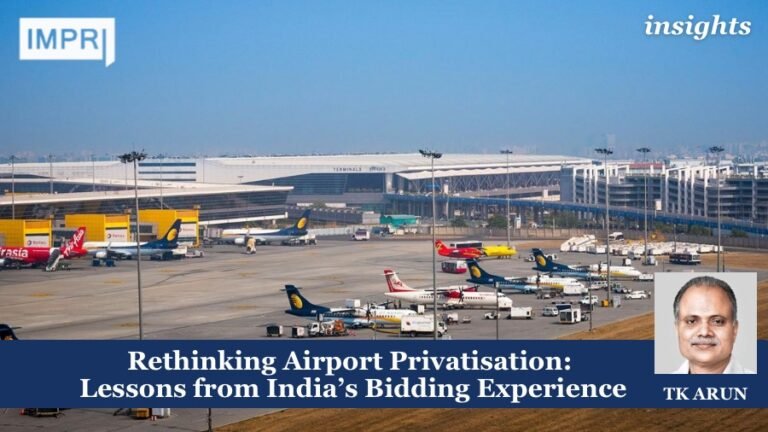
Rethinking Airport Privatisation: Lessons from India’s Bidding Experience

Airports are local monopolies, for the most part. Who gets to operate them and on what terms matter to the public at large. Sure, there is a regulator, the Aeronautic Economic Regulatory Authority of India to regulate aeronautical and other charges at any given airport.

Talk to Us