Category Center for International Relations and Strategic Studies

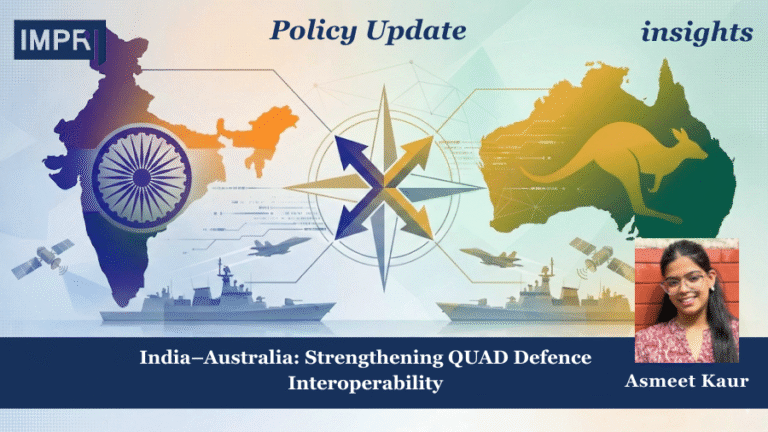
India–Australia: Strengthening QUAD Defence Interoperability

India–Australia: Strengthening QUAD Defence Interoperability

In the 21st century, the Indo-Pacific has emerged as the epicentre of global geopolitics due to shifting power dynamics, competing naval claims, supply-chain competition, and increased defence postures. With the Indo-Pacific region lofty ambitions to become the world's strategic and economic centre of gravity, partnerships among like-minded democracies continue to grow in significance. In this regard, the India–Australia relationship has become a fundamental stabilising element in the broader Quad Security Dialogue (QUAD) context.
Defence

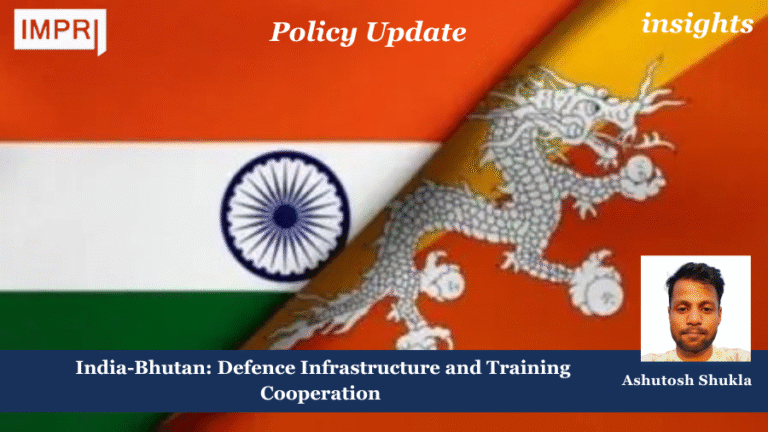
India–Bhutan: Defence Infrastructure and Training Cooperation

Bhutan, one of the most important countries from a Geostrategic angle, is located between Tibet and North-East India and also to the nearest points of the Chumbi Valley of Tibet, Sikkim and the Eastern borders at the same time the proximity of Bhutan from the Siliguri corridor which is the connecting point of the seven north eastern states of India is crucial for both India and Bhutan.

Political Flux and Economic Headwinds: Reading the CCP’s Fourth Plenum

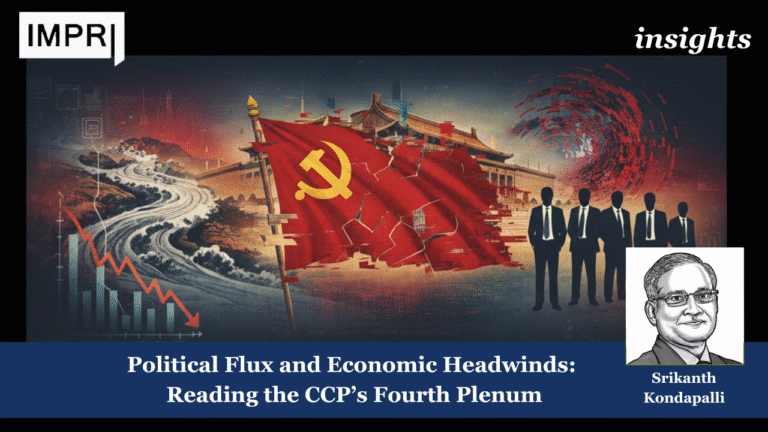
Political Flux and Economic Headwinds: Reading the CCP’s Fourth Plenum

The much-delayed Fourth Plenum of the Chinese Communist Party (CCP) Central Committee met in Beijing from October 20-23. Of the seven plenary sessions during a CCP congress, the fourth typically focuses on strengthening the party and governance. At this meeting, the formulation of the 15th Five-Year Plan for 2026–2030, personnel appointments and policy changes took precedence over other matters.

Buy the Oil, Not the Trouble: Why India Must Avoid Rosneft & Lukoil

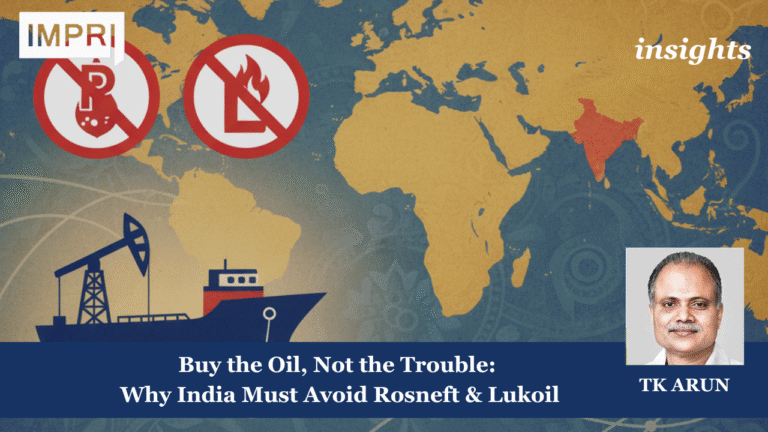
Buy the Oil, Not the Trouble: Why India Must Avoid Rosneft & Lukoil

There are good reasons for India to continue sourcing oil from Russia, notwithstanding the latest American sanctions on Russia’s oil giants Lukoil and Rosneft. India has a stake in Russia retaining its great power status, for which Moscow needs to have continued access to its only all-season naval base in Sevastopol, Crimea. That, in turn, calls for Ukraine to stay neutral, rather than join NATO, and for Russia to have control of eastern Ukraine, through which run the land routes from Moscow or St Petersburg to Crimea. Buying Russian oil is not primarily about cheaper energy, as far as India is concerned.

3 1

One Man’s Climate Change, Another Woman’s Climate Crisis: Why India Needs a Feminist National Action Plan

The severity and overarching implications of climate change in the world’s most populated country need no introduction. According to World Bank reports, India undergoes extreme heat, rapidly changing waterfall patterns, overexploited groundwater resources, and security threats including but not limited to energy, food, water, and agriculture, along with regional migration conflicts.

The Hallyu Ascendancy and India's Soft Power Ceiling: A Geocultural Analysis for India-South Korea Bilateral Relations

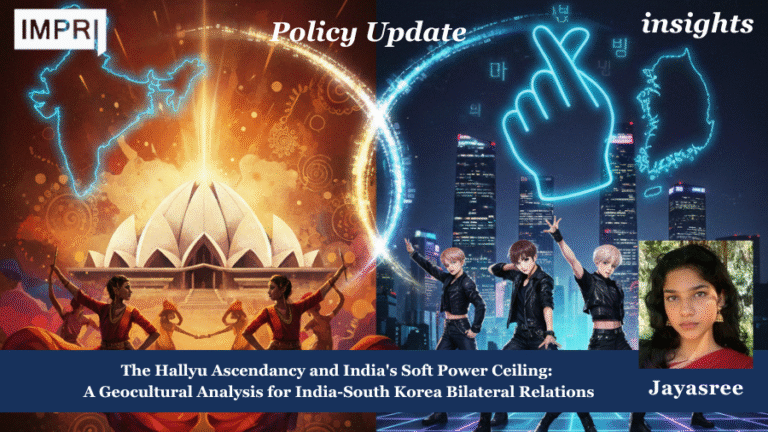
The Hallyu Ascendancy and India’s Soft Power Ceiling: A Geocultural Analysis for India-South Korea Bilateral Relations

The Korean wave, etymologically known as the hallyu, refers to the soft power of the Korean popular culture that originated in Southeast Asia, first in mainland China and eventually spreading across Asia in the late 1990s. The transnational cultural influence of the K-wave in the postmodern era is one of a kind due to the decisive yet dominant nature of ‘compressed modernity’. South Korea experienced a century's worth of economic growth-led cultural influence within the span of a few decades. The phenomenon of ‘Miracle on the Han River’ transformed a war-ravaged South Korea that was one of the 25 poorest countries in the world in the 1960s into an advanced economy built on technology and innovation, with the help of the International Development Association of the World Bank. 

Talk to Us