Category Gender, Pluralism and Social Inclusion

Swasth Nari Abhiyan: Building Stronger Families Through Women’s Health

Swasth Nari Abhiyan: Building Stronger Families Through Women’s Health

India has been working on women’s and children’s health for over a decade now. It has not been in vain. Maternal deaths have dropped. More babies are born safely in hospitals. Vaccines reach even the remotest corners.
Women

Conceptualising Cyber-Crime Against Women: Beyond Numbers and “Online  Misbehaviour”

The rapid expansion of digital technologies in India has opened up unprecedented opportunities  for women in education, employment, financial inclusion and political participation. Yet these  same technologies have also created new sites for control, humiliation and violence.  Smartphones and social media platforms can easily become tools for stalking, blackmail, non consensual image sharing and coordinated harassment. In this context, “cyber-crime against  women” is not merely a technical or legal category; it is a window into how gendered power reorganises itself in digital spaces. 

Co-Creating Care: India’s PCOS Discourse, Policy Neglect, and a Roadmap to Participatory Solutions

Polycystic Ovary Syndrome (PCOS) impacts countless women in India, yet our understanding often remains trapped in clinical jargon. This is more than just a medical condition; it is a socially constructed illness and lived experience deeply intertwined with our deep-rooted societal expectations, structural inequalities shaped by caste, class, and gender, and policy shortcomings. Despite its prevalence, existing research predominantly emphasizes biomedical and clinical dimensions, neglecting subjective narratives and sociocultural contexts.

Copy of Insights 6

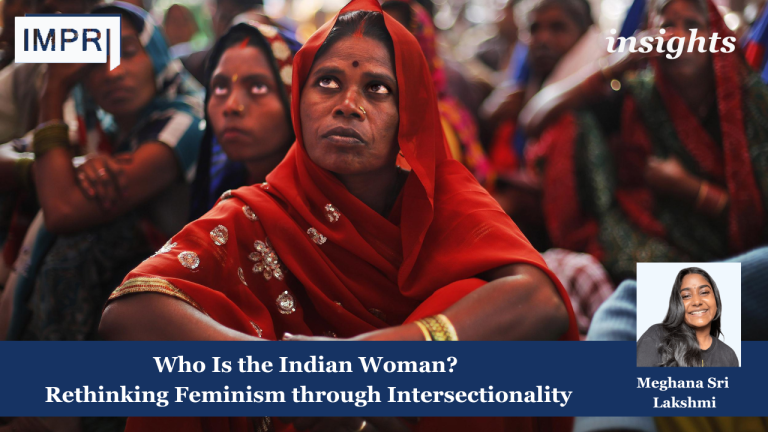
Who Is the Indian Woman? Rethinking Feminism through Intersectionality

The Indian Constitution enshrines a solemn promise of equality and non-discrimination in Articles 14 and 15, committing the nation to protect citizens equally before the law. Yet, feminist legal reforms in India often assume a uniform category of “women,” treating their experiences and needs as largely homogeneous.

Copy of Insights 4

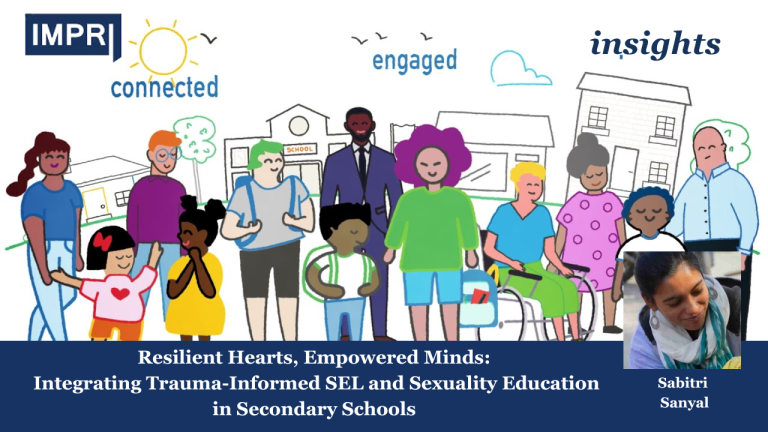
Breathing Movement and Words: Rethinking Trauma-Informed SEL and CSE for Our Girls

In India’s secondary schools, discussions about mental health, violence, or sexuality are often minimal due to stigma, despite high need. Urban adolescent girls from low-income communities frequently encounter traumatic experiences – a national study by the Ministry of Women and Child Development found that 2 out of 3 children had faced physical abuse and half of all children had suffered sexual or emotional abuse

Copy of Copy of Copy of Policy Update 9

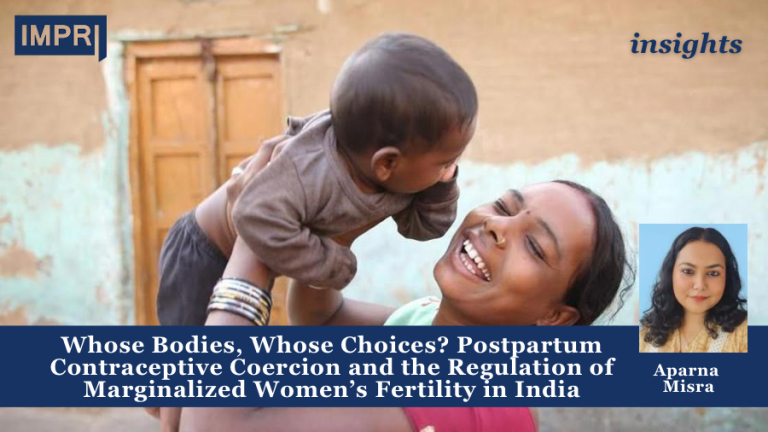
Whose Bodies, Whose Choices? Postpartum Contraceptive Coercion and the Regulation of Marginalized Women’s Fertility in India

A woman who had recently given birth to her first child at a government hospital in Delhi was distraught to discover that she had been fitted with an IUD without her knowledge and prior consent. Her appeals for help to ease her discomfort and pain as a result of the insertion of the device were disparaged, and she was asked to seek further treatment at a private facility.

Talk to Us