Category Policy Briefs

PU insights poster

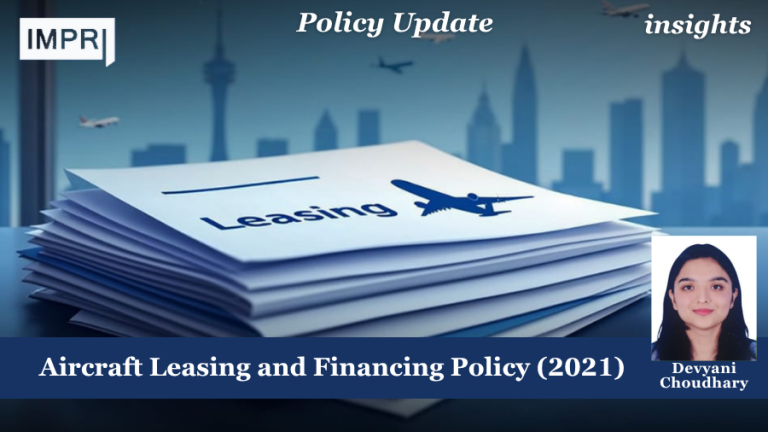
Aircraft Leasing and Financing Policy (2021)

The Government of India has promulgated the Aircraft Leasing and Financing Policy (2021) to position India, especially GIFT City (Gujarat International Finance Tec-City), as an aircraft leasing global hub. This was prompted by the realization that more than 80% of India's fleet of aircraft was leased from outside the country, leading to a huge foreign exchange outflow and exposure to foreign jurisdictions in terms of law, such as Ireland and Singapore.
SOAR

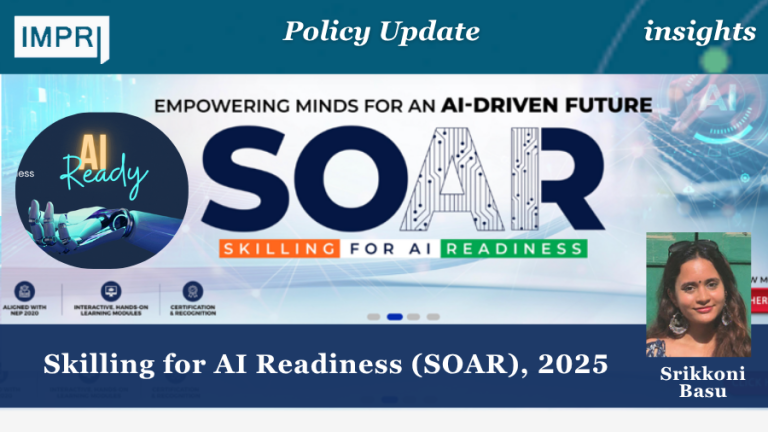
SOAR: Skilling for AI Readiness

Artificial Intelligence is rapidly increasing in the everyday life of humans. As the global demand for AI-related skills is rising, SOAR aims to create a future-ready generation equipped with technical knowledge and ethical and societal understanding required to navigate AI-driven transformation. This programme is part of a larger mission under Skill India, celebrating its 10th anniversary alongside the launch. The world is witnessing the revolution led by technological advancement, machine learning, AI, data analytics and automation. Unfortunately, Access to AI education in India has remained limited to higher education and elite institutions. The SOAR Programme breaks the barrier by introducing these subjects to classes of  6 to 12, including less resourceful schools, and by ensuring teachers are trained to deliver the subject. It aspires to build the largest AI-ready school population in the world, as declared by the Union Minister, Jayant Chaudhary.

e-Shram Portal 2021

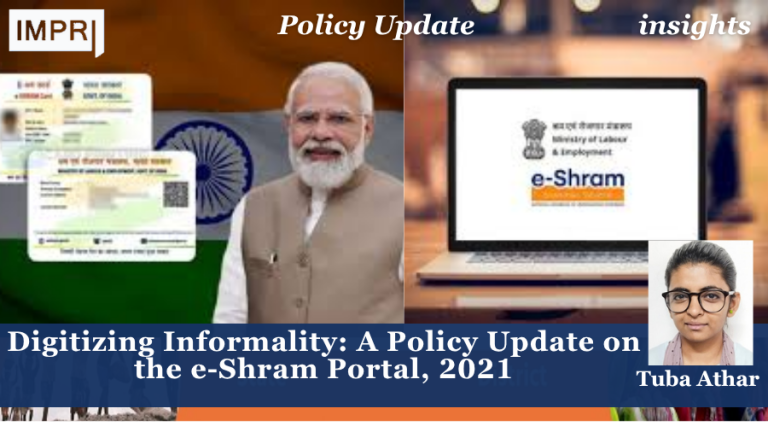
Digitizing Informality: A Policy Update on the e-Shram Portal, 2021

According to the ILO (2020), around 90 percent of India’s workforce is engaged in the unorganized sector, which absorbs most of the internal migrants.
The 2011 Census enumerated 450 million internal migrants, and this is estimated to increase to 600 million by 2021. Therefore, creating a comprehensive, accurate, and accessible database was the need of the hour. In May 2021, the Supreme Court directed the Union government to build a national database of unorganized workers.

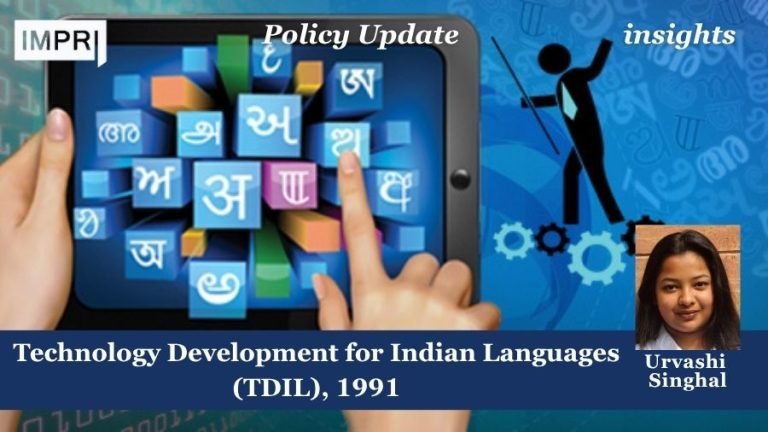
Technology Development for Indian Languages (TDIL), 1991

Technology Development for Indian Languages (TDIL), 1991

ndia is a multilingual country, with 22 official languages and 12 scripts. In India only about 5% - 10% people know English and the rest are deprived of the benefits of advances in information technology. The benefits of information technology can reach the common man only when software tools and human machine interfaces are available in people's own languages. Technology Development for Indian Languages (TDIL) Programme of Ministry of Electronics & Information Technology , Government of India is an on-going Research Programme with the following Mission statement:

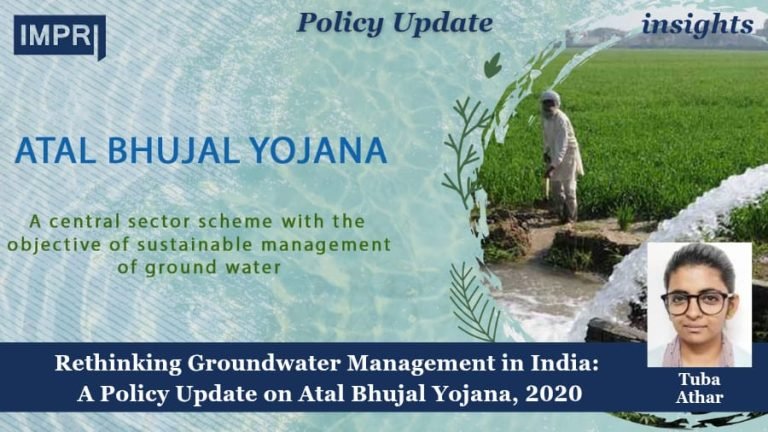
Rethinking Groundwater Management in India: A Policy Update on Atal Bhujal Yojana, 2020

Rethinking Groundwater Management in India: A Policy Update on Atal Bhujal Yojana, 2020

Groundwater is a significant source of freshwater and is crucial for domestic, agricultural, and industrial purposes. However, unchecked extraction, overexploitation, and contamination pose serious threats to its sustainability

Policy Update 10

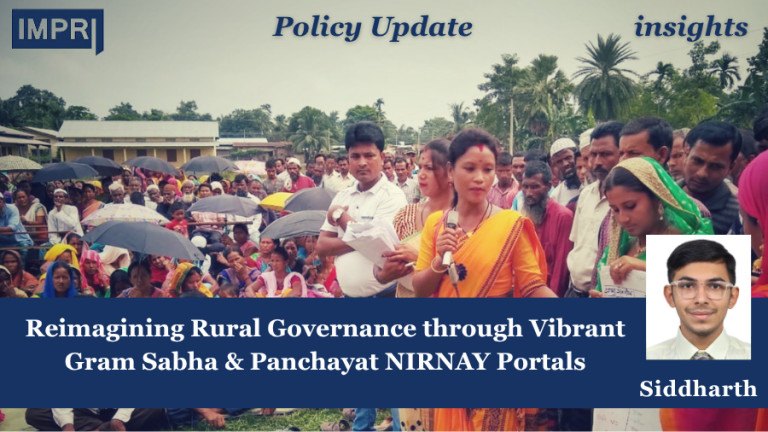
Reimagining Rural Governance through Vibrant Gram Sabha & Panchayat NIRNAY Portals

The Vibrant Gram Sabha and Panchayat NIRNAY portals are key digital initiatives launched by the Government of India to modernize rural governance. Designed to boost transparency and encourage active citizen involvement in Gram Sabha (village assembly) meetings, these platforms replace the old paper-based processes with efficient, real-time digital systems.

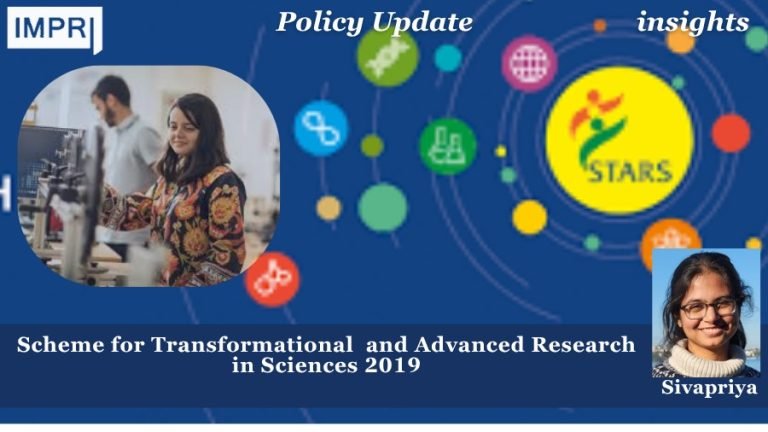
STARS

STARS: Scheme for Transformational and Advanced Research in Sciences

The Scheme for Transformational and Advanced Research in Sciences is an initiative of the Ministry of Human Resource Development (MHRD) and the Department of Higher Education, established in February 2019.  It operates with the main aim of promoting translational, India-centric research in sciences, to be implemented and managed by the Indian Institute of Science (IISc), Bangalore. The scheme functions to support socially relevant research in the following six basic thrust areas – Physics, Chemistry, Biological Sciences, Nanosciences, Data Sciences & Mathematics, and Earth Sciences.

Talk to Us