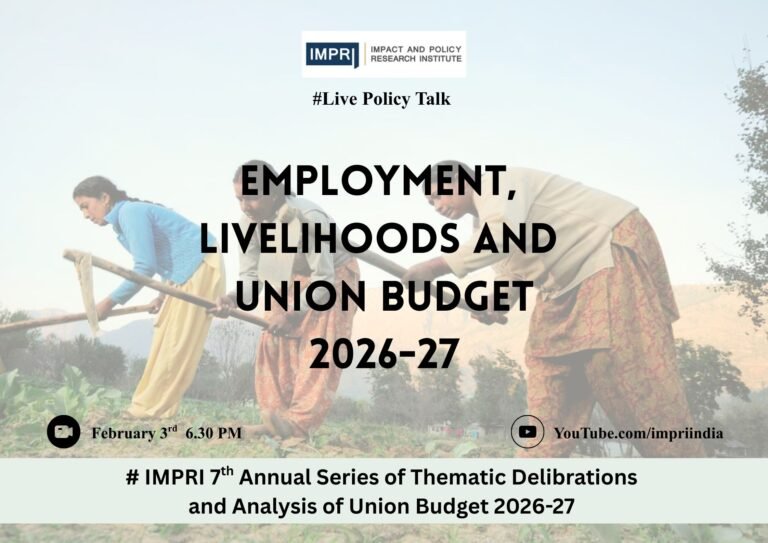
Employment, Livelihoods and Union Budget 2026-27
The IMPRI Centre for Work and Welfare (CWW) at the IMPRI Impact and Policy Research Institute, New Delhi, organised a thematic discussion on Employment, Livelihoods, and the Union Budget 2026–27
The IMPRI Centre for Work and Welfare (CWW) at the IMPRI Impact and Policy Research Institute, New Delhi, organised a thematic discussion on Employment, Livelihoods, and the Union Budget 2026–27
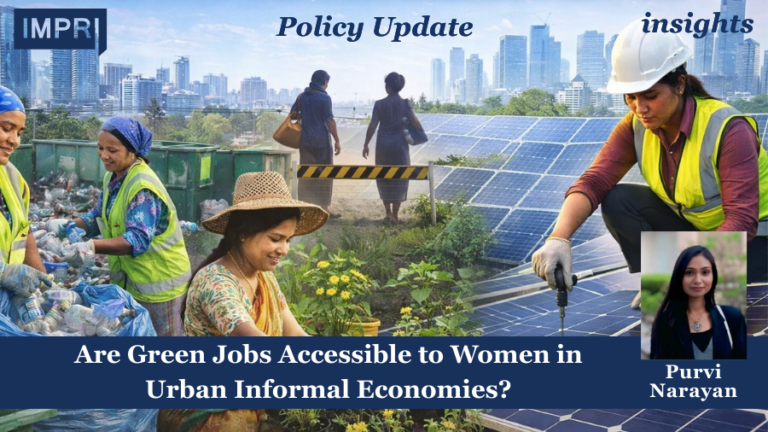
Urban economies across the Global South are undergoing profound transformations driven by climate imperatives, sustainability goals, and green growth agendas. Yet these transitions intersect with labour markets that are already deeply unequal. Informal work constitutes the backbone of urban employment in countries like India, and women form a substantial share of this workforce.
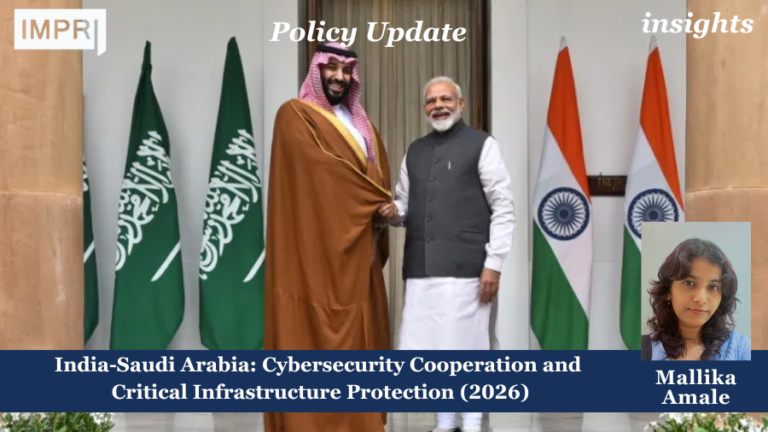
The institutionalisation of the Strategic Partnership Council (SPC) in 2019 marked the beginning of India-Saudi cooperation in cybersecurity and the safeguarding of critical infrastructure. Discussions commenced under broader defence, security, and technological cooperation frameworks of SPC. India’s priorities are to safeguard its Digital Public Infrastructure (DPI) and the telecom sector along with its cyberspace. Its digital economy is valued at 11.74 percent of its national income, thus contributing USD 402 billion to the GDP. Considerable progress has been made in capacity development, legal, and technical aspects of cybersecurity by India as evident by its Tier 1 status in the International Telecommunication Union (ITU) Global Cybersecurity Index. Similarly, Saudi Arabia’s Vision 2030 constitutes cybersecurity as a cornerstone for its economic resilience and development. Vision 2030 seeks to diversify the Saudi economy, build smart cities such as NEOM, and secure critical oil, gas, desalination, and logistics infrastructure.
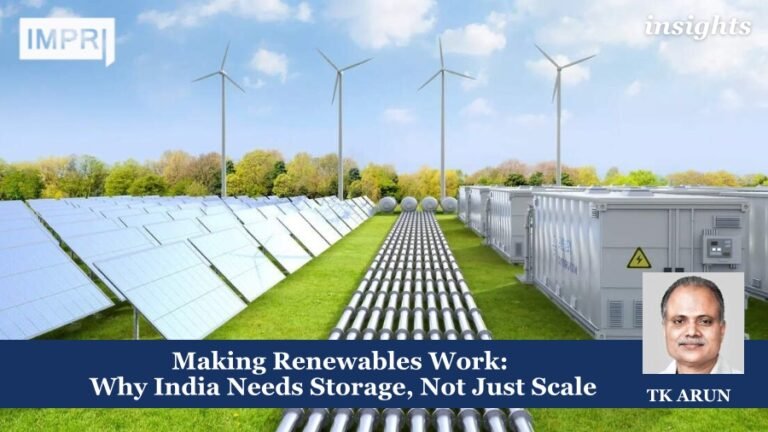
India continues to add renewable power generation capacity without any coherent strategy for its full utilisation, often ordering RE generation to back down to maintain grid stability.
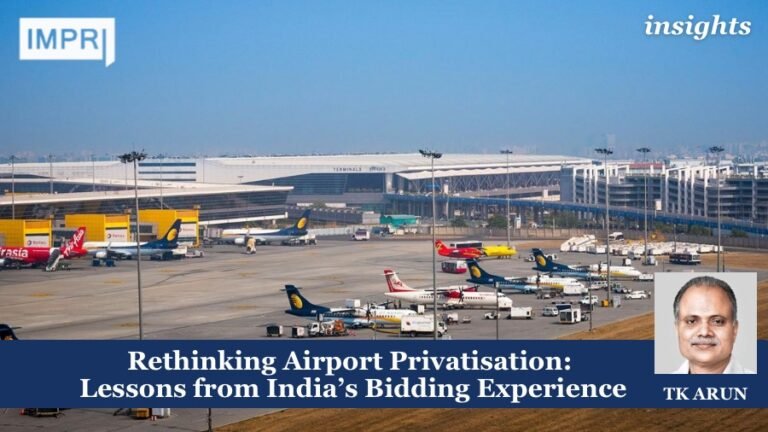
Airports are local monopolies, for the most part. Who gets to operate them and on what terms matter to the public at large. Sure, there is a regulator, the Aeronautic Economic Regulatory Authority of India to regulate aeronautical and other charges at any given airport.

In recent years several countries in the Middle East, especially from the GCC (Gulf Cooperation Council), have weaponised their foreign policies to achieve their perceived geopolitical objectives.
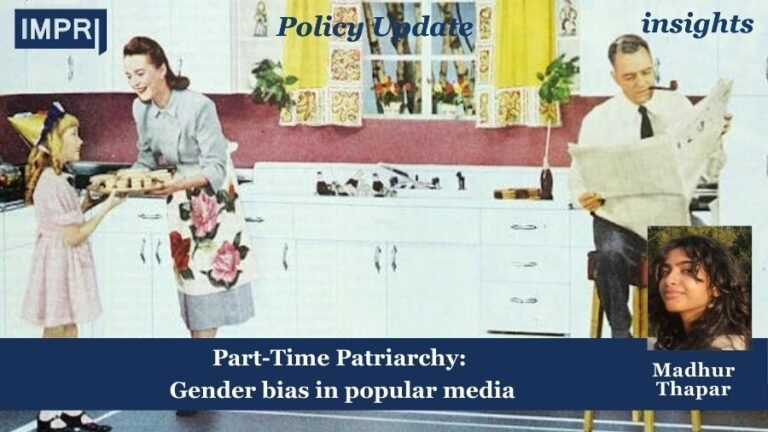
Patriarchy refers to a system of social organisation in which power, authority and privilege are unevenly distributed in favour of men. It works not only through formal institutions like the state, family or workplace but also through culture, stories, symbols, humour, and everyday representations that normalise unequal gender relations.