Category Center for the Study for Finance and Economics

make in india

Make in India-2014

The Make in India campaign is a paradigm change in the Indian economic policy that was launched by the Prime Minister, Narendra Modi, in September 2014. It was at this very critical juncture when the world was doubting whether India could sustain its high population birth rates, and at the same time keep up with the economic development process.
Government e-Marketplace (GeM), 2016

Government e-Marketplace (GeM), 2016

Policy UpdateBavleen Background The Government e‑Marketplace (GeM) portal is India’s flagship digital platform for government procurement of goods and services, launched on 9 August 2016 by the Ministry of Commerce & Industry (MoCI) to drive greater efficiency, transparency, and inclusiveness in…

US

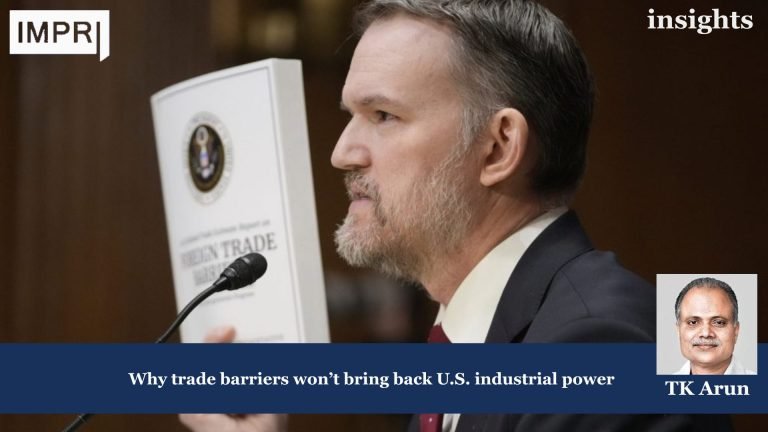
Why trade barriers won’t bring back U.S. industrial power

Changes in America’s economic structure, coupled with its global dominance in the services sector, explain why manufacturing now occupies only a modest share of the nation’s GDP

The latest installment of the Make-America-Great-Again (MAGA) assault on globalised economic growth takes the form of an import duty of 100% on a segment of pharmaceuticals.

Municipal

Understanding the Flaws in India’s Municipal Fiscal Architecture

Urban India generates nearly two-thirds of the national GDP, yet its municipalities control less than one per cent of the country’s tax revenue. Indian cities are not generating revenue, not because they are inefficient, but because the fiscal architecture has failed them. Today, municipal finance is dependent on intergovernmental transfers, loans, and schemes. The core of the problem lies in the centralisation of taxation powers.

Modified Special Incentive Package Scheme (M-SIPS) - 2012

Modified Special Incentive Package Scheme (M-SIPS) – 2012

Modified Special Incentive Package Scheme (M-SIPS) started in July 2012 as a three-year scheme addressing India’s growing import dependency. In 2015, it underwent its first major revision, extending the program to 2020, adding 15 verticals, and simplifying approval processes to encourage faster investment. By 2017, strategic amendments further expedited procedures and extended deadlines to the end of 2018. Applications closed in December 2018, but implementation continues. In 2020, the Scheme for Promotion of Manufacturing of Electronic Components and Semiconductors (SPECS) was launched as a successor, focusing on incentivizing component manufacturing with 25% capital expenditure support.

India

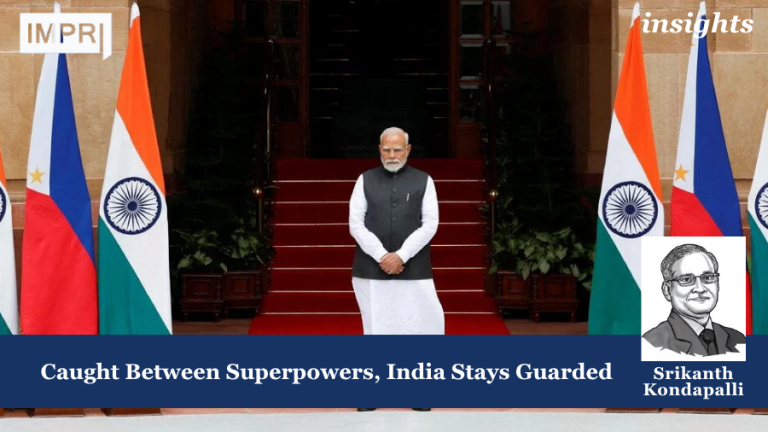
Caught Between Superpowers, India Stays Guarded

At the centre of the issue is the US goods trade deficit with China – $295.4 billion in 2024. President Donald Trump, in his 2016 election campaign, said China was “raping” the US. It needs to be noted that while China, Mexico, and Canada had massive trade surpluses with the US, the latter imposed tariffs on almost all countries.

Lending

Why Easy Lending Won’t Spark an Investment Revival

The RBI’s latest monetary policy and regulatory pronouncements are a strange mixture of caution and recklessness. The policy appreciates that with inflation depressed, not only because of well-behaved food prices but also because of deficient demand that has sent fast-moving consumer goods companies into depression, real interest rates in the economy are high.

Talk to Us