
Category In News

National Knowledge Research

Transforming Education and Research: The Impact of India’s National Knowledge Network 2010

The National Knowledge Network (NKN) is an advanced, pan-India network introduced to connect universities, research institutions, libraries, laboratories, healthcare, and agricultural institutions using a high-bandwidth and low-latency backbone. The objective of this network is to enable seamless access to information, creating an efficient knowledge society. without any boundaries or restrictions.

India-ASEAN

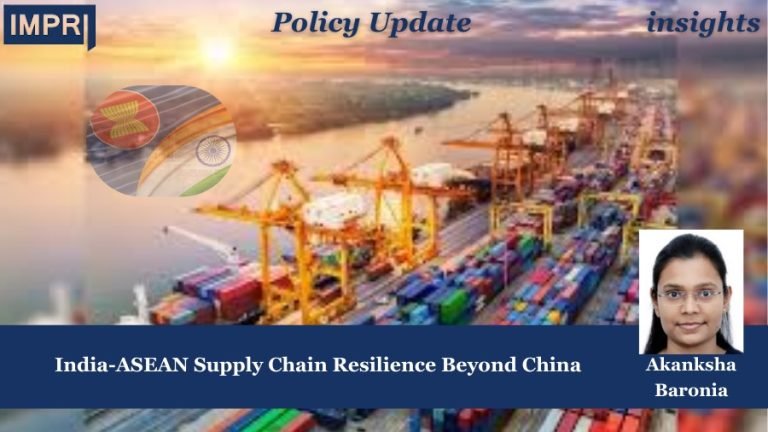
India-ASEAN Supply Chain Resilience Beyond China

Countries have been attempting to improve supply chain linkages as well as searching for resilient and long-term value chains. Countries are interconnected and dependent on one another countries for production inputs leading to exports. The COVID-19 and subsequent trade measures have led to restricting the flow of goods and services between the countries. Today, value chain and intra-industry trade account for more than half of Asia’s trade. The pandemic is also seen as an opportunity to rebuild trade partnerships and supply chain linkages.

Cultural Diplomacy

India – Australia: Cricket and Cultural Diplomacy

India- Australia: Cricket and Cultural Diplomacy have a dynamic relationship in which culture serves as a diplomatic bridge. Cultural diplomacy between the two countries emphasizes how people to people, culture and soft power can help to build better bilateral relations. Cricket has become one of the most powerful unifying forces between India and Australia, and it has defined 70 years of sporting and cultural relations between the nations.

SMART-PDS-2023-2026

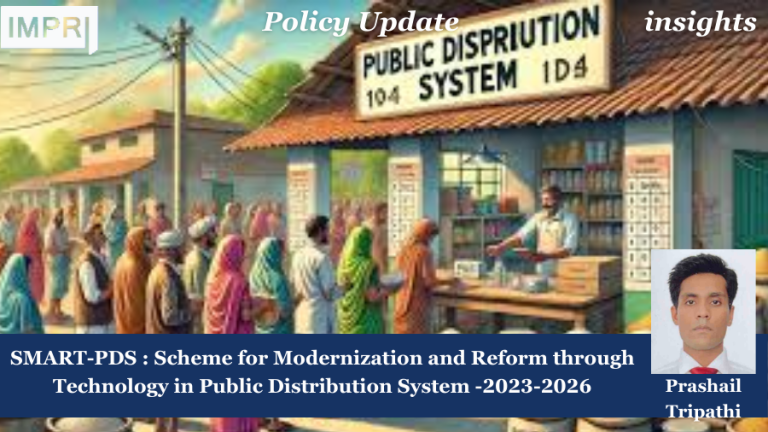
SMART-PDS: Scheme for Modernization and Reform through Technology in Public Distribution System

SMART-PDS is a centrally sponsored, technology-oriented reform initiative by the Department of Food & Public Distribution (DFPD), Ministry of Consumer Affairs, aimed at enhancing and consolidating the IT infrastructure of India’s Public Distribution System (PDS). With a total budget of ₹349.9 crore, the three-year (April 2023–March 2026) approved program builds on previous computerisation attempts (End-to-End TPDS and the Integrated Management of PDS/IM-PDS) and introduces a modern, standardized national platform that unifies state and central operations throughout the PDS lifecycle.

Innovation

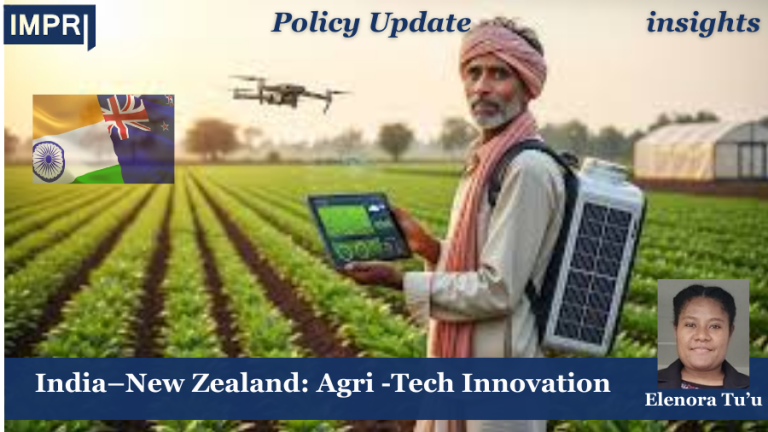
India–New Zealand: Agri -Tech Innovation

India–New Zealand Agri-Tech Innovation is emerging as more than a technical exchange; it is a contest over models of innovation and inclusion. At a time when agriculture faces the twin pressures of climate resilience and global market integration. The partnership can be transformational, but only if deliberate adaptation, rights-based data governance, and financing follow the technology. Without these, the result risks being one of two failures: techno-dumping (NZ solutions ill-fitted to India) or stalled scalability (India pilots remaining fragmented). 

Copy of Insights 13

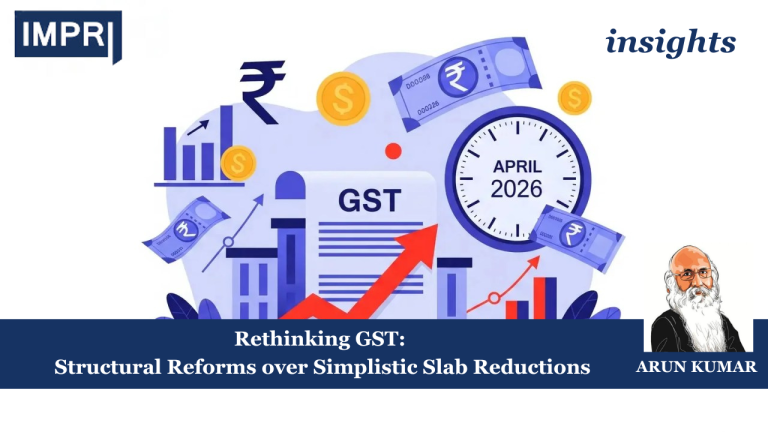
Rethinking GST: Structural Reforms over Simplistic Slab Reductions

There is much talk of the proposed simplification of India’s complex GST regime. Prime minister Narendra Modi in his Independence Day speech, said, "…The government will implement next generation GST reforms which will bring down tax burden on the common man."

gst

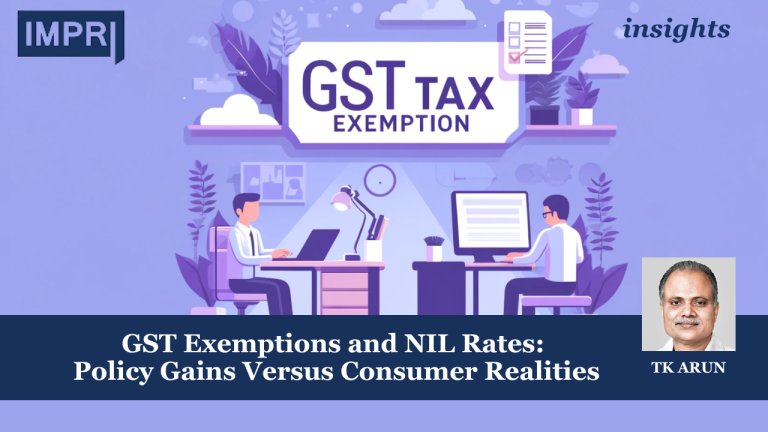
GST Exemptions and NIL Rates: Policy Gains Versus Consumer Realities

Health insurance for individuals has been made exempt from Goods and Services Tax. GST has been removed from life insurance premium payments for individuals, as well. Both used to be charged GST at 18%. So, this represents major relief for individuals, this lowering of the cost of buying insurance by nearly a fifth, right?  That magnitude of reduction in the cost of either life or health insurance is merely an illusion. The cost of insurance might come down somewhat, but definitely not by 18%.

Talk to Us