Category Research

Tariff

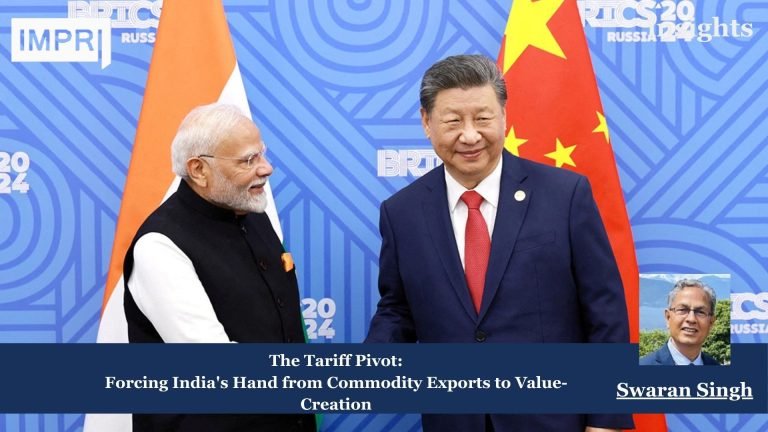
The Tariff Pivot:Forcing India’s Hand from Commodity Exports to Value-Creation

After more than three years, China’s top diplomat and Politburo member Wang Yi visited New Delhi this week for the 24th round of India-China Special Representative talks.

The last round took place in December 2019, but the Galwan Valley clashes in June 2020 brought the dialogue to a halt. Talks resumed only in December 2024 in Beijing, following a Narendra Modi–Xi Jinping meeting in Kazan, Russia, in October that year.
Insights poster 5

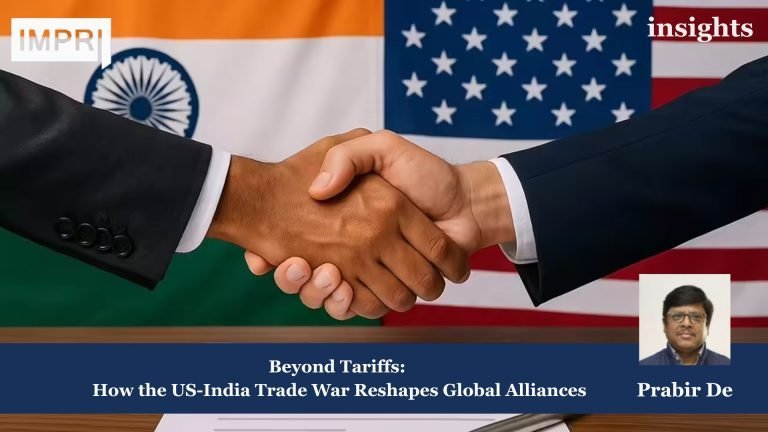
Beyond Tariffs:How the US-India Trade War Reshapes Global Alliances

President Donald Trump signed an executive order earlier this month, imposing an additional 25% tariff on India for its imports from Russia, thereby raising the total tariff level to 50%. This World Trade Organization (WTO)-inconsistent tariff, whose implementation was notified by the Trump administration on Tuesday, is going to heavily affect India’s $48.2-billion merchandise exports to the US. The merchandise exports account for almost 60% of India’s export to the US. The US has already raised the tariffs for all other trade partners with a variation between 10% to 50%.

Copy of Insights 2

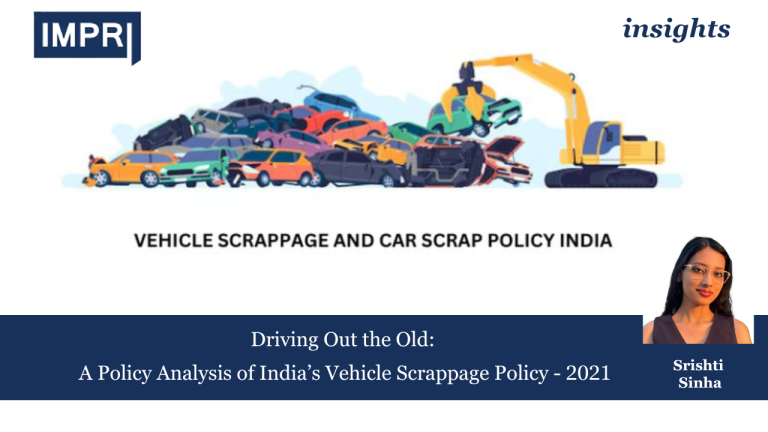
Driving Out the Old: A Policy Analysis of India’s Vehicle Scrappage Policy – 2021

In 2021, the Government of India launched the V oluntary Vehicle-Fleet Modernization Programme (VVMP), commonly referred to as the Vehicle Scrappage Policy, with a threefold ambition: to improve road safety, reduce urban air pollution, and kick-start a domestic circular economy for vehicle materials. The policy couples regulatory instruments with financial incentives and institution-building to formalize how “end-of-life” vehicles (ELVs) are retired and recycled.

Copy of Copy of Copy of Policy Update

Assessing India’s Digital Personal Data Protection Act, 2023: Policy Implications and Future Outlook

India is a rapidly digitalising  state with over 954.40 million users. The reach of internet services is immense, with various sectors like healthcare, banking, education and finance adopting the digital platforms to dispense their services.

India-Bangladesh counterterrorism Information Sharing

India–Bangladesh: Counterterrorism Information Sharing

India- Bangladesh share South Asia’s longest border, sharing landmass with over 4000 km running across states like West Bengal, Tripura, and Assam, as well as riverine porous terrain. This historical geography has enabled illegal migration, human trafficking, insurgent safe havens, and extremist networks. In the 1990s and early 2000s, concerning extremist networks such as the United Liberation Front Asom (ULFA) and the National Democratic Front of Bodoland (NDFB) often used Bangladeshi soil for shelter, while Bangladeshi groups like Jamaat-Ul-Mujahdeen Bangladesh (JMB) exploited Indian territories for recruitment and logistics to and from.

National food Security Mission (NFSM)

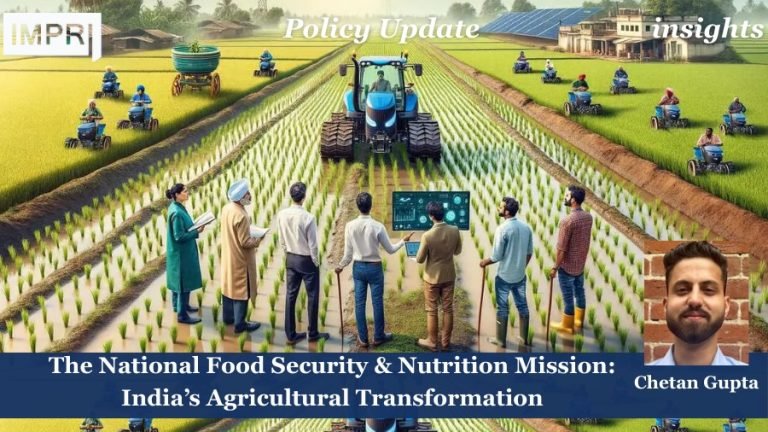
The National Food Security & Nutrition Mission (NFSM): India’s Agricultural Transformation

National Food Security Mission (NFSM) is a Centrally Sponsored Scheme launched in October 2007. The National Development Council (NDC) adopted a resolution in its 53rd meeting, held on 29 May 2007, to launch a Food Security Mission aimed at increasing the production of rice, wheat, and pulses and securing food security for the nation.

Talk to Us