Category Environment, Energy, Climate Change and Sustainable Development

Union Budget 2026-27: Environmental Concerns Remain on the Periphery

The IMPRI Center for Environment, Climate Change and Sustainable Development (CECCSD), IMPRI Impact and Policy Research Institute, New Delhi, organised a panel discussion on “The Environment and Union Budget 2026-27” under its 7th Annual Series of Thematic Deliberations and Analysis of the Union Budget 2026-27, as part of IMPRI. The discussion critically examined the environmental priorities, fiscal allocations, and policy directions reflected in the Union Budget 2026-27.

mountain

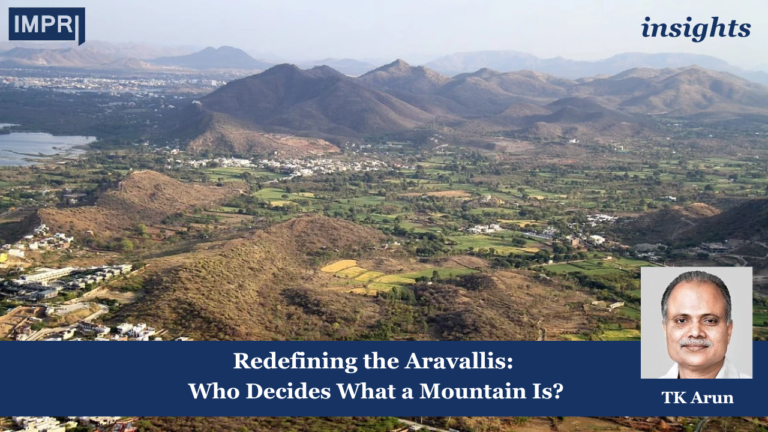
Redefining the Aravallis: Who Decides What a Mountain Is?

TK Arun When mountains are measured by committees and metres, what’s under threat is not just geology but the idea of environmental protection itself. A rose, we have been told, is a rose. Mountains are different. Mountains tower over the…

EPAYF

Fellows Blog List and Details: EPAYF Environment Policy and Action Youth Fellowship- Cohort 3.0

EPAYF Environment Policy and Action Youth Fellowship- Cohort 3.0 | Theme: People, Power & the Planet: Reimagining Environmental Policy for a Just and Equitable Future | A Three-Month Online Immersive Introductory Leadership Certificate Training Fellowship Program | Dec 2025-Feb 2026 | IMPRI #WebPolicyLearning EPAYF Program Details…

118 1

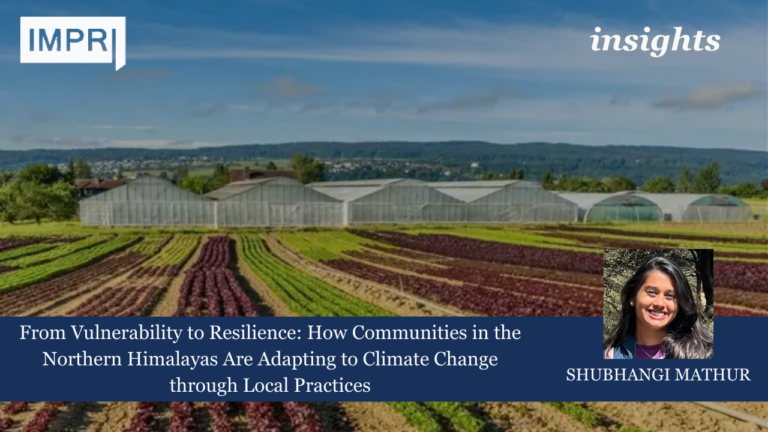
From Vulnerability to Resilience: How Communities in the  Northern Himalayas Are Adapting to Climate Change  through Local Practices 

The Himalayas is frequently described as “fragile,” but vulnerability here is not just  ecological, but also deeply social and economic. Erratic and declining rainfall now arrives outside  traditional crop cycles. Longer dry spells and early frosts affect soil fertility. Melting glaciers and  drying springs reduce water availability. Deforestation increases landslides and soil erosion. At the same time, rising temperatures increase energy demand while weakening already fragile supply chains. 

117 1

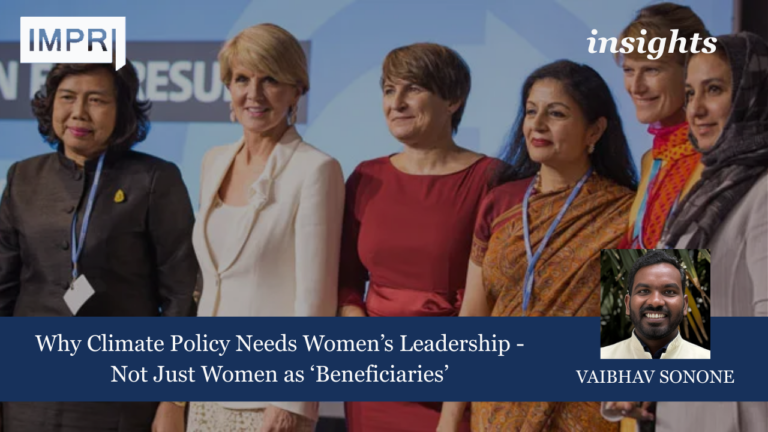
Why Climate Policy Needs Women’s Leadership – Not Just Women as ‘Beneficiaries’

Across India, climate and livelihood policies increasingly recognize women, but largely as vulnerable groups or beneficiaries. Women are visible in policy documents, State  Action Plans on Climate Change, watershed programmes, and rural livelihood missions as recipients of  support or participants in implementation. While this recognition is important, it reflects a limited framing  of women’s role in climate adaptation. So, a question arises- why is women’s leadership missing at grassroot?

116 1

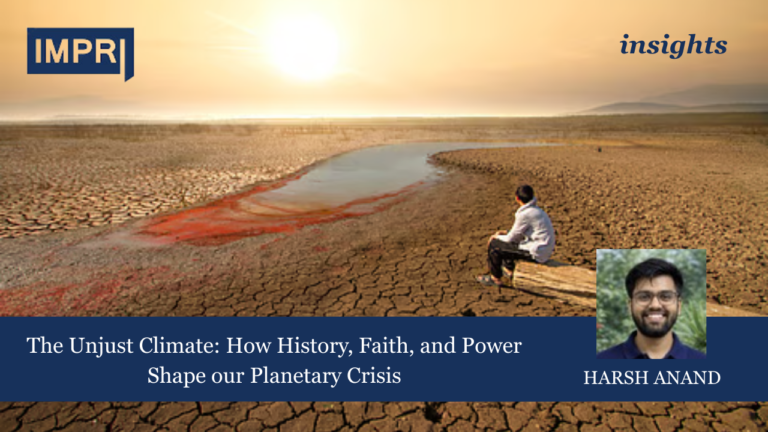
The Unjust Climate: How History, Faith, and Power Shape our Planetary Crisis

The climate crisis, often framed as a purely scientific or technological challenge, is in reality a deeply entangled web of social, political, ethical, and historical issues. While global temperatures continue to rise, threatening ecosystems and human livelihoods, a critical paradox persists: those who have contributed least to the problem often bear its heaviest burdens.

115 1

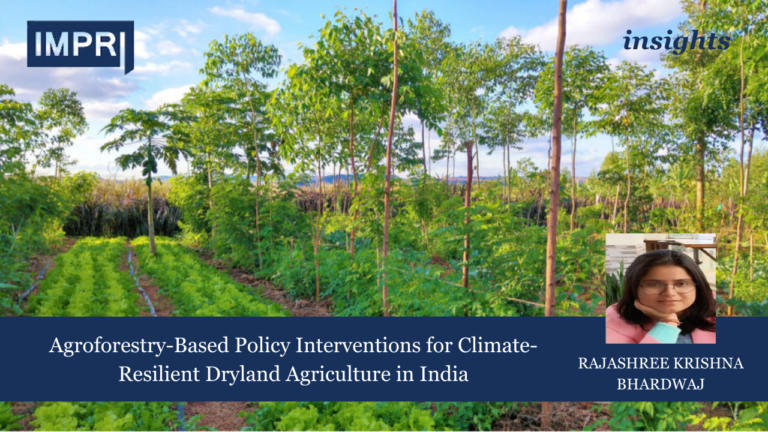
Agroforestry-Based Policy Interventions for Climate-Resilient Dryland Agriculture in India

Dryland agriculture sustains nearly half of India’s cultivated area and supports the livelihoods of millions of smallholder farmers. Yet, it remains one of the most vulnerable sectors in the face of climate change — grappling with unpredictable rainfall, rising temperatures, frequent droughts, and land degradation. In this context, agroforestry emerges not only as a pragmatic farming practice, but also as a strategic policy imperative to build climate-resilient dryland systems that enhance productivity, ecological balance, and rural livelihoods.