
Category Center for Human Dignity and Development

Labour

The Pro-Business Pivot: How Modern Labour Codes Prioritize Industry Over Protection

That Labour Codes will create a divide between workers and businesses was a given. The former have opposed them since 2019 when the Code on Wages was passed by parliament followed by the other three in 2020 – the Industrial Relations Code, the Code on Social Security and the Occupational Safety, Health and Working Conditions Code. Businesses have been pressing for their implementation since then because they know they will benefit from them. The government presents these Codes as beneficial to labour since they are supposed to simplify a very complex and outdated system. 
HIV

Beyond the Red Ribbon: Humanizing the Future of HIV Care in India

When India diagnosed its first case of HIV in 1987, it was met with silence, fear, and judgment. The virus was poorly understood, and those living with it were often treated as outcasts -denied care, employment, or even the dignity of empathy. Hospitals hesitated to admit them, schools refused their children, and neighbours withdrew in fear. It was a time when HIV was not just a virus — it was a social sentence.

Cancer

Expanding the Definition: The Case for Recognizing Cancer-Related Disabilities in India

India is witnessing a troubling paradox. Advances in diagnosis and treatment mean that more people are surviving cancer than ever before. Yet the very systems that should protect these patients and survivors are failing to recognise the lasting impact of cancer on their lives.

Copy of Insights 1

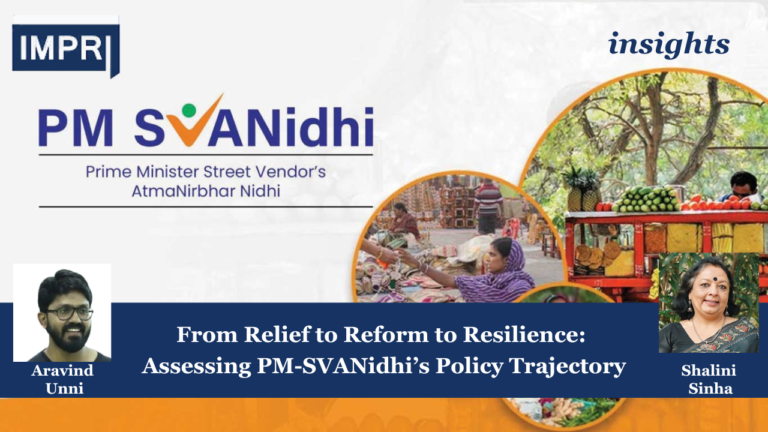
From Relief to Reform to Resilience: Assessing PM-SVANidhi’s Policy Trajectory

When we speak of successful government initiatives of the past decade, popular missions like the Swachh Bharat Mission (SBM) usually dominates the conversation. Yet, quietly, another programme has been impacting the lives of the millions of India’s urban street vendors, who sustain the everyday economy of Indian cities.

Legacy

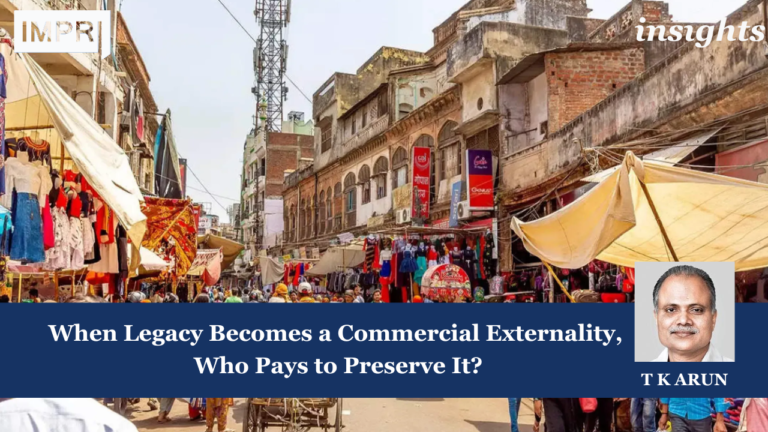
When Legacy Becomes a Commercial Externality, Who Pays to Preserve It?

TK Arun As Annapurna Bhandar of Chandini Chowk faces closure, can Indian cities take a cue from Paris or San Francisco to protect legacy shops? When a sudden rent increase forces a thriving commercial establishment — that has a century-old…

SIM

SIM-Binding: A Tool for Security That Demands a Foundation of Trust

There has been a sharp pushback against the government’s directive to all mobile phone makers and importers to preload, within 90 days, the government app, Sanchar Sathi, on phones freshly sold in the country. In the case of another related security-oriented mandate that seeks all messaging and communications apps to stay bound all the time to a particular SIM issued to the user, the response has been more mixed: while cellular operators think this is a good idea, the Broadband India Forum, which represents the interests of stakeholders in cyber business, has sought more time and consultations.

Talk to Us