
Category Center for International Relations and Strategic Studies

Trump

Trump’s “Make It in America” Push Is Falling Flat

The most momentous event of the last week has been the Gaza ceasefire. It has brought respite for Palestinians from genocidal slaughter and famine, and brought 20 hostages back home to Israel. The peace deal is still fragile, and could unravel.

1 1

From Reproductive Rights to Global Responsibility: Why India’s Feminist Foreign Policy Must Center Women’s Bodily Autonomy

The term “Feminist Foreign Policy” (FFP) is frequently discussed in various global capitals.
While countries such as Sweden, Canada, and Germany have adopted it, the discourse often
centers on issues like representation, aid, and trade. However, for FFP to be genuinely
transformative—particularly for an emerging global power like India—it needs to address a
fundamental issue: bodily autonomy.

5

Can Feminist Foreign Policy Truly Transform Global Power? Or Is It Reproducing the Same Old Inequalities?

Over the last two decades, ideas from feminist philosophy have slowly made their way into global politics. Governments worldwide now speak of Feminist Foreign Policy (FFP), and the United Nations promotes its Women, Peace and Security (WPS) agenda.

3

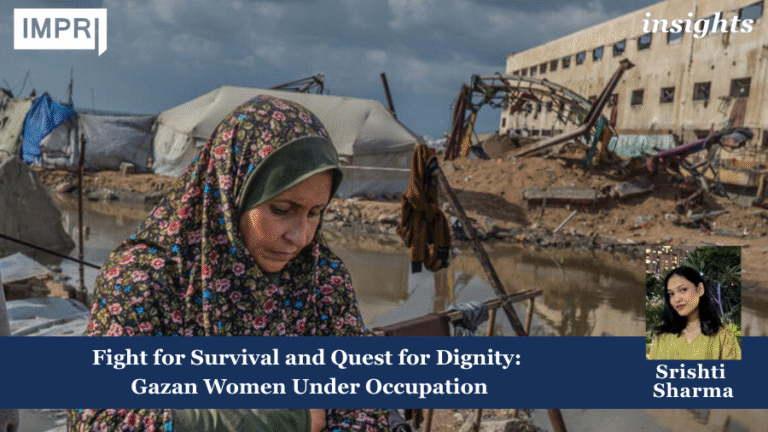
Fight for Survival and Quest for Dignity: Gazan Women Under Occupation

The heart-wrenching pictures of the amusement park in Khan Younis capture a devastating
contrast, where vibrant echoes of children’s laughter are replaced by screams of horror, a grim depiction of how Israeli bombardment has left Palestine, particularly Gaza, in ruins.

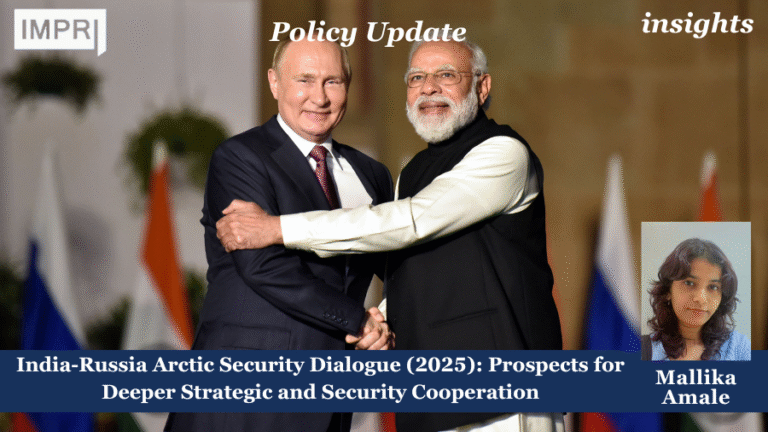
India-Russia Arctic Security Dialogue (2025): Prospects for Deeper Strategic and Security Cooperation

India-Russia Arctic Security Dialogue (2025): Prospects for Deeper Strategic and Security Cooperation

The Arctic region is emerging as a strategic arena for geopolitical competition among both Arctic and non-Arctic superpowers. It comprises the northernmost parts of Norway, Sweden, Finland, Russia, the United States, Canada, Greenland (Denmark’s autonomous territory), and Iceland. The once largely ice-covered Arctic ocean is melting due to the accelerating effects of climate change, thereby opening up new opportunities for energy exploration and potential transit routes which are significantly shorter than the traditional Suez canal route.

Talk to Us