Category Center for Work and Welfare

Commercial

Who Should Pay to Preserve Urban Commercial Heritage?

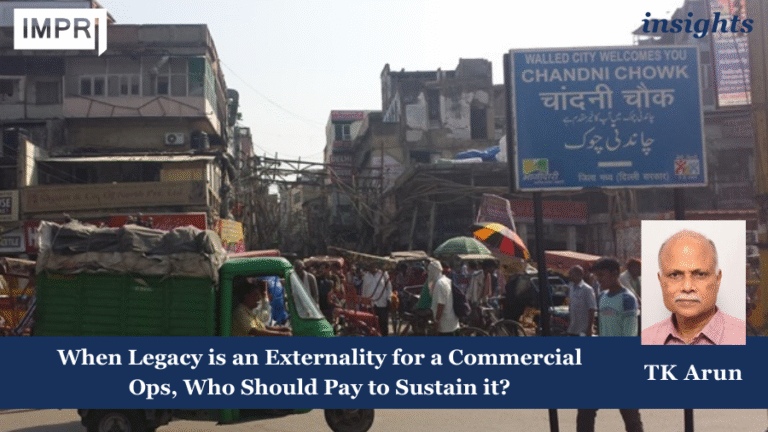
When a sudden rent increase forces a thriving commercial establishment — that has a century-old legacy and is a hallmark of a historic locality — to shut shop, is there any sensible alternative to the mournful death of a chunk of the city’s living tradition? 
Presidential

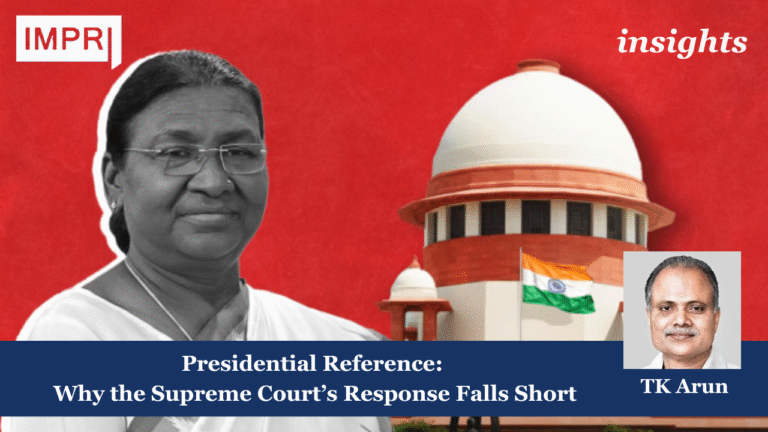
Presidential Reference: Why the Supreme Court’s Response Falls Short

The Supreme Court’s reply to the Presidential reference is a big letdown. The Constitution Bench’s task was to ascertain if the Court can prescribe timelines for Governors and the President to decide on a Bill that comes up before them, and whether the conduct of Governors and the President is justiciable.

Mamdani

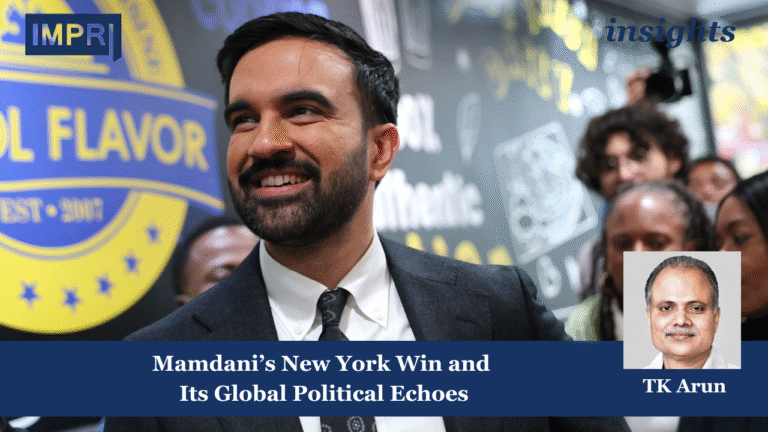
Mamdani’s New York Win and Its Global Political Echoes

Hyperbole aside, Zohran Mamdani’s victory in New York City is a significant development that will reverberate in US national politics, and find resonance abroad.

Socialists and leftists in Europe have declared validation of their ideology by American voters, and hope to do better in their own countries, states and cities as a result.

Ontario

Did an Ontario TV Ad Jeopardize India’s US Trade Deal?

Has the Canadian prime minister, Mark Carney, eroded the chances of a trade deal between India and the US, with his apology to the US President over a television spot that a Canadian state government recently ran on US networks? The probability is strong that he has, even if purely inadvertently.

Unions

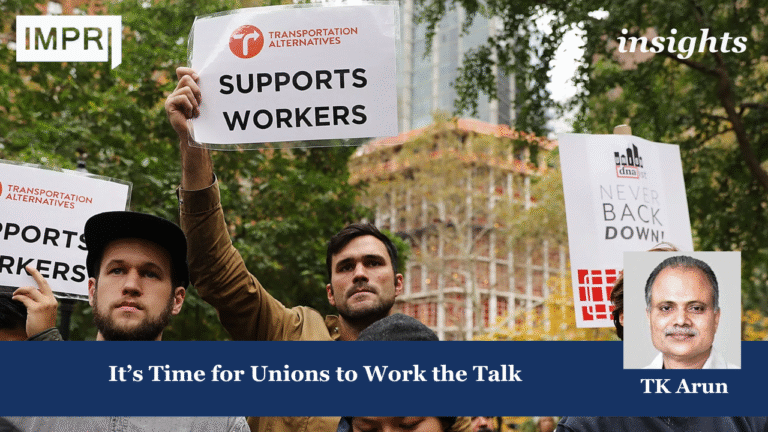
It’s Time for Unions to Work the Talk

The four labour codes long in the making have finally been notified. The good thing is that a legal framework now exists for a company inclined to provide social security for the gig workers it employs to actually provide it. Uber, for example, says it has been waiting for such a legal framework. Any labour law is only as good as its enforcement. Where workers and their unions are strong enough to compel enforcement, laws are complied with.

PU posting 2.0 nanditha blog

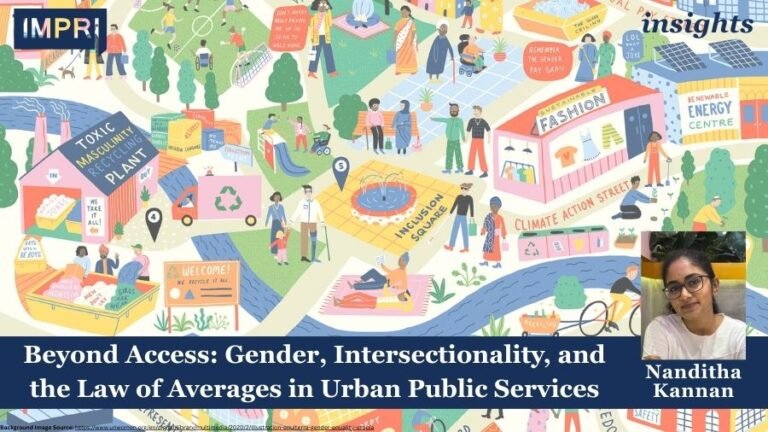
Beyond Access: Gender, Intersectionality, and the Law of Averages in Urban Public Services

Indian cities are often celebrated as engines of growth and opportunity, driven by expanding infrastructure and ambitious urban development projects. However, it can be noticed that access to public spaces and essential services is not experienced uniformly across social groups in such urban dwellings. This article reflects on a research journey that examines gendered inequalities in urban public spaces and services.

Talk to Us