Category Public Policies, Programs and Schemes

PU insights poster

Training Management Portal, Ministry of Panchayati Raj

When we think of governance, most of us imagine big offices, ministers, and heavy paperwork. But real governance, the kind that touches people’s everyday lives, actually happens in villages, in small meetings under trees, or in community halls where someone speaks up about a broken handpump or an unused ration card. That’s the world of Panchayati Raj Institutions (PRIs), and it’s a world that runs on the shoulders of thousands of elected representatives, many of whom are women, first-timers, or people who’ve never stepped into a leadership role before.

Free coaching

Free Coaching for SCs, OBCs, and beneficiaries of the PM CARES Children Scheme

The Free Coaching for SCs, OBCs, and beneficiaries of the PM CARES Children Scheme is an initiative taken by the Ministry of Social Justice & Empowerment, Government of India. The scheme aims to provide high-quality coaching to Scheduled Castes (SCs), Other Backward Classes (OBCs), and beneficiaries of the PM CARES Children scheme, who were included from 2024-25. These groups often face systemic inequalities and exclusion that hinder their access to educational resources.

Fostering Inclusivity in Communication Technology: Knowledge and Resource Centre for Accessibility in ICT (KAI), 2022

Fostering Inclusivity in Communication Technology: Knowledge and Resource Centre for Accessibility in ICT (KAI), 2022

The Ministry of Electronics and Information Technology (MeitY) launched the KAI project, led by C-DAC Pune, to develop national ICT accessibility standards and make digital technology more inclusive for persons with disabilities in India.

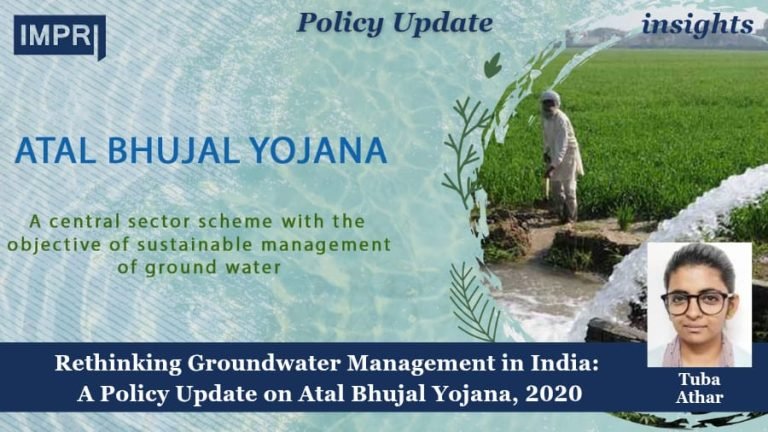
Rethinking Groundwater Management in India: A Policy Update on Atal Bhujal Yojana, 2020

Rethinking Groundwater Management in India: A Policy Update on Atal Bhujal Yojana, 2020

Groundwater is a significant source of freshwater and is crucial for domestic, agricultural, and industrial purposes. However, unchecked extraction, overexploitation, and contamination pose serious threats to its sustainability

Talk to Us