Category Center for Environment, Climate Change and Sustainable Development

EPAYF

Fellows Blog List and Details: EPAYF Environment Policy and Action Youth Fellowship- Cohort 3.0

EPAYF Environment Policy and Action Youth Fellowship- Cohort 3.0 | Theme: People, Power & the Planet: Reimagining Environmental Policy for a Just and Equitable Future | A Three-Month Online Immersive Introductory Leadership Certificate Training Fellowship Program | Dec 2025-Feb 2026 | IMPRI #WebPolicyLearning EPAYF Program Details…
Urban Policy & Local Governance Youth Fellowship (UPLGYF) – Cohort 2.0

Fellows blog list & Details: UPLGYF Urban Policy & Local Governance Youth Fellowship- Cohort 2.0

UPLGYF Urban Policy & Local Governance Youth Fellowship Cohort 2.0 | An Online International Summer School Program | A Three-Month Online Immersive Introductory Leadership Certificate Training Fellowship Program | Dec 2025 – Feb 2026 | IMPRI #WebPolicyLearning Program Details Field Details Program Name UPLGYF…

Copy of Insights 3 1

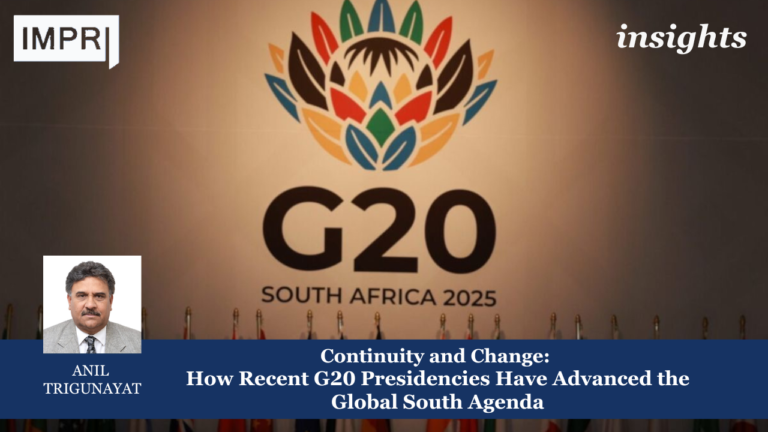
Continuity and Change: How Recent G20 Presidencies Have Advanced the Global South Agenda

Anil Trigunayat The last four years of G20 presidency have been remarkable in more than many ways. The most important dimension was that it has been steered by the developing countries and the Global South agenda starting with Indonesia, India,…

Photo 17

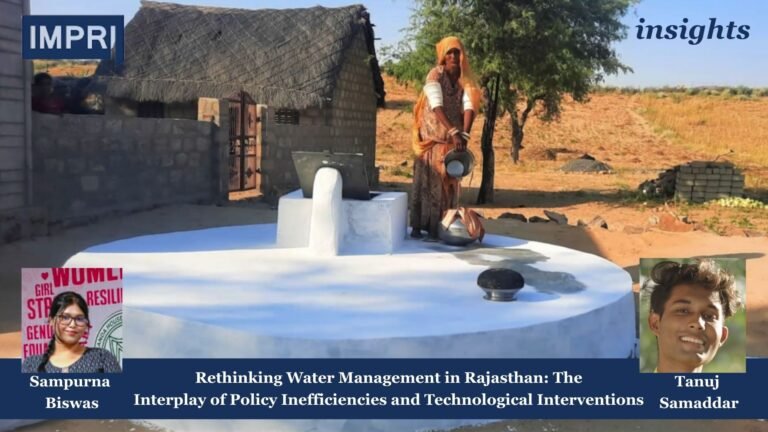
Rethinking Water Management in Rajasthan: The Interplay of Policy Inefficiencies and Technological Interventions

This article examines the ever-existent problem of water scarcity in Rajasthan with a special focus on the district of Barmer, and its direly grave socio-economic implications on agriculture, health, and education. In their periods of water shortages, the systems and policy frameworks in place fail to uphold themselves perpetuating the unending cycle of poverty.

118 1

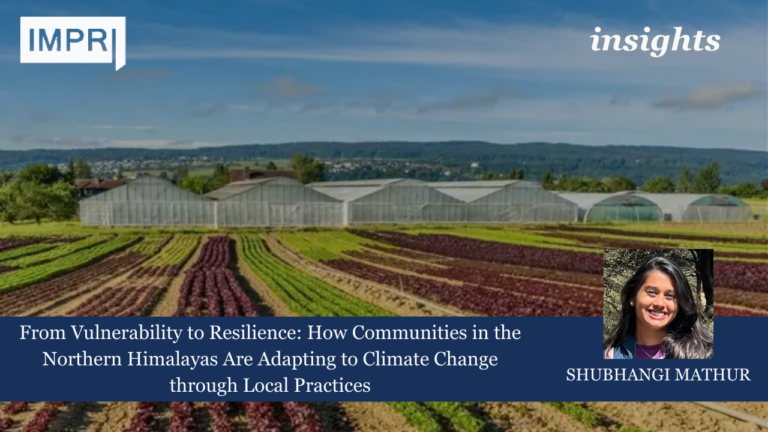
From Vulnerability to Resilience: How Communities in the  Northern Himalayas Are Adapting to Climate Change  through Local Practices 

The Himalayas is frequently described as “fragile,” but vulnerability here is not just  ecological, but also deeply social and economic. Erratic and declining rainfall now arrives outside  traditional crop cycles. Longer dry spells and early frosts affect soil fertility. Melting glaciers and  drying springs reduce water availability. Deforestation increases landslides and soil erosion. At the same time, rising temperatures increase energy demand while weakening already fragile supply chains. 

117 1

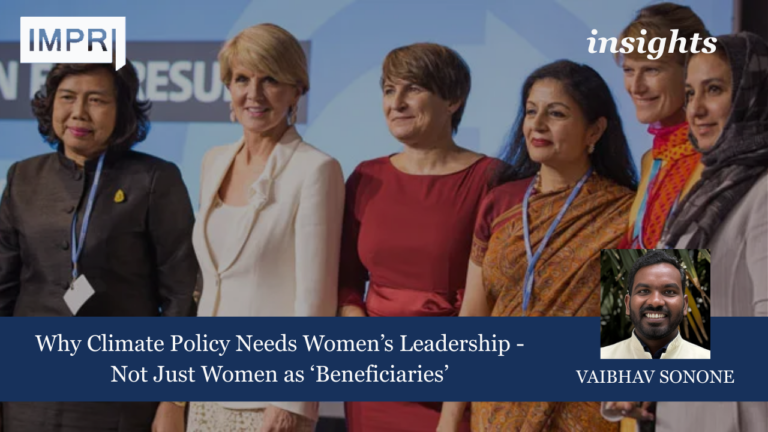
Why Climate Policy Needs Women’s Leadership – Not Just Women as ‘Beneficiaries’

Across India, climate and livelihood policies increasingly recognize women, but largely as vulnerable groups or beneficiaries. Women are visible in policy documents, State  Action Plans on Climate Change, watershed programmes, and rural livelihood missions as recipients of  support or participants in implementation. While this recognition is important, it reflects a limited framing  of women’s role in climate adaptation. So, a question arises- why is women’s leadership missing at grassroot?

115 1

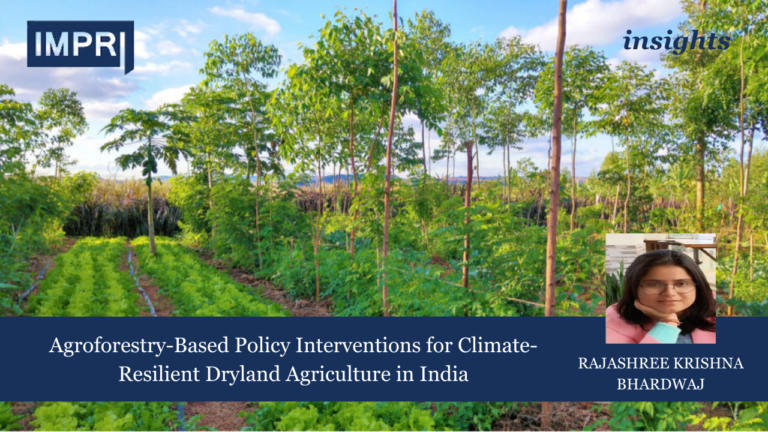
Agroforestry-Based Policy Interventions for Climate-Resilient Dryland Agriculture in India

Dryland agriculture sustains nearly half of India’s cultivated area and supports the livelihoods of millions of smallholder farmers. Yet, it remains one of the most vulnerable sectors in the face of climate change — grappling with unpredictable rainfall, rising temperatures, frequent droughts, and land degradation. In this context, agroforestry emerges not only as a pragmatic farming practice, but also as a strategic policy imperative to build climate-resilient dryland systems that enhance productivity, ecological balance, and rural livelihoods.

Talk to Us