Category Gender Impact Studies Center

Vajpayee

Vajpayee: The Gentle Architect of Modern India

I have a vivid memory of a gleeful and beaming laugh of the great statesman and leader, former prime minister Atal Bihari Vajpayee, who was born on this day in 1924 in Gwalior. An affable personality, Vajpayee would express his love for Mithila’s Rohu and his appreciation for Maithili language.
world

How Big Shifts Are Remaking the World

A remarkable feature of the world in the wake of President Trump’s assault on the global trading and security system is the resilience of global interdependence.

Delhi

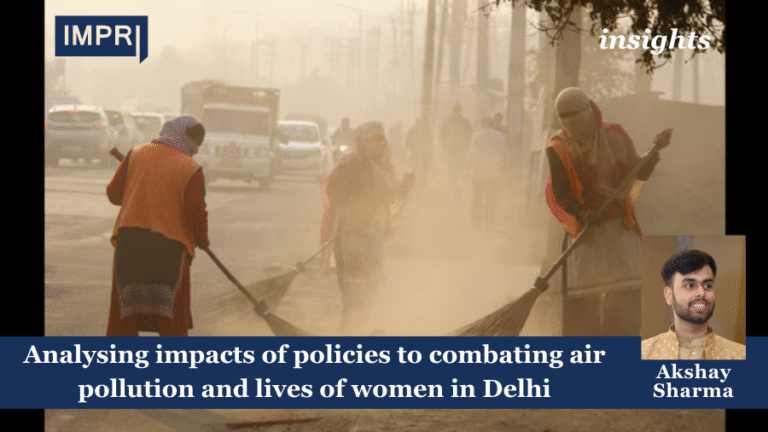
Analysing impacts of policies to combating air pollution and lives of women in Delhi

Delhi has become a centre of controversy and politics for the continuously rising and persisting levels of high AQI. Rising vehicular emission, industrial expansion, burning of stubble, etc. remains to be the prime suspected reason for this. States keep blaming each other for transmitting it with lesser stricter action against polluters.

Energy

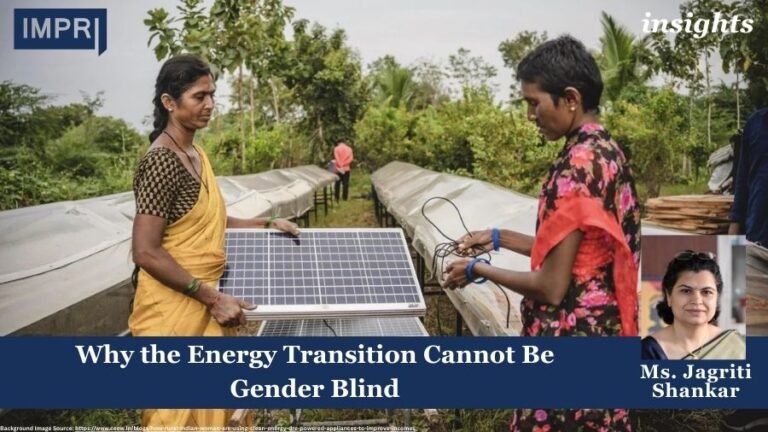
Why the Energy Transition Cannot Be Gender Blind

Policies are often described as gender neutral. In reality, they are rarely neutral. Women, men, and different social groups experience policies differently because they do not have equal access to resources, opportunities, or decision-making power. Social norms, unequal asset ownership, unpaid care responsibilities, mobility constraints, access to finance, education, and institutional power all shape how people engage with public programs.

PU posting 2.0 nanditha blog

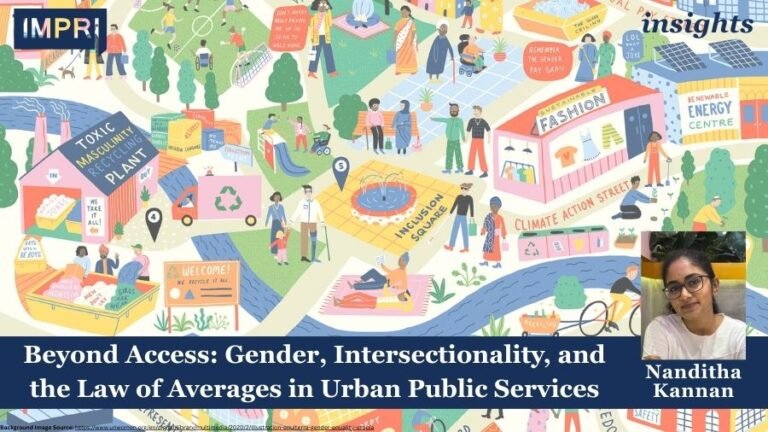
Beyond Access: Gender, Intersectionality, and the Law of Averages in Urban Public Services

Indian cities are often celebrated as engines of growth and opportunity, driven by expanding infrastructure and ambitious urban development projects. However, it can be noticed that access to public spaces and essential services is not experienced uniformly across social groups in such urban dwellings. This article reflects on a research journey that examines gendered inequalities in urban public spaces and services.

Burden

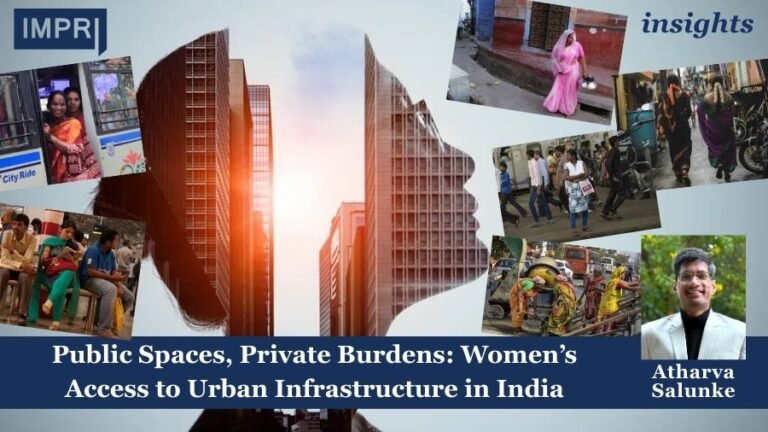
Public Spaces, Private Burdens: Women’s Access to Urban Infrastructure in India

Indian urban policy increasingly frames cities as inclusive, liveable, and gender-sensitive. Yet, this narrative collapses under scrutiny. Women’s everyday engagement with cities reveals a fundamental contradiction: while urban infrastructure is publicly funded and collectively justified, its design failures are privately absorbed by women’s bodies, time, safety, and unpaid labour. The Indian city does not merely exclude women incidentally; it is structured around assumptions that systematically marginalize them as legitimate users of public space.

Talk to Us