Category Centres

nobe

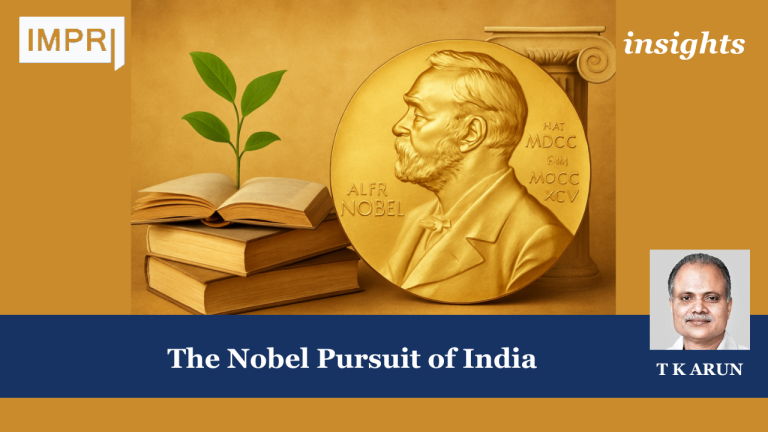
The Nobel Pursuit of India

India should set a goal of winning at least 10 Nobel Prizes every decade. Viewing development as raising per-capita income — which is the current obsession of government policy, think tanks, business associations and others — isn’t just sterile, but also betrayal of what is sound in India’s own tradition, when it comes to thinking on life’s attainment.

PU insights poster 7

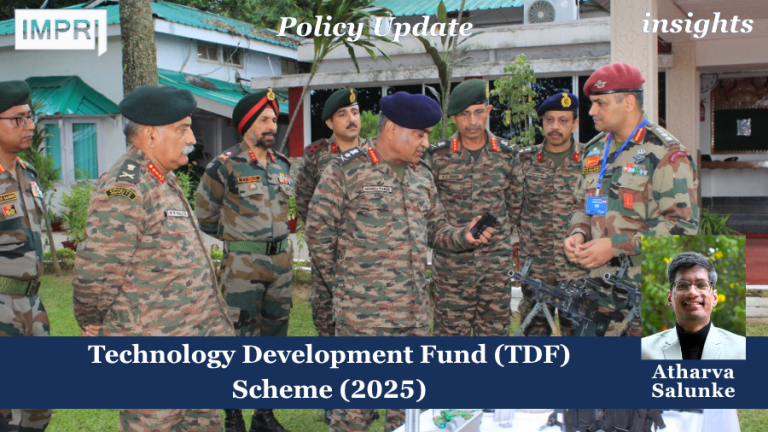
Technology Development Fund (TDF) Scheme (2025)

India's drive for self-reliance in defence production has been a paramount national agenda, closely interlinked with strategic autonomy and economic development. Defence Production Policy of 2011 focused on eliminating foreign dependence on suppliers and encouraging indigenous capability in defence technology.

WhatsApp Image 2025 10 12 at 11.48.45 AM

India-Qatar: Gas Trade and Energy Transition

India and Qatar share historic trade linkages, deep-rooted people-to-people ties and robust multifaceted bilateral relations. Qatar and India established diplomatic relations in the early 1970s. They celebrated 50 years of diplomatic ties in 2023

52b69b53 459c 4837 bc4d 80a6549c4c07

Modified Electronic Manufacturing Clusters (EMC 2.0): India’s Electronic Transformation

India’s electronics manufacturing sector entered a transformative phase with the launch of the Modified Electronics Manufacturing Clusters (EMC 2.0) scheme. This initiative was introduced to address long-standing infrastructure bottlenecks that limited the country’s ambition of becoming a global hub for electronics production.

Demonetisation

Another Policy, Same Mistake: The GST Rate Cut Echoes Demonetisation’s Flaws

The demand will shift further from the unorganised to the organised sector. This, will accelerate the decline of the unorganised sector leading to loss of employment and incomes and decline in demand.

muni

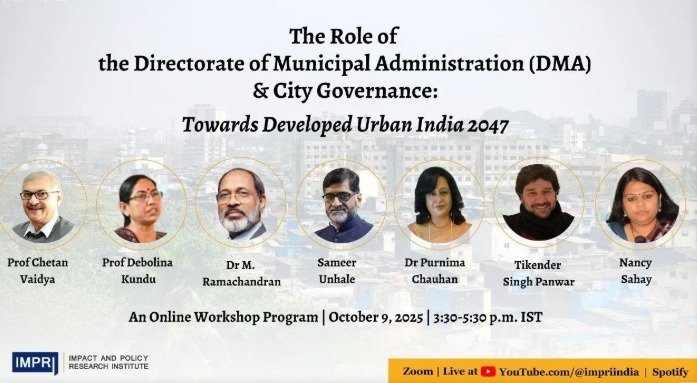
The Role of the Directorate of Municipal Administration (DMA) & City Governance: Towards Developed Urban India 2047

On 9 October 2025, the IMPRI Centre for Habitat, Urban and Regional Studies (CHURS) brought together leading administrators, urban practitioners, and scholars for a #WebPolicyTalk on “The Role of the Directorate of Municipal Administration (DMA) & City Governance: Towards Developed Urban India 2047.” Against the backdrop of rapid peri-urbanisation, rising census towns, and overlapping mission architectures, the workshop emphasised that India’s urban ambitions for 2047 will be realised not by infrastructure projects alone but by strengthened municipal institutions. Speakers noted that a reimagined DMA – with clear legal mandate, fiscal tools, professional cadres, and data-driven systems – can act as the indispensable broker that translates national and state priorities into reliable local service delivery, resilience, and inclusive growth.
Talk to Us