Category Insights

Insights, a blog published by IMPRI.

Copy of Insights 3 1

Continuity and Change: How Recent G20 Presidencies Have Advanced the Global South Agenda

Anil Trigunayat The last four years of G20 presidency have been remarkable in more than many ways. The most important dimension was that it has been steered by the developing countries and the Global South agenda starting with Indonesia, India,…

PU posting 2.0 5

National Technical Textile Mission (NTTM) 2025

Policy UpdateVatsala Sinha Introduction Textiles have long been a vital part of India’s economy and culture. The country is a global leader in traditional textiles like cotton, silk, and garments. However, the rise of technical textiles represents a significant change…

Photo 17

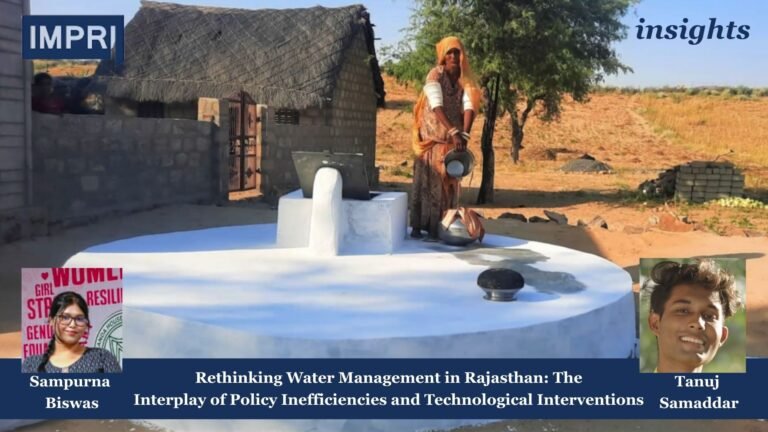
Rethinking Water Management in Rajasthan: The Interplay of Policy Inefficiencies and Technological Interventions

This article examines the ever-existent problem of water scarcity in Rajasthan with a special focus on the district of Barmer, and its direly grave socio-economic implications on agriculture, health, and education. In their periods of water shortages, the systems and policy frameworks in place fail to uphold themselves perpetuating the unending cycle of poverty.

G20

The G20 Through a Global South Lens: South Africa’s Moment

Harsh V Pant and Samir Bhattacharya South Africa’s G20 Presidency represents a landmark moment for Africa and the broader Global South, building on the momentum generated by preceding Global South chairs, Indonesia, India, and Brazil. With South Africa taking charge…

unions

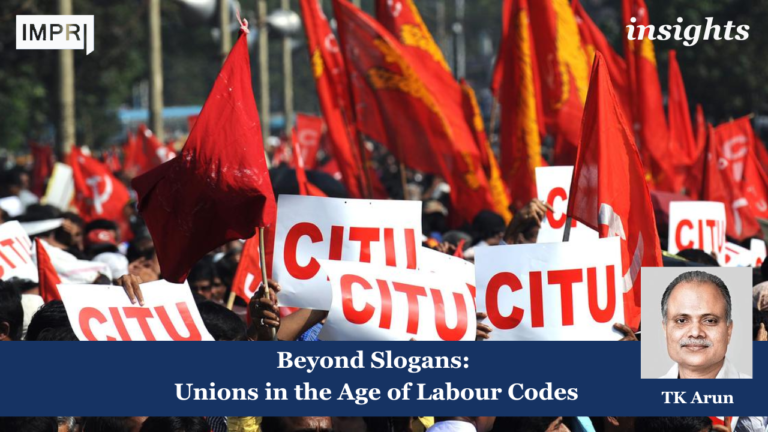
Beyond Slogans: Unions in the Age of Labour Codes

TK Arun Work within parameters of globalised growth, instead of ranting and raving against it. The four labour codes long in the making have finally been notified. The good thing is that a legal framework now exists for a company…

118 1

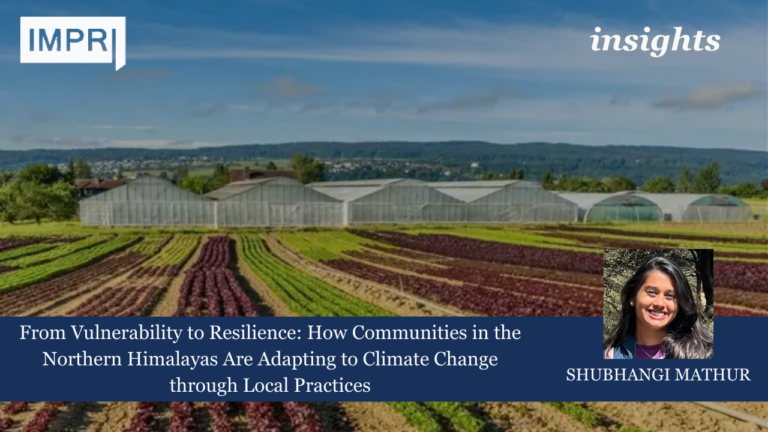
From Vulnerability to Resilience: How Communities in the  Northern Himalayas Are Adapting to Climate Change  through Local Practices 

The Himalayas is frequently described as “fragile,” but vulnerability here is not just  ecological, but also deeply social and economic. Erratic and declining rainfall now arrives outside  traditional crop cycles. Longer dry spells and early frosts affect soil fertility. Melting glaciers and  drying springs reduce water availability. Deforestation increases landslides and soil erosion. At the same time, rising temperatures increase energy demand while weakening already fragile supply chains. 

Talk to Us