Category Livelihoods, Employment and Well-being

governance

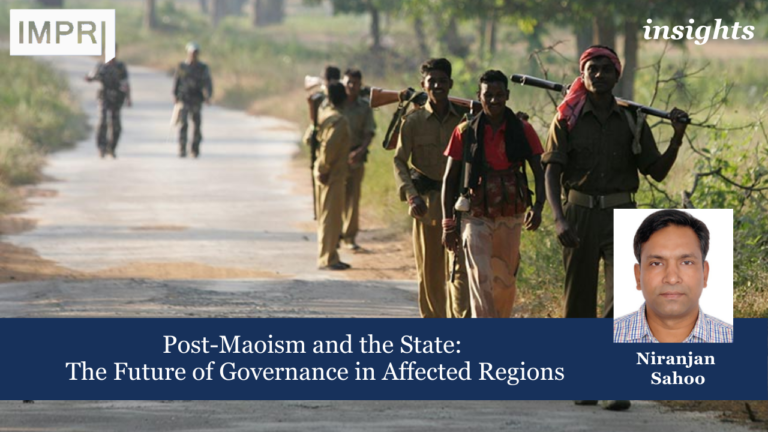
Post-Maoism and the State: The Future of Governance in Affected Regions

Niranjan Sahoo India’s Fifth Schedule areas became the hotbed of Maoist insurgencies due to administrative neglect, exacerbating discontent and a lack of representation of tribal groups in local bodies. Effective governance is crucial to address these issues and mitigate the…
Copy of Insights 7

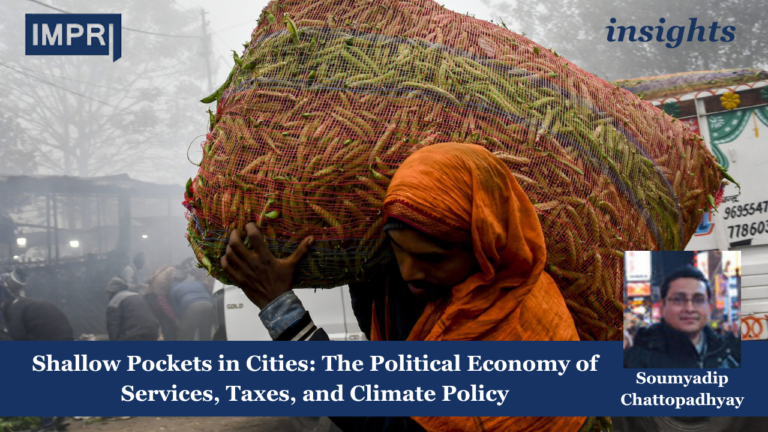
Shallow Pockets in Cities : The Political Economy Of Services, Taxes, and Climate Policy

With increased urbanisation and intensification of climate risks, Indian cities face an unprecedented challenge: how to finance the massive infrastructure investments needed to build climate-resilient futures.

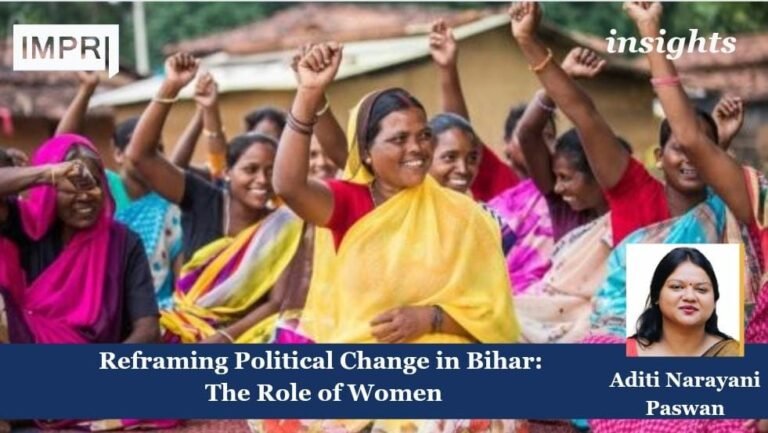
Reframing Political Change in Bihar: The role of Women

Reframing Political Change in Bihar: The role of Women

Women’s active participation in Bihar’s electoral process is a crucial indicator of a deepening democracy. This engagement disrupts traditional gender hierarchies by promoting a fairer distribution of political power and symbolising the expansion of substantive citizenship for women.

GDP

Decoding India’s Q2 GDP: Growth Drivers and Data Integrity

The Gross Domestic Product or GDP growth rate for quarter two of 2025-2026 has come at a whopping 8.2% – which is a six-quarter high – much faster than experts expected. The Reserve Bank of India had also expected a growth rate of 7%. This is surprising because the expected GST reduction impacted production and consumption of various items in August-September. The demand boost came after September 22 – which left just a week before the close of Q2. Reports have come in of many investment projects being withdrawn or curtailed and of net FDI becoming negative. These are not the signs of a robust economy.

Labour

The Pro-Business Pivot: How Modern Labour Codes Prioritize Industry Over Protection

That Labour Codes will create a divide between workers and businesses was a given. The former have opposed them since 2019 when the Code on Wages was passed by parliament followed by the other three in 2020 – the Industrial Relations Code, the Code on Social Security and the Occupational Safety, Health and Working Conditions Code. Businesses have been pressing for their implementation since then because they know they will benefit from them. The government presents these Codes as beneficial to labour since they are supposed to simplify a very complex and outdated system. 

HIV

Beyond the Red Ribbon: Humanizing the Future of HIV Care in India

When India diagnosed its first case of HIV in 1987, it was met with silence, fear, and judgment. The virus was poorly understood, and those living with it were often treated as outcasts -denied care, employment, or even the dignity of empathy. Hospitals hesitated to admit them, schools refused their children, and neighbours withdrew in fear. It was a time when HIV was not just a virus — it was a social sentence.

Cancer

Expanding the Definition: The Case for Recognizing Cancer-Related Disabilities in India

India is witnessing a troubling paradox. Advances in diagnosis and treatment mean that more people are surviving cancer than ever before. Yet the very systems that should protect these patients and survivors are failing to recognise the lasting impact of cancer on their lives.

Talk to Us