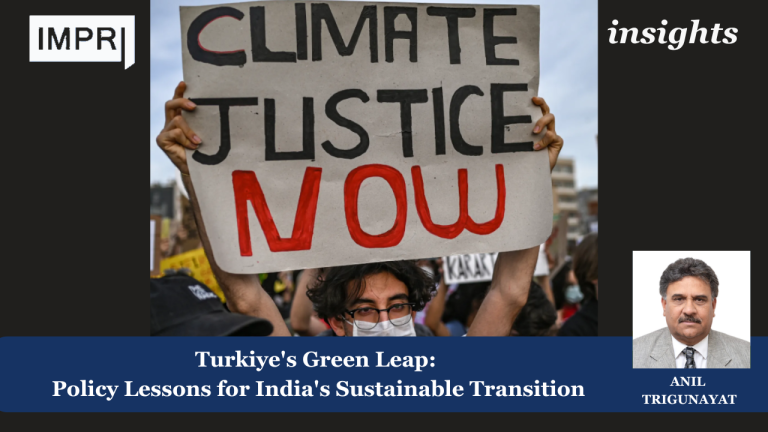
Turkiye’s Green Leap: Policy Lessons for India’s Sustainable Transition
Even as India-Turkiye ties face strain over Ankara’s role following the Pakistan-orchestrated attack in Pahalgam, it is worth examining Turkiye’s climate governance leap.
Even as India-Turkiye ties face strain over Ankara’s role following the Pakistan-orchestrated attack in Pahalgam, it is worth examining Turkiye’s climate governance leap.
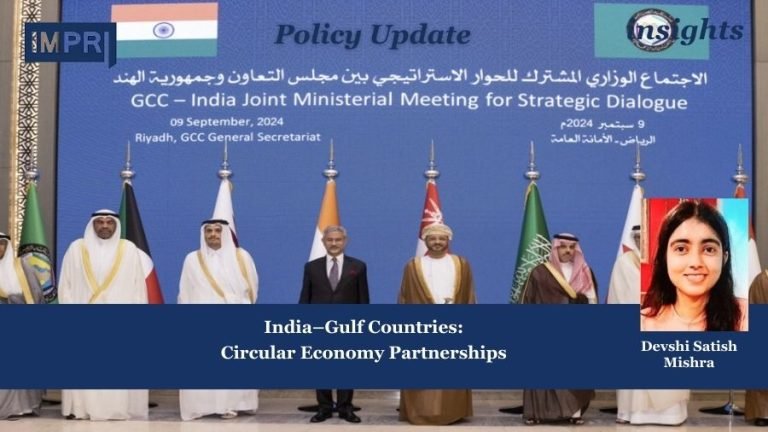
Policy UpdateDevshi Satish Mishra What is meant by “Circular Economy”? The circular economy is a system that could be understood as a move towards sustainable development. It is a system wherein materials are fully utilised, which allows nature to be…
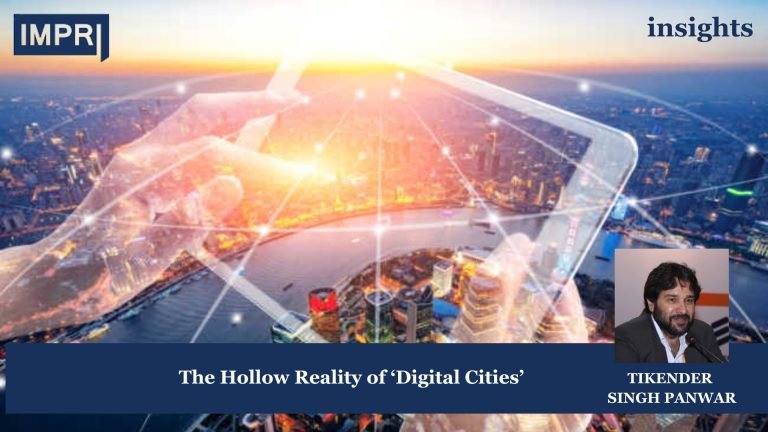
It is the season of digital spectacle. From Smart Cities to the National Urban Digital Mission (NUDM), the Union government never misses an opportunity to announce a grand plan for “transforming urban India.” Glossy dashboards, artificial intelligence claims, and billion-dollar contracts are flaunted as if technology alone can rescue India’s cities.
India’s wellness industry is booming, with PWC estimating its size at ₹490 billion, growing at a compound growth rate of around 16%. Fitness centres, yoga studios, Zumba dance classes, personal trainers, health food, and athleisure clothing proliferate. A section of the population is really taking their health and fitness into their own earnest hands, even as another section is feasting on newfound prosperity and growing obese.
The Indian population is growing, and the country is demonstrating strong growth potential. In this scenario, a lack of financial inclusion can be one of the major challenges faced by the government.
eTaal (Electronic Transaction Aggregation & Analysis Layer) is an initiative by the Government of India, developed by the National Informatics Centre (NIC) under the Ministry of Electronics and Information Technology (MeitY).
Modernising public service delivery is essential for enhancing governance and improving citizen engagement. In line with this objective, ServicePlus, a comprehensive platform launched in 2012 as part of the Panchayat Enterprise Suite (PES) under the E-Panchayat Mission Mode Project (MMP), has emerged as a transformative solution.