Category Center for International Relations and Strategic Studies

Intel

What Intel’s Chip Agreement Means for India’s Semiconductor Ambitions

T.K. Arun China, facing US chip bans, doubled down on indigenous chipmaking—with success. If India leans on Intel instead of investing in homegrown R&D, it could miss its chance to replicate that model. Intel was one of the technology companies whose…

PU posting 2.0 2

India-France: Co-Producing Cinema for Global Audiences

While India and France have a deep cultural association, the film alliance between them has only clearly formed over the recent decades. What began as an occasional exchange of films between film societies in the 1950s culminated in a formal relationship when the two governments signed an audiovisual co-production agreement in 1985.

Copy of Insights 1

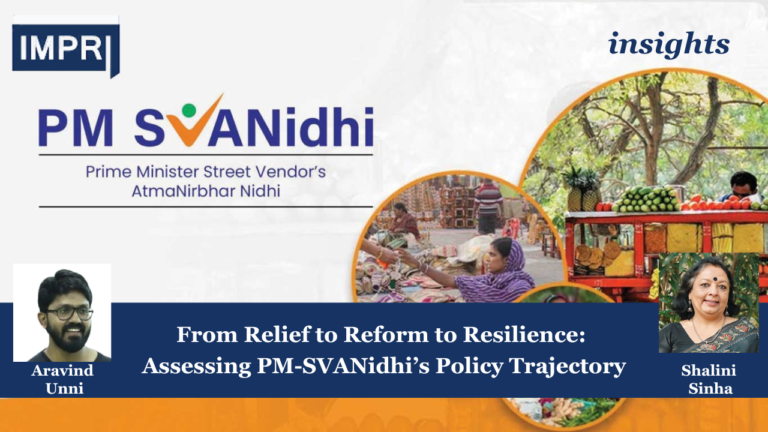
From Relief to Reform to Resilience: Assessing PM-SVANidhi’s Policy Trajectory

When we speak of successful government initiatives of the past decade, popular missions like the Swachh Bharat Mission (SBM) usually dominates the conversation. Yet, quietly, another programme has been impacting the lives of the millions of India’s urban street vendors, who sustain the everyday economy of Indian cities.

Oman

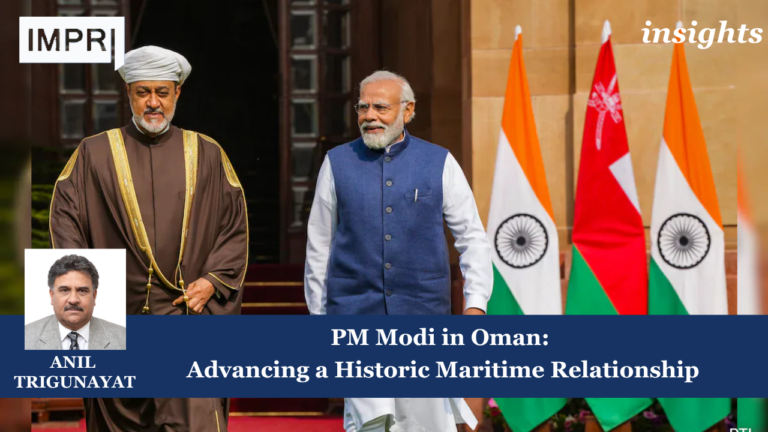
PM Modi in Oman: Advancing a Historic Maritime Relationship

Anil Trigunayat Trade and economic cooperation have been the fulcrum of the relationship, with bilateral trade already exceeding $10 billion. Prime Minister Narendra Modi is visiting the Sultanate of Oman at the invitation of HM Sultan Haitham bin Tarik from…

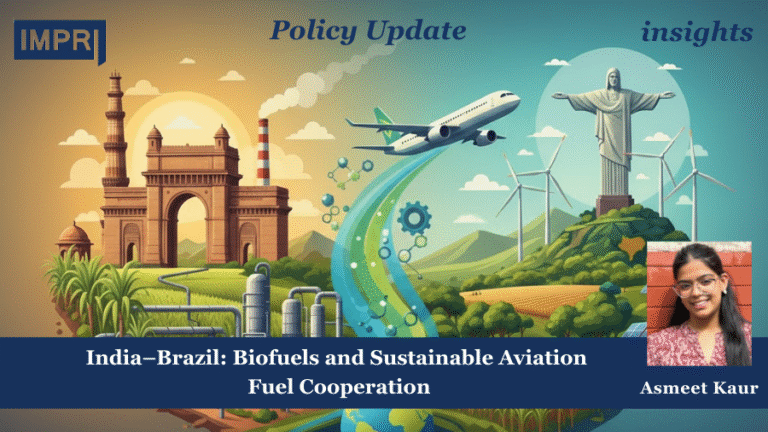
India–Brazil: Biofuels and Sustainable Aviation Fuel Cooperation

India–Brazil: Biofuels and Sustainable Aviation Fuel Cooperation

India and Brazil are natural partners in the low-carbon bioenergy transition. Brazil has decades of experience in large-scale biofuel deployment, most famously its sugarcane-based ethanol program and a mature flex-fuel vehicle market, while India has moved aggressively in recent years to scale ethanol blending and to develop policy frameworks for sustainable aviation fuel (SAF). The two countries formalized energy and biofuel cooperation through a series of memoranda and joint statements: New Delhi's Ministry of Petroleum and Natural Gas and its Brazilian counterparts highlighted SAF and biofuel collaboration in a joint statement on 21 September 2024, and broader bioenergy MOUs and bilateral instruments between India and Brazil date back several years and were reiterated during high-level exchanges in 2024–2025.

Tourism

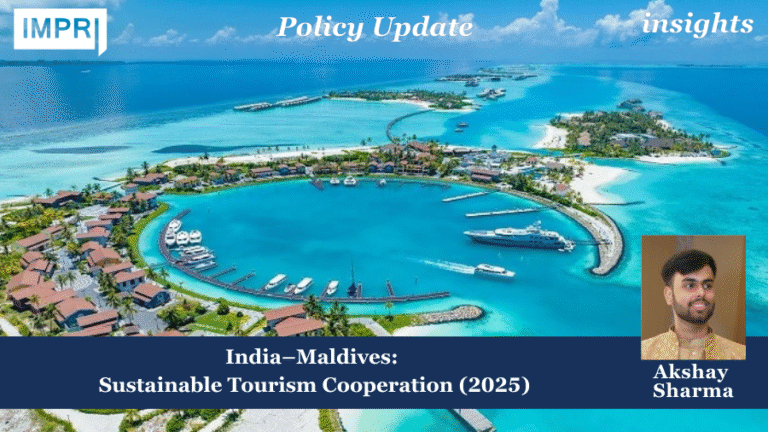
India–Maldives: Sustainable Tourism Cooperation (2025)

The Republic of Maldives, located on the Indian subcontinent, consists of 1,190 coral islands grouped into 26 natural atolls. Following the Maldives' independence in 1965, India was one of the first countries to recognise and establish diplomatic relations with them. India and the Maldives have had long-standing ethnic, linguistic, cultural, religious, and economic links. Physical proximity, cultural links, and development collaboration have all contributed to the two countries' close, friendly, and diverse relationship.

In Small Island Developing States (SIDS) such as the Maldives, where tourism is the principal source of foreign exchange profits and government revenue, the business is growing.

Talk to Us