Category Agriculture, Food, Nutrition Security and Rural Development

EPAYF

Fellows Blog List and Details: EPAYF Environment Policy and Action Youth Fellowship- Cohort 3.0

EPAYF Environment Policy and Action Youth Fellowship- Cohort 3.0 | Theme: People, Power & the Planet: Reimagining Environmental Policy for a Just and Equitable Future | A Three-Month Online Immersive Introductory Leadership Certificate Training Fellowship Program | Dec 2025-Feb 2026 | IMPRI #WebPolicyLearning EPAYF Program Details…
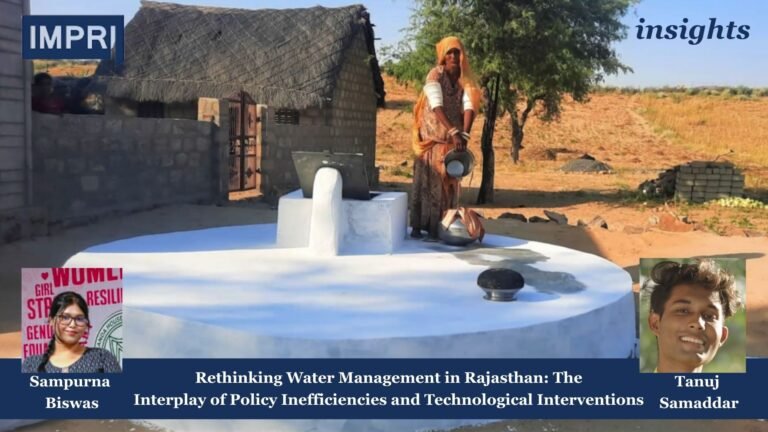
Photo 17

Rethinking Water Management in Rajasthan: The Interplay of Policy Inefficiencies and Technological Interventions

This article examines the ever-existent problem of water scarcity in Rajasthan with a special focus on the district of Barmer, and its direly grave socio-economic implications on agriculture, health, and education. In their periods of water shortages, the systems and policy frameworks in place fail to uphold themselves perpetuating the unending cycle of poverty.

115 1

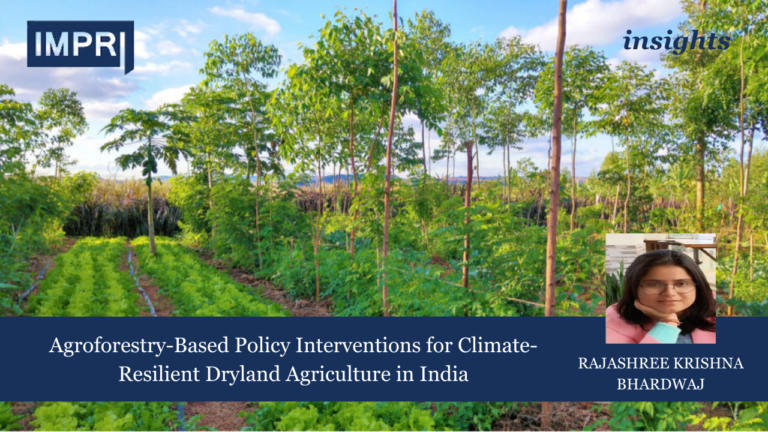
Agroforestry-Based Policy Interventions for Climate-Resilient Dryland Agriculture in India

Dryland agriculture sustains nearly half of India’s cultivated area and supports the livelihoods of millions of smallholder farmers. Yet, it remains one of the most vulnerable sectors in the face of climate change — grappling with unpredictable rainfall, rising temperatures, frequent droughts, and land degradation. In this context, agroforestry emerges not only as a pragmatic farming practice, but also as a strategic policy imperative to build climate-resilient dryland systems that enhance productivity, ecological balance, and rural livelihoods.

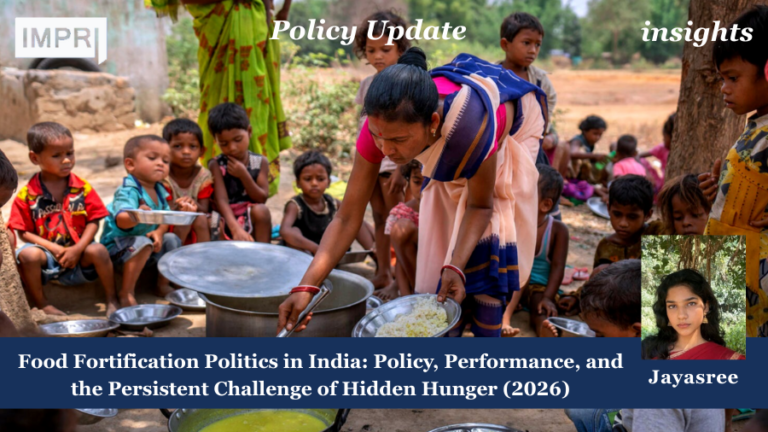
Food Fortification Politics in India: Policy, Performance, and the Persistent Challenge of Hidden Hunger (2026)

Food Fortification Politics in India: Policy, Performance, and the Persistent Challenge of Hidden Hunger (2026)

Food fortification is scientifically defined by the World Health Organisation (WHO) as the practice of deliberately increasing the content of one or more essential micronutrients (i.e. minerals and vitamins, including trace elements) in a food so as to improve the nutritional quality of the food supply and provide a public health benefit with minimal risk to health. From the purview of public policy in the Indian context, it deals with the state intervention or government efforts to combat malnutrition and other deficiencies via structured public policy schemes in the food sector.

India-Israel

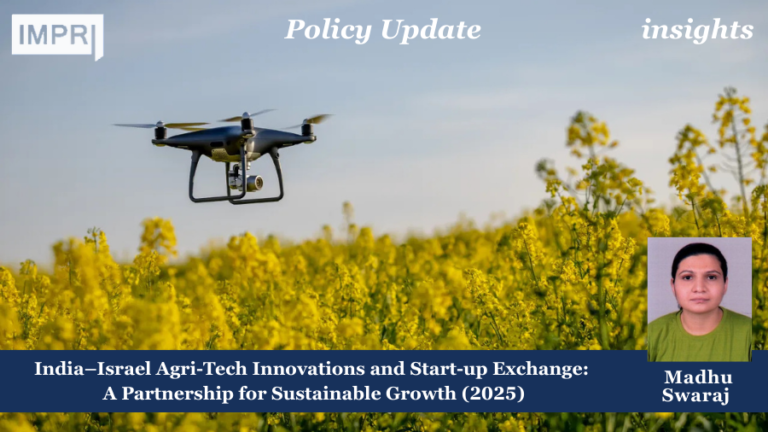
India–Israel Agri-Tech Innovations and Start-up Exchange: A Partnership for Sustainable Growth (2025)

The economic relationship between India and Israel has evolved strategically, moving beyond the traditional defence-centric ties to encompass high-technology sectors like cyber, water management, and most significantly, Agri-Tech. This partnership leverages Israel's cutting-edge agricultural innovation and India's massive scale, diverse market, and vast talent pool, creating a powerful synergy for sustainable and inclusive growth.

Tribal

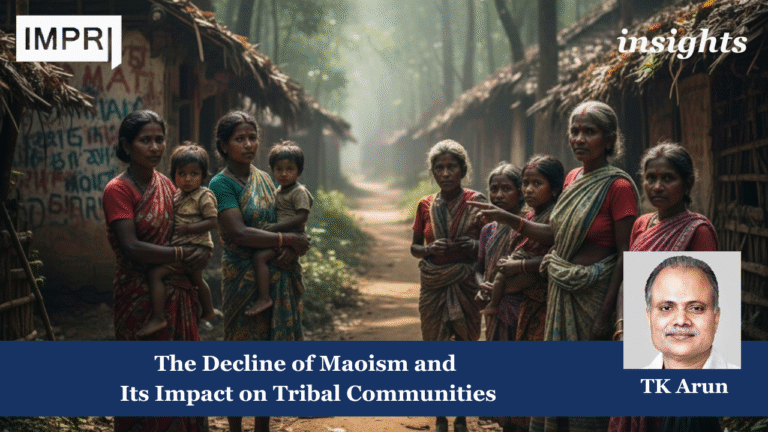
The Decline of Maoism and Its Impact on Tribal Communities

The Maoists might have been looking after their own interests more than those of the tribal people, and hindering State efforts to extend the scope of governance and development to their habitats, but they also raised a voice of protest against acts of injustice against the tribals.

world

How Big Shifts Are Remaking the World

A remarkable feature of the world in the wake of President Trump’s assault on the global trading and security system is the resilience of global interdependence.

Talk to Us