Category Public Policies, Programs and Schemes

Scholarship

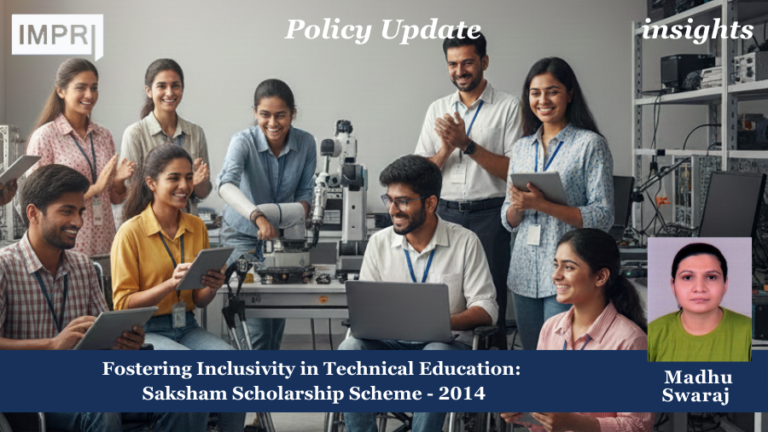
Fostering Inclusivity in Technical Education: Saksham Scholarship Scheme (2014)

The Saksham Scholarship Scheme is a significant initiative by the Government of India, aimed at providing financial support and encouragement to specially-abled students to pursue technical education. The scheme was officially launched in the academic year 2014-15. It was introduced under the then Ministry of Human Resource Development (MHRD), which has since been renamed the Ministry of Education. The All India Council for Technical Education (AICTE), the statutory body for technical education in the country, was tasked with implementing and managing the scheme.

PU posting 2.0 5

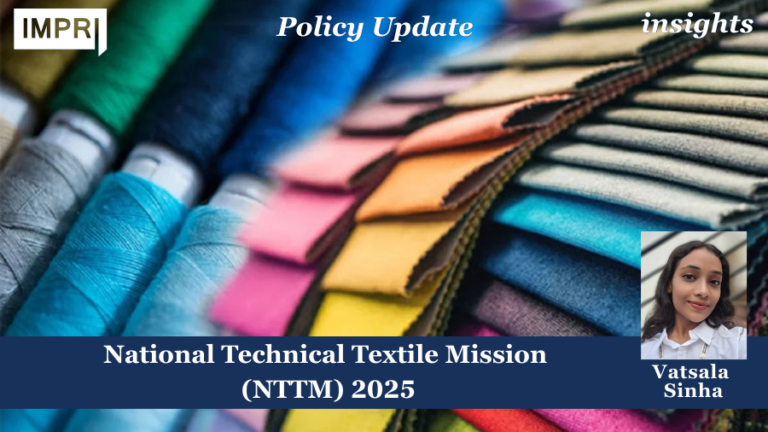
National Technical Textile Mission (NTTM) 2025

Policy UpdateVatsala Sinha Introduction Textiles have long been a vital part of India’s economy and culture. The country is a global leader in traditional textiles like cotton, silk, and garments. However, the rise of technical textiles represents a significant change…

G20

The G20 Through a Global South Lens: South Africa’s Moment

Harsh V Pant and Samir Bhattacharya South Africa’s G20 Presidency represents a landmark moment for Africa and the broader Global South, building on the momentum generated by preceding Global South chairs, Indonesia, India, and Brazil. With South Africa taking charge…

India-Israel

India–Israel Agri-Tech Innovations and Start-up Exchange: A Partnership for Sustainable Growth (2025)

The economic relationship between India and Israel has evolved strategically, moving beyond the traditional defence-centric ties to encompass high-technology sectors like cyber, water management, and most significantly, Agri-Tech. This partnership leverages Israel's cutting-edge agricultural innovation and India's massive scale, diverse market, and vast talent pool, creating a powerful synergy for sustainable and inclusive growth.

Intel

What Intel’s Chip Agreement Means for India’s Semiconductor Ambitions

T.K. Arun China, facing US chip bans, doubled down on indigenous chipmaking—with success. If India leans on Intel instead of investing in homegrown R&D, it could miss its chance to replicate that model. Intel was one of the technology companies whose…

HIV

Beyond the Red Ribbon: Humanizing the Future of HIV Care in India

When India diagnosed its first case of HIV in 1987, it was met with silence, fear, and judgment. The virus was poorly understood, and those living with it were often treated as outcasts -denied care, employment, or even the dignity of empathy. Hospitals hesitated to admit them, schools refused their children, and neighbours withdrew in fear. It was a time when HIV was not just a virus — it was a social sentence.

Talk to Us